
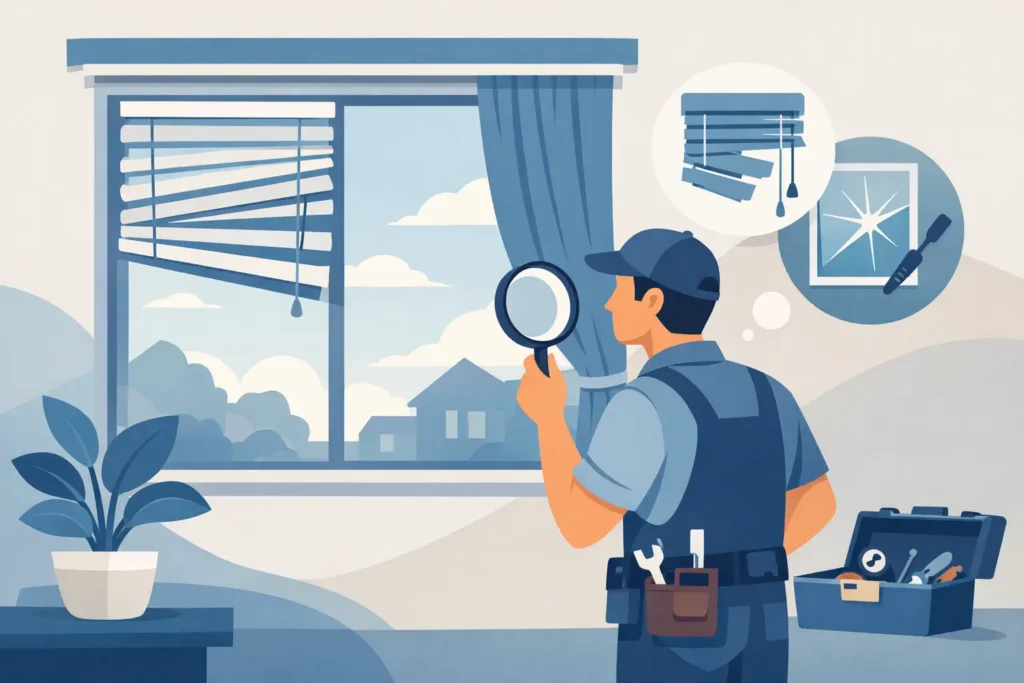
A shade that stops halfway, a blind with crooked slats, or shutters that no longer close cleanly can make a room feel unfinished fast. A professional window treatment repair service helps restore privacy, light control, and the polished look you expected when those treatments were first installed.
For many homeowners and office managers, the first question is simple: should you repair the existing treatment or replace it? The answer depends on the product, the age of the hardware, the extent of the damage, and whether the treatment was custom fit to the window. In many cases, repair is the smarter move, especially when the original window covering still suits the space and only one or two components have failed.
What a window treatment repair service actually handles
Repair is not limited to obvious damage. Sometimes the issue is functional but subtle. A roller shade may retract unevenly. A cellular shade might sag on one side. Wood blinds can develop broken tilt mechanisms, while plantation shutters may have loose louvers, damaged staples, or alignment problems that affect daily use.
A reliable repair service looks at the entire system, not just the part that failed. That matters because cords, wand controls, brackets, mounting points, and internal mechanisms all work together. Replacing one piece without checking the rest can leave you with another problem a few weeks later.
Professionally installed treatments also tend to have details worth preserving. Custom sizing, coordinated finishes, specialty materials, and motorized components are not easy to duplicate with a quick off-the-shelf swap. When the product still fits the room and the damage is isolated, repair often protects the original design investment.
Signs it is time to schedule window treatment repair service
Some problems are obvious enough that there is no debate. If a bracket pulls away from the wall, a cord frays, or a motorized shade stops responding, it is time to have the unit inspected. Other signs are easier to ignore but usually get worse over time.
A treatment that drags, catches, tilts unevenly, or no longer stays in position is already telling you something is wearing out. The same is true for shutters that rub against the frame, shades that roll up crooked, or blinds with repeated slat misalignment. You may still be able to use them for a while, but daily strain tends to increase the damage.
Repairs are also worth considering after remodeling, repainting, or replacing windows. A treatment may need to be resecured, adjusted, or rehung to sit correctly in the updated opening. In Southern California homes, sun exposure can also speed up wear on certain materials and operating systems, particularly in rooms that get strong afternoon light.
Repair versus replacement – what makes sense?
This is where experience matters. Not every damaged blind or shade should be repaired, and not every older treatment needs to be replaced. The right decision usually comes down to three factors: condition, value, and compatibility.
If the damage is limited to hardware, lift systems, brackets, cords, or a small number of components, repair is often cost-effective. That is especially true for custom shutters, designer shades, or treatments installed across multiple windows where consistency matters. Keeping the existing look can be just as important as restoring function.
Replacement becomes more likely when the product is heavily warped, faded, structurally compromised, or based on discontinued parts that are no longer practical to source. It may also make sense if your needs have changed. For example, if you now want better room darkening, cordless operation, or motorization, replacement may offer more long-term value than repairing an outdated system.
A good service provider should be honest about that trade-off. Homeowners do not benefit from paying for a repair that only delays replacement by a few months. At the same time, replacing a well-made custom treatment because of one failed mechanism can be unnecessary and expensive.
Why professional repair is worth it
Window treatments seem simple until you start taking them apart. Many systems use small internal parts, tensioned components, or mounting methods that can be damaged easily during a do-it-yourself attempt. Even when the repair looks straightforward, reinstalling the treatment level and secure is another step where mistakes happen.
Professional repair helps in two ways. First, it addresses the real cause of the problem rather than the visible symptom. Second, it protects the fit and finish of the treatment and the surrounding wall or window frame.
That matters more with custom products. A shade that was measured precisely for an inside mount or shutters built to match a specific opening need careful handling. One incorrect adjustment can affect operation, appearance, and lifespan. For homes and offices that value a clean, tailored look, proper repair is part of preserving the overall design.
Common repairs for blinds, shades, and shutters
Different products fail in different ways. Horizontal blinds often need help with tilt mechanisms, ladders, slat clips, cords, and mounting hardware. Faux wood and wood blinds may also develop slat damage from impact or long-term exposure.
Shades can present more variety. Roller shades may have spring or clutch issues. Cellular shades can lose pleat structure or develop uneven lifting. Roman shades may need attention to rings, cords, folds, or headrail components. Motorized shades add another layer, where the issue might involve the motor, power source, programming, or remote communication.
Shutters are generally durable, but they are not immune to wear. Hinges can loosen, louvers can detach or stop moving smoothly, and panels may shift enough to affect closure. Because shutters are often a permanent visual feature in the room, even small problems stand out.
The value of working with a full-service local specialist
Repair is easier when the company understands the full life cycle of a window treatment – measuring, product selection, installation, and post-installation support. That broader perspective helps identify whether the issue started with age, environment, daily use, or a mounting condition that needs adjustment.
For homeowners in Los Angeles County and Orange County, local service also means someone who understands the practical demands of the area. Strong sunlight, heat, frequent use in family spaces, and design expectations all shape which repairs make sense and which upgrades may be worth considering.
A company like Blinds by Design brings an advantage here because the conversation does not stop at fixing a broken part. If a repair reveals that one room would benefit from a more durable material, safer operating system, or better light control, you can make that decision with guidance from people who handle both repair and replacement.
How to get the most from your repair appointment
A little preparation can make the service visit more efficient. If possible, note when the issue started, whether the treatment still moves at all, and if the problem affects one window or several. Photos can help, especially if the treatment changes position or behaves differently at different times of day.
It also helps to mention whether the treatment is original to the home, custom made, or part of a larger matched set. That context can influence whether preserving the existing style should be a priority. If the room has changed since installation, such as new furniture placement or a remodel, mention that too.
Most important, avoid forcing a jammed mechanism. Pulling harder on a stuck shade or twisting a shutter louver that will not move often turns a manageable repair into a larger one.
A practical next step for damaged window treatments
When a treatment stops working properly, the real loss is not just mechanical. It affects comfort, privacy, appearance, and how smoothly the room functions every day. A trusted window treatment repair service can often restore all of that without the cost and disruption of starting over.
If your blinds, shades, or shutters are not operating the way they should, having them evaluated early is usually the best move. The right repair at the right time can keep your windows looking finished, your rooms working better, and your original investment doing its job for years to come.