
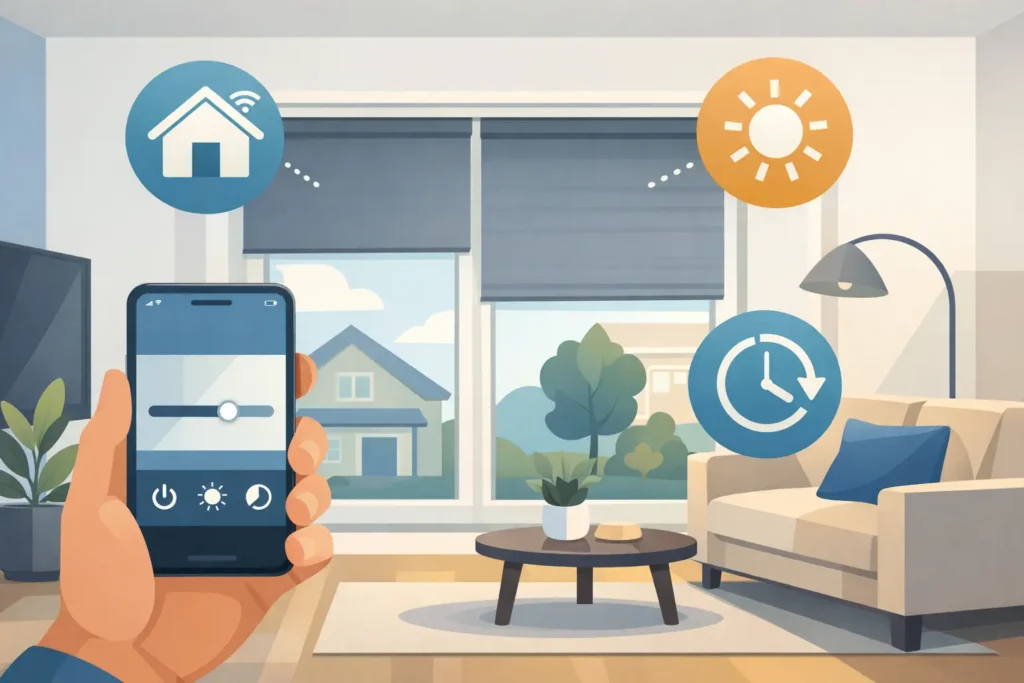
A west-facing living room in Los Angeles can feel perfect at 10 a.m. and far too bright by late afternoon. That is exactly where smart shades for home start to make a real difference. They do more than raise and lower on command. When chosen well, they help manage glare, protect interiors from harsh sun, improve privacy, and make everyday routines feel easier.
For many homeowners, the appeal is simple: less manual adjustment, cleaner lines, and better control over light throughout the day. But the right solution depends on your windows, your layout, and how you actually use each room. Smart shades are not one-size-fits-all, and that is why the details matter.
What smart shades for home actually do
At the most basic level, smart shades use a motor to raise, lower, or tilt without a cord or chain. Control can come from a remote, a wall switch, a phone app, or voice commands through a compatible smart home system. Some can also be scheduled to move at certain times of day.
That convenience is what most people notice first, but it is only part of the value. In a bedroom, automated shades can help create a better wake-up routine by opening gradually in the morning. In a family room, they can reduce afternoon glare on a TV without anyone leaving the couch. In hard-to-reach windows, they solve a problem that manual shades never handle well.
There is also a design benefit. Motorized shades remove dangling cords and keep the window area looking more finished. In homes with large glass doors, tall windows, or a modern interior style, that cleaner appearance often matters just as much as the technology.
Where they make the biggest impact
Not every room needs automation. In some spaces, it is a true upgrade. In others, it may be more of a convenience feature. The best candidates are usually rooms where light changes quickly, windows are difficult to reach, or privacy needs shift throughout the day.
Living rooms and media rooms are common choices because glare control is a daily issue. Bedrooms are another strong fit, especially when homeowners want blackout performance with easy control. Home offices also benefit, since shifting sunlight can make a workspace uncomfortable or interfere with screens.
Large windows, high windows, and sliding glass doors are especially well suited for motorization. Those openings are often awkward to operate manually, and they tend to be focal points in the room. Smart shades help them function better without adding visual clutter.
The real advantages beyond convenience
Convenience gets attention, but most homeowners end up appreciating the day-to-day comfort more. Scheduled operation helps maintain a more consistent indoor environment. Shades can close during peak sun hours and reopen later, which can support energy efficiency and reduce strain on cooling systems.
That matters in Southern California, where strong sun can heat up interiors quickly. Consistent shade positioning can also help protect flooring, furniture, artwork, and fabrics from fading over time. If you have invested in interior finishes, that added protection is worth considering.
There is also a safety advantage. Cordless, motorized operation is a smart option for homes with children or pets. It creates a cleaner look while removing an obvious hazard.
For homeowners focused on resale appeal, smart window treatments can also make a home feel more current and thoughtfully finished. They are not always the first feature a buyer asks about, but they do contribute to the overall impression of quality.
What to consider before choosing smart shades
The best smart shade is not always the most advanced one. It is the one that fits the room, the window, and the homeowner’s habits. That starts with deciding what matters most: privacy, blackout performance, filtered natural light, insulation, or appearance.
Fabric choice changes everything. A solar or light-filtering shade may be ideal in a living area where you want brightness without glare. A blackout shade is usually better for bedrooms or media rooms. Woven textures can add warmth, while smooth roller fabrics often suit a more minimal look.
Power source is another practical decision. Some motorized shades use rechargeable battery packs, while others can be hardwired. Battery-powered options are often easier to install in existing homes and work well in many spaces. Hardwired systems can be a better long-term fit for large projects, remodels, or homes where frequent operation is expected. Neither is automatically better. It depends on the number of windows, access to power, and how clean you want the final setup to be.
Control method matters too. Some homeowners want a simple remote and nothing more. Others want app control, room-by-room scheduling, or integration with a broader home automation system. If the goal is simplicity, there is no reason to overcomplicate it. A dependable setup that is easy to use every day is better than a feature-heavy system that frustrates you.
Custom fit matters more than many people expect
This is where many smart shade projects go right or wrong. A motor can be excellent, but if the shade is not measured correctly, aligned properly, or matched to the opening, the result can still feel disappointing.
Custom sizing affects both function and appearance. A poorly fitted shade may leave too much light gap, sit unevenly, or fail to deliver the privacy the homeowner expected. On larger windows, even small measuring errors become obvious. Professional measurement helps avoid those problems before the order is placed.
Installation matters just as much. Motorized products need proper mounting, programming, and testing. In some cases, they also need careful planning around window trim, recessed openings, or nearby doors. A smooth final result depends on getting those details right from the start.
That is why many homeowners prefer a full-service process instead of trying to piece together product selection, measuring, and installation on their own. Seeing fabrics, colors, and opacity options in the actual room also makes the choice easier. Light in a showroom is not the same as light in your home.
Are smart shades worth the cost?
For the right home, yes. But the answer depends on where you use them and what you expect from them.
If you are adding smart shades to a hard-to-reach window, a bright bedroom, or a room with strong afternoon sun, the value is usually easy to see. You are solving a daily annoyance while improving comfort and function. If you are automating every window in the house mainly for novelty, the return may feel less clear.
Many homeowners find the best balance by prioritizing key rooms first. Start with the spaces where automation would make the biggest difference, then expand later if needed. That approach keeps the project practical and budget-conscious without giving up the benefits where they matter most.
It is also worth remembering that cost is tied to more than the motor. Fabric, window size, control options, power source, and installation all affect pricing. Custom work generally costs more than off-the-shelf products, but it also tends to look better, last longer, and perform more reliably.
A better way to shop for smart shades for home
Smart window treatments are easier to choose when the process happens in your space, with guidance based on your windows, your lighting, and your design goals. That is especially helpful when you are comparing fabric opacities, deciding between battery and hardwired power, or trying to coordinate shades with existing finishes.
A local, full-service company like Blinds by Design can help simplify that decision. Instead of guessing from product photos, homeowners can review styles in person, get precise measurements, and make choices with installation in mind from the beginning. That tends to save time, avoid costly mistakes, and lead to a better final result.
If you are considering smart shades, start by thinking room by room. Where is the light hardest to control? Which windows are most inconvenient to operate? Where would privacy on demand make everyday life easier? Those answers usually point you to the right solution faster than any feature list.
The best smart shades do not call attention to themselves. They simply make your home feel more comfortable, more polished, and easier to live in every day.