
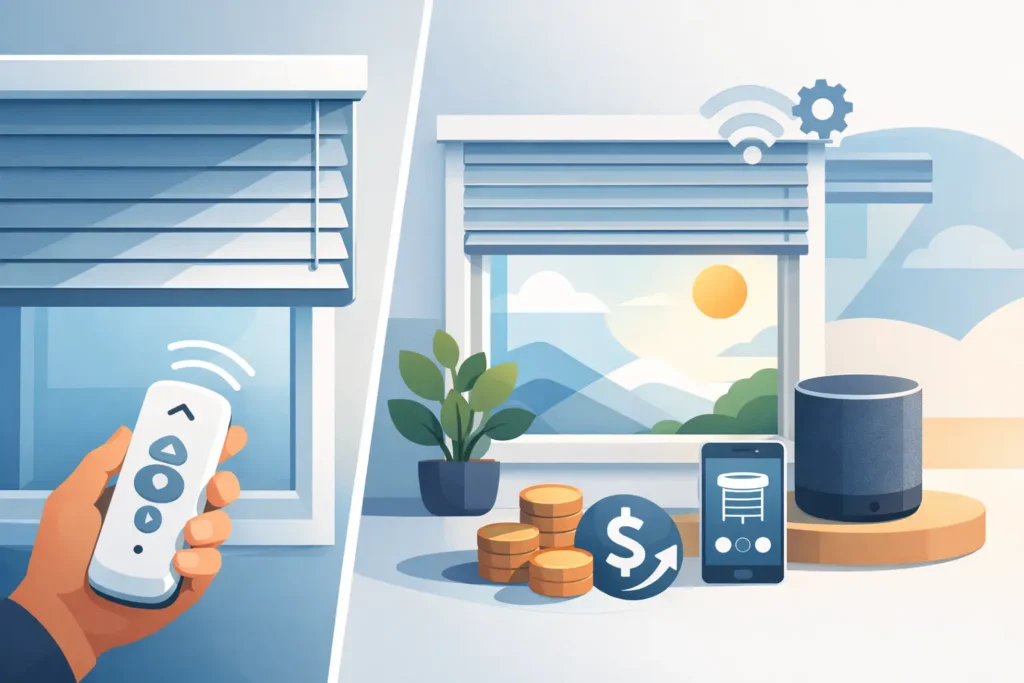
The real test for any window treatment is simple: does it make daily life easier while still looking right in the room? That is exactly why motorized blinds for windows have become such a popular choice for homeowners and office spaces across Los Angeles County and Orange County. They do more than add a modern feature. When selected well and installed properly, they improve light control, privacy, comfort, and the overall feel of a space.
For many clients, the appeal starts with convenience. A hard-to-reach window in a stairwell, a wall of glass in a living room, or an office that gets strong afternoon sun can all become easier to manage with the touch of a button. But convenience is only part of the story. The better question is whether motorization makes sense for your specific windows, your routine, and your design goals.
What motorized blinds for windows actually do
At the most practical level, motorized blinds for windows let you raise, lower, or tilt your window coverings without manual cords or wands. Depending on the product, control can come from a remote, a wall switch, an app, or a smart home system. Some options can also be scheduled to open and close at set times.
That sounds straightforward, but the real value comes from how this changes the way a room functions. In bedrooms, motorized blinds can help create better sleep conditions by controlling early morning light. In family rooms, they make it easier to reduce glare on TVs without interrupting the room. In offices, they can help manage brightness and privacy throughout the workday.
This is also why custom fit matters. Motorization works best when the blind or shade is selected for the actual opening, the room’s sun exposure, and the way the space is used. A product that looks great online may not be the right answer for a west-facing living room in Southern California.
Where motorized blinds make the biggest difference
Some windows benefit from motorization more than others. Large windows and sliding glass doors are often at the top of the list because manual operation can feel awkward or inconsistent over time. Tall windows, clerestory windows, and windows behind furniture are also strong candidates because they are difficult to reach.
There is also a design advantage in rooms with multiple windows. When several blinds open and close together, the room looks cleaner and more intentional. You do not get the uneven appearance that often happens when one blind is half-open and another is fully lowered.
In homes throughout Downey, Whittier, Lakewood, and nearby communities, sun control is another major reason people choose motorization. Southern California light is a benefit, but it can also create heat buildup, glare, and fading on floors and furnishings. Being able to adjust window coverings quickly and consistently makes that easier to manage.
Style and function should work together
One reason motorization has grown so much is that it no longer feels limited to a narrow, high-tech look. Today, many blinds and shades can be motorized while still matching the style of the room. That means you can prioritize clean modern lines, a softer layered interior, or a more traditional feel without giving up function.
This matters because window treatments are highly visible. They affect color balance, texture, light quality, and how finished a room feels. A good motorized solution should not look like a gadget added at the last minute. It should feel like part of the design from the start.
That is where in-home guidance is especially useful. Seeing materials, colors, and lift options in the actual room often changes the decision. A fabric that seemed right in a showroom may look too cool in natural light. A blind that appeared minimal in a sample may feel too stark once it is placed next to flooring, trim, and furniture.
The main trade-offs to consider
Motorization offers clear benefits, but it is not automatically the best choice for every window. Cost is the first consideration. Motorized products typically cost more than manual versions because they include the motor, control system, and additional setup. For some clients, that investment is easy to justify in a primary living space or master bedroom, but less necessary in a guest room or small secondary area.
Power source is another factor. Some systems use rechargeable batteries, while others are hardwired. Battery-powered options can be a strong fit for many homes because installation is less invasive, but they do require periodic charging or battery replacement. Hardwired systems can be ideal in new construction or major remodels, though they usually need more planning.
There is also the question of how much automation you actually want. Some homeowners want simple remote control and nothing more. Others want integration with broader smart home features. Neither approach is wrong. The best choice depends on how you live and whether added connectivity will genuinely improve your routine.
Choosing the right motorized blinds for windows
The right selection starts with the room, not the motor. You want to think about privacy needs, light exposure, the size of the window, and the style of the space before narrowing down control features. A bedroom may call for stronger light blocking and quiet operation. A kitchen may need easy light adjustment with materials that hold up well in an active environment. An office may prioritize glare reduction and a professional appearance.
Window size and layout also matter. Wider or taller openings may need specific product types or motor capacities. If you have several windows in one room, it can make sense to group them so they operate together. If your goal is a clean, uncluttered look, concealed or low-profile control options may be the better fit.
This is one of the biggest reasons custom measurement and professional installation matter. Even a quality motorized product can underperform if the fit is off, the mounting is not right, or the controls are not set up properly. With custom treatments, the goal is not just to cover the window. It is to make the finished result look polished and work reliably day after day.
Why professional installation matters more with motorization
Motorized window treatments involve more than hanging brackets and snapping in a blind. The installer needs to account for exact dimensions, clearance, mounting surface, power choice, control setup, and product alignment. Small mistakes can affect both appearance and performance.
Professional installation also helps avoid a common problem: selecting a feature-rich product that is more complicated than the space requires. A dependable setup that fits your room and daily routine is usually better than a system with extra functions you will never use.
For clients who want a smoother experience, working with one local team from consultation through installation can make the process much easier. Instead of managing measurements, product questions, design decisions, and setup separately, you get one coordinated plan. That is especially helpful when you are treating multiple rooms or trying to match a specific interior style.
Blinds by Design works with clients this way because motorization is rarely just a product choice. It is part of a larger decision about comfort, appearance, privacy, and long-term value in the home or office.
Are motorized blinds worth it?
For many spaces, yes. If you have large windows, hard-to-reach openings, strong sun exposure, or simply want a more comfortable daily routine, motorization can be a worthwhile upgrade. It adds ease, supports a cleaner look, and can make high-use rooms feel more refined and functional.
That said, not every window needs it. Sometimes the best plan is to motorize the windows that will benefit most and keep other coverings manual. That balanced approach often gives homeowners the convenience they want while staying aligned with budget and design priorities.
The strongest results usually come from looking at the full picture – how the room is used, what style you want to achieve, and how much control you need throughout the day. When those pieces line up, motorized blinds can feel less like a luxury add-on and more like a smart part of the home.
If you are considering motorized window treatments, the most helpful next step is to see the options in your own space, with expert guidance on fit, function, and style. The right choice should look good on day one and still make life easier long after installation.