
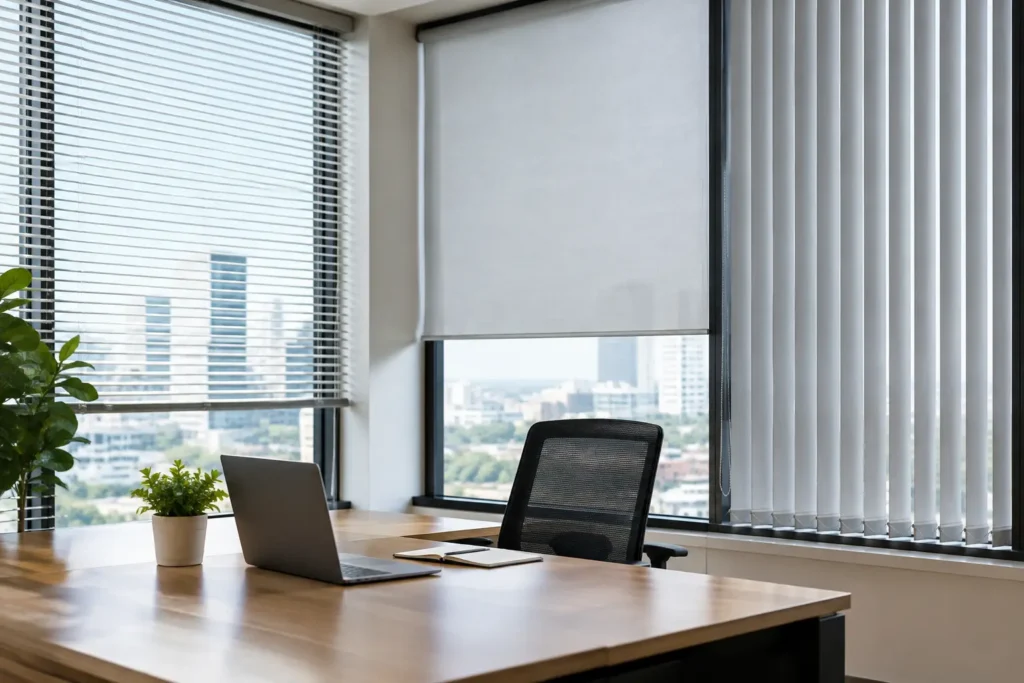
A conference room that catches afternoon sun can become unusable by 3 p.m. A street-facing office may need privacy without losing every bit of daylight. That is why the answer to what blinds work for offices is rarely one product for every window. The right choice depends on how each space is used, where the sun hits, who needs privacy, and how polished the finished office should feel.
For Los Angeles and Orange County businesses, heat and glare are often as significant as appearance. A custom window treatment should help employees work comfortably, support screen visibility, and give clients a professional first impression without creating a dark, closed-in environment.
What Blinds Work for Offices? Start With the Room
Before choosing a material or color, look at the job the window treatment needs to do. Reception areas, private offices, conference rooms, medical offices, and open workspaces often have very different needs, even within the same suite.
A reception area typically benefits from a clean, welcoming treatment that filters harsh light while maintaining an open view. Conference rooms need dependable glare control for presentations and video calls. Private offices may prioritize privacy and adjustable light. In open-plan workplaces, treatments should be easy to operate consistently across multiple windows so the office does not look uneven or cluttered.
The direction of the windows matters, too. West-facing glass is often the most challenging in Southern California because intense late-day sun can cause glare, heat buildup, and fading. East-facing windows may need softer morning light control, while street-level windows may require privacy during business hours. A professional in-office consultation makes it easier to assess these details in the actual space rather than choosing from a small sample under retail lighting.
The Best Office Blind and Shade Options
Roller shades for clean, modern light control
Roller shades are one of the most versatile choices for contemporary offices. Their simple profile works well in reception areas, conference rooms, creative studios, and professional offices where a streamlined look matters. They raise fully out of the way when an unobstructed view is preferred and lower easily when glare becomes a problem.
Solar roller shades are especially useful for offices with large windows. Their woven fabric filters sunlight and reduces glare while preserving a degree of outward visibility. Openness factors vary by fabric, so a more open weave provides a clearer view but less privacy and solar control. A tighter weave offers greater privacy and light reduction, but the outside view becomes more limited.
For conference rooms or spaces with projection screens, blackout roller shades may be the better choice. They provide stronger room darkening, although light can still enter around the sides unless the shade is paired with side channels or a carefully planned mounting approach.
Vertical blinds for wide windows and sliding doors
Vertical blinds remain a practical option for wide expanses of glass, sliding doors, and large office windows. The vanes rotate to direct light away from desks and computer monitors, then draw open to provide access or clear the view. They are often cost-effective for larger window areas and can coordinate well across a commercial space.
Their trade-off is aesthetic. Standard vertical blinds can feel more traditional than fabric shades or shutters, particularly in a newly renovated office. Choosing higher-quality materials, neutral colors, and a custom fit can make a noticeable difference in the finished look.
Horizontal blinds for flexible privacy and light adjustment
Horizontal blinds, including faux wood and aluminum styles, give office managers precise control over light. Tilting the slats can block direct sun while still allowing daylight to enter, making them useful for individual offices, street-facing windows, and rooms where privacy needs change throughout the day.
Faux wood blinds bring warmth and a more residential finish to professional settings without the maintenance concerns of natural wood. They can be a strong fit for law offices, counseling offices, real estate offices, and client-facing spaces where comfort and polish are part of the experience. Aluminum blinds are lighter and often a practical choice for utility areas or budget-conscious projects.
Keep cleaning in mind. Slatted blinds collect more dust than a smooth roller shade, so they require occasional wiping to maintain a crisp appearance. This is rarely a major concern in a small private office, but it can add maintenance time across dozens of windows.
Cellular shades for comfort and energy efficiency
Cellular shades, also called honeycomb shades, are designed with air pockets that help insulate the window. For offices that feel uncomfortably warm near glass or experience temperature swings, they can improve comfort while creating a soft, tailored appearance.
These shades are available in light-filtering and room-darkening fabrics. They are well suited to private offices, administrative areas, medical practices, and workplaces that want a quieter, less commercial look. Their main limitation is that they do not offer the same view-through capability as solar shades. When lowered, they prioritize filtered light and privacy over an exterior view.
Plantation shutters for a permanent, polished finish
Plantation shutters are a premium option for offices where design, durability, and long-term value matter. Their adjustable louvers offer excellent control over privacy and daylight, and their structured appearance can elevate executive offices, boutique firms, professional practices, and customer-facing suites.
Shutters are not the right solution for every office. They cost more than many blind and shade options, and their fixed frame changes the visual character of the window. But for an office that needs a refined, built-in look and dependable daily operation, custom shutters can be a worthwhile investment.
Consider Motorization for Hard-to-Reach or High-Use Windows
Motorized blinds and shades are no longer reserved for luxury homes. In offices, they can be a practical upgrade for tall windows, large conference rooms, and windows that must be adjusted frequently throughout the day.
With motorization, staff can raise or lower multiple treatments with a remote, wall control, or compatible smart controls. This helps keep a meeting space presentation-ready, reduces the need to reach over desks or furniture, and creates a more consistent look across the room. Motorization is particularly helpful when direct sunlight shifts across workstations during the day.
The decision comes down to use. For one easily reached window that is rarely adjusted, manual operation may be all that is needed. For a conference room with several large windows or a multi-office suite, motorization can add meaningful convenience and improve daily comfort.
Color, Material, and Opacity Matter More Than Most People Expect
Office window treatments should complement the flooring, wall color, furniture, and brand atmosphere, but appearance should not override performance. A very dark fabric can help with glare, yet it may make a small office feel closed in. A bright white treatment looks crisp, but the fabric’s opacity and backing determine how well it manages sun and privacy.
Neutral tones such as soft white, warm gray, beige, charcoal, and natural textures tend to work well in professional settings because they age gracefully through furniture changes and refreshes. Fabric shades can soften rooms with hard surfaces, while blinds and shutters bring architectural definition.
For windows facing busy streets or neighboring buildings, do not assume a light-filtering shade provides nighttime privacy. During the day, it may obscure the view inward effectively. At night, when interior lights are on, silhouettes can become visible from outside. A privacy liner, blackout shade, or adjustable blind may be a better fit for offices that stay open late.
Why Custom Measurement and Installation Are Worth It
Office windows are rarely as uniform as they appear. Frames may be out of square, ceiling heights may vary, and furniture placement can affect how a treatment should be mounted and operated. An off-the-shelf blind may technically fit the opening but still leave distracting gaps, interfere with handles, or look unfinished.
Custom sizing allows the treatment to fit the window and the room’s purpose. Professional installation also helps ensure brackets are secure, shades operate smoothly, and multiple treatments align properly. These details matter in a client-facing office, where uneven blinds can make an otherwise well-designed space feel neglected.
Blinds by Design brings samples and product options directly to the office, making it easier to compare colors, materials, and light-control levels in the conditions that matter most. With more than 23 years of experience, the team can help narrow the choices without turning the process into a lengthy research project.
A well-chosen office treatment should disappear into the workday until it is needed: filtering glare during a client presentation, protecting privacy for a sensitive conversation, or making a sunny room more comfortable. Schedule a free consultation to see which custom blind or shade solution makes the most sense for your windows, your team, and the way your office operates.