
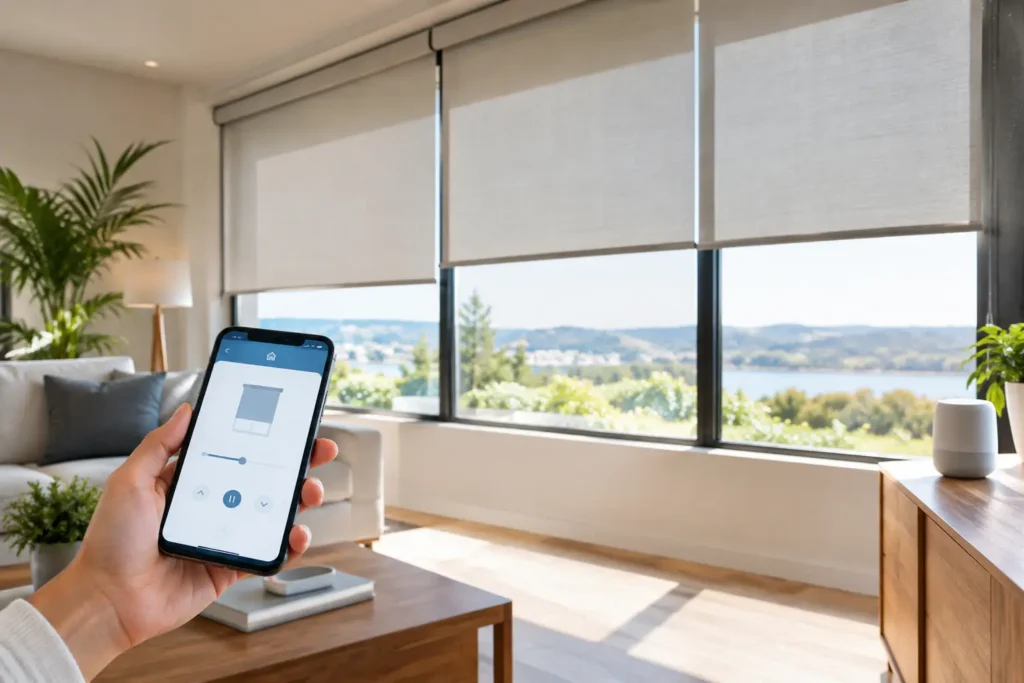
A west-facing Los Angeles room can be bright and comfortable at breakfast, then uncomfortably hot by midafternoon. For years, the answer was to walk over and adjust the blinds or close the shades before leaving home. The future of smart window coverings makes that daily decision more precise. Instead of treating window treatments as static decor, homeowners can use them as an active part of how a room manages sunlight, privacy, comfort, and routine.
Motorized shades and blinds are already familiar to many homeowners. What is changing is how naturally they can respond to the home, the time of day, and the people using the space. The best smart window coverings will not feel like a novelty. They will make a home more comfortable without adding another complicated task to the day.
The Future of Smart Window Coverings Is More Personal
The next generation of smart window treatments is less about pressing a button and more about setting preferences that fit real life. A bedroom shade might open gradually in the morning, while shades in a sunny family room lower during the strongest afternoon light. In an office, glare-control shades can be adjusted before a video call without interrupting work.
Scheduling remains one of the most useful features because it is simple and dependable. Homeowners can set treatments to open and close around their daily routine, whether that means early mornings, school drop-offs, evening privacy, or travel. Scenes take the idea a step further. One command can lower selected shades, dim lights, and prepare a media room for a movie.
Sensor-based control will also become more common. Light sensors can prompt treatments to react to intense sun, while temperature settings may support more comfortable rooms during hot weather. These features work best when they are used thoughtfully. A sensor should support how you live in the space, not constantly move a shade in ways that feel distracting or unnecessary.
Smart Window Coverings and Energy Comfort
For homeowners in Los Angeles and Orange County, sun control is often the strongest reason to consider automation. Large windows create a beautiful connection to the outdoors, but they can also bring heat gain, glare, and fading concerns. Smart shades can be programmed to lower when direct sunlight reaches a room, then raise later to bring back natural light.
That does not mean every home needs full automation on every window. The most effective approach depends on window direction, glass type, room use, and the treatment itself. A south- or west-facing living room may benefit from automated solar shades, while a rarely used guest room may only need a well-chosen manual shade. Custom guidance helps direct the investment where it will have the greatest day-to-day value.
The fabric or material matters as much as the motor. Solar shades can reduce glare while preserving an outside view during the day. Cellular shades can offer added insulation. Plantation shutters provide lasting light control and a tailored architectural look, while layered treatments can soften a room and improve flexibility. Smart operation enhances a window covering’s performance, but it cannot replace the need to select the right product for the window.
Privacy Can Be Scheduled, Not Remembered
Privacy is another area where automation earns its place. Street-facing rooms, homes close to neighboring properties, and ground-floor offices often need different levels of privacy throughout the day. With scheduled shades, homeowners do not have to remember to close every treatment at sunset.
This is particularly helpful when the house is empty. Timed movement can make a home look occupied while allowing natural light into the space at appropriate times. It also offers peace of mind for people who travel often or arrive home after dark. The goal is not to overcomplicate privacy. It is to make a simple protective habit more consistent.
Convenience Has to Be Reliable
A smart window treatment is only useful when it works easily for everyone in the household. Voice control and app control can be convenient, but wall-mounted remotes are still valuable. They provide a familiar option for guests, children, and anyone who would rather not reach for a phone to adjust a shade.
Compatibility deserves careful consideration before purchasing. Some systems work with popular home platforms, while others operate best through their own remote or app. If a homeowner wants window treatments to be part of a larger lighting, security, or climate routine, that should be discussed during product selection. It is much easier to plan for the right system before installation than to force a connection later.
Power is another practical decision. Battery-powered motors can be an excellent choice for many windows because they avoid visible wiring and make motorization possible in spaces where electrical access is limited. Rechargeable battery options reduce replacement needs. Hardwired systems may be preferable for larger projects, frequent-use treatments, or new construction and remodeling where wiring can be planned in advance.
Neither option is automatically better. A professional recommendation should account for the number of windows, access to power, treatment size, use frequency, and the finished look you want in the room.
Quiet Operation and Correct Fit Matter
As technology improves, homeowners expect smart treatments to be quieter, smoother, and less noticeable. That expectation makes proper measuring and installation especially important. A motorized shade that is poorly fitted, mounted incorrectly, or paired with the wrong fabric can undermine the whole experience.
Custom window coverings are designed around the actual opening rather than an approximate standard size. That matters for privacy, light gaps, insulation, and appearance. It also matters when integrating motors, valances, fascia, or side channels. The details may be less visible once the project is complete, but they are what help the treatment operate well for years.
For this reason, the future of smart window coverings is not simply an online product choice. It is a design and installation decision. Seeing materials, colors, opacity levels, and operating options in the actual room gives homeowners a clearer picture of the final result. A mobile showroom also makes it easier to compare choices against flooring, wall color, furniture, and changing natural light.
Where Smart Treatments Make the Most Sense
Automation is especially useful in hard-to-reach windows, such as treatments above stairwells, in tall entryways, or behind large furniture. It is also a strong fit for rooms with multiple windows that need to move together. A bank of shades can be controlled as one group, keeping the room balanced and reducing the small frustrations of adjusting each window individually.
Bedrooms, media rooms, home offices, and sun-exposed living areas are other natural candidates. In a bedroom, automated blackout shades can support a more restful morning routine. In a home office, solar shades can reduce screen glare while maintaining daylight. In a living room, automated treatments can protect furnishings during peak sun and still preserve the view when conditions allow.
Office settings benefit as well. Professional window coverings can improve visual comfort for employees and visitors, reduce glare on screens, and maintain privacy in conference rooms. For property decision-makers, centralized control can also make larger spaces easier to manage.
Choosing Technology That Will Age Well
The smartest choice is not always the system with the longest feature list. Look for dependable operation, clear controls, an appropriate warranty, and a treatment style you will still enjoy years from now. Technology changes faster than interior design, so it helps to begin with a quality custom shade, blind, or shutter and add automation that genuinely improves its use.
A free in-home consultation with Blinds by Design can clarify which rooms should be motorized, which power option fits the project, and how each treatment can support your privacy, light-control, and design goals. With careful planning and professional installation, smart window coverings can become one of the easiest parts of a well-functioning home: quiet, tailored, and ready when the sun changes.