
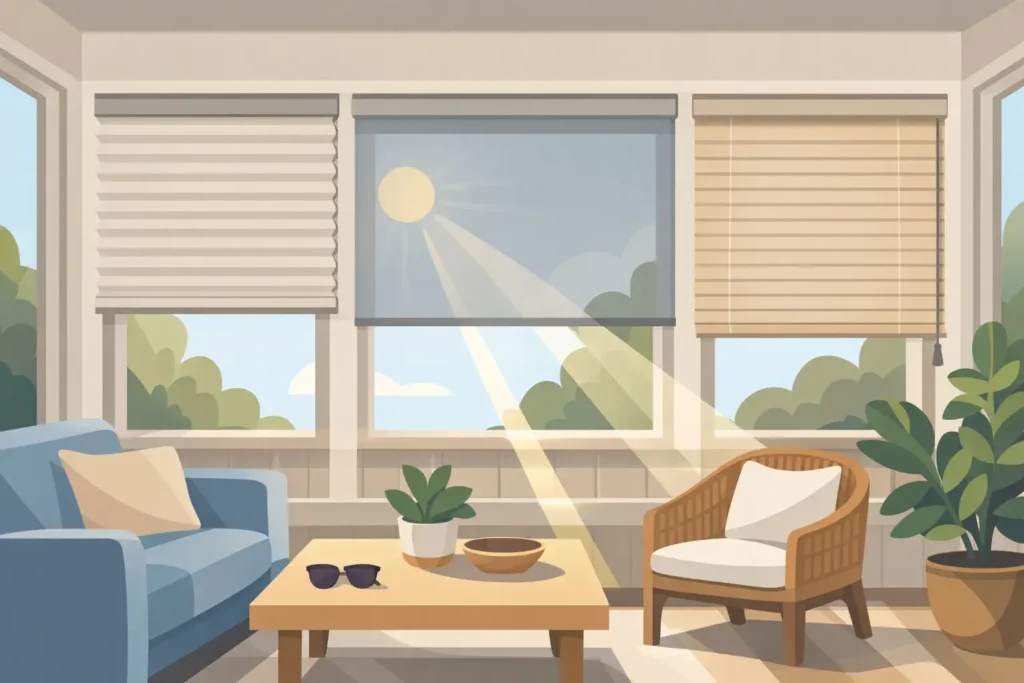
A sunroom can be the brightest, most inviting room in the house – until afternoon glare makes the seating area unusable or solar heat turns it into a room no one wants to enter. The best shades for sunrooms solve both problems without hiding the view or making the space feel closed in. For Los Angeles and Orange County homes, the right choice often comes down to the direction of the windows, the type of glass, and how you use the room from morning through evening.
What a Sunroom Shade Needs to Do
Sunrooms ask more of window coverings than most rooms. A shade may need to soften direct sun, reduce heat, protect flooring and furnishings from fading, provide daytime privacy, and still preserve the open feeling that made the room appealing in the first place.
That is why a single “best” product does not fit every sunroom. A west-facing room in Downey may need aggressive late-day heat control. A garden-facing breakfast room in Whittier may benefit more from gentle glare reduction and a view-friendly fabric. In a room used for reading, watching television, or working from home, light control becomes more precise.
Custom sizing matters here. Sunroom windows are frequently large, tall, angled, grouped together, or paired with doors. A professionally measured shade helps avoid light gaps, uneven operation, and the unfinished look that can come from trying to adapt a standard-size product to a nonstandard opening.
The Best Shades for Sunrooms by Priority
Solar shades for glare, views, and daytime comfort
Solar shades are often an excellent starting point for sunrooms with expansive glass. Their woven material filters harsh sunlight and UV exposure while allowing a view to remain visible. They are especially useful when the goal is to reduce screen glare, protect finishes, and make bright afternoon light more comfortable without darkening the room completely.
The key decision is openness factor, which refers to how tightly the fabric is woven. Lower openness provides more shade and privacy but reduces visibility outward. Higher openness keeps the view clearer but lets in more light. In a sunroom facing a busy street or neighboring property, a more private fabric may be worth the trade-off. Keep in mind that solar shades generally provide stronger daytime privacy than nighttime privacy. Once interior lights are on, silhouettes may be visible from outside.
Cellular shades for insulation and heat control
Cellular shades, also called honeycomb shades, are a strong option when temperature control is the primary concern. Their structured pockets trap air near the window, helping slow heat transfer. That can make a noticeable difference in a room with older glass, long hours of direct sun, or windows that feel hot to the touch.
They also provide a softer, more insulated appearance than solar fabrics. Light-filtering cellular shades maintain a warm glow, while blackout and room-darkening options offer greater control for media rooms or spaces used for afternoon rest. The trade-off is that they do not preserve an open exterior view as well as solar shades. For homeowners who value a clear view of the yard, this is usually the deciding factor.
Roller shades for clean, tailored coverage
Roller shades offer a simple, tailored look that suits both contemporary and traditional sunrooms. They are available in solar, light-filtering, and blackout fabrics, so the same streamlined shade style can be adapted to the room’s practical needs.
For sunrooms with many windows, roller shades can create visual consistency without adding bulk. A light-filtering fabric works well for general daytime use, while a more opaque material is better for rooms that receive intense direct exposure. Carefully chosen colors also matter. White or light neutral shades tend to reflect more sunlight and feel airy, while darker fabrics may improve outward visibility during the day but can absorb more heat.
Roman shades for a softer design statement
When a sunroom connects directly to a living room, dining room, or primary bedroom, Roman shades can bring a more decorative, finished look. They add texture and softness that hard window coverings do not always provide, making them a natural fit for homeowners focused on a coordinated interior design plan.
Fabric selection is essential. A lined Roman shade can offer stronger light control and privacy, but heavier materials may not be ideal for every humid or high-sun environment. Light-filtering performance fabrics are often a practical middle ground. They soften sunlight while standing up better to regular use than delicate decorative fabrics.
Woven wood shades for warmth and texture
Woven wood shades bring natural character to sunrooms with coastal, organic, transitional, or relaxed California-inspired interiors. Their varied textures make the windows feel intentional even when the shades are raised. They filter light beautifully, but because the weave is naturally irregular, they may allow small amounts of light through.
Adding a privacy or blackout liner improves function, especially for a sunroom used after dark. That liner does change the open, airy effect of the woven material, so it is best to compare samples in the actual room before deciding. Natural materials also deserve thoughtful placement away from excessive moisture or areas where direct exposure is exceptionally intense.
Consider Window Direction Before Choosing a Fabric
The orientation of your sunroom can influence the best shade more than the room’s decor. East-facing windows tend to receive strong morning sun. Light-filtering roller, solar, or cellular shades often provide enough relief while keeping the room pleasant later in the day.
South-facing sunrooms can receive prolonged exposure, particularly in warmer months. Solar shades with a tighter weave, cellular shades, or layered treatments can help manage that extended brightness. West-facing windows are often the most challenging in Southern California because late-day sun can produce intense glare and heat. Greater coverage, more opacity, and motorization are often worthwhile in those rooms.
North-facing sunrooms typically receive softer, indirect light. Here, decorative priorities may carry more weight because heavy heat control may not be necessary. Roman or woven wood shades can be especially appealing when the room needs visual warmth more than solar management.
Motorization Makes Large Sunrooms Easier to Use
Sunrooms often have windows that are difficult to reach, especially when glass extends high toward the ceiling. Motorized shades make those openings practical rather than decorative-only. With a remote, wall control, or smart-home programming, shades can be lowered before direct sun reaches the room and raised when you want more natural light.
Motorization is also helpful for a wall of matching windows. Instead of adjusting several shades one by one, you can move them together for a balanced appearance. For homes with children or pets, cordless motorized operation also removes hanging cords from the space.
Automated schedules are useful, but they should be tailored to real conditions. The sun’s position changes through the year, and nearby trees, patio covers, and neighboring buildings can alter the light pattern. A professional consultation helps identify which windows need independent controls and which can operate as a group.
Do Not Overlook Privacy After Sunset
Many homeowners choose shades based on daytime performance and only later realize that privacy changes after dark. If the sunroom faces neighbors, a street, or a shared outdoor area, think about how it looks when indoor lights are on.
Solar shades and light-filtering materials may be perfect for daytime comfort but may not provide the nighttime privacy you expect. A dual-shade system can be an effective answer: a solar shade for daytime glare and view preservation, plus a room-darkening or blackout shade when privacy is needed. It costs more than a single treatment, but it gives the room flexibility that one fabric cannot always deliver.
Get the Fit and Installation Right
Even a high-quality shade can underperform if it is measured or installed incorrectly. Outside mounts can cover more glass and reduce side light gaps, while inside mounts offer a cleaner built-in appearance when the window depth allows it. Door handles, window cranks, trim details, and shallow frames all affect the best mounting approach.
For a sunroom, seeing fabric samples against the actual glass is particularly valuable. The same color can look very different in direct afternoon light than it does in a showroom. Blinds by Design brings product options to your home, allowing you to compare materials, colors, opacity levels, and operating systems where they will actually be used.
A well-designed sunroom should feel bright on your terms, not bright by default. Schedule a free in-home consultation to find a custom shade solution that protects the room, supports your style, and makes every seat comfortable at every hour of the day.