
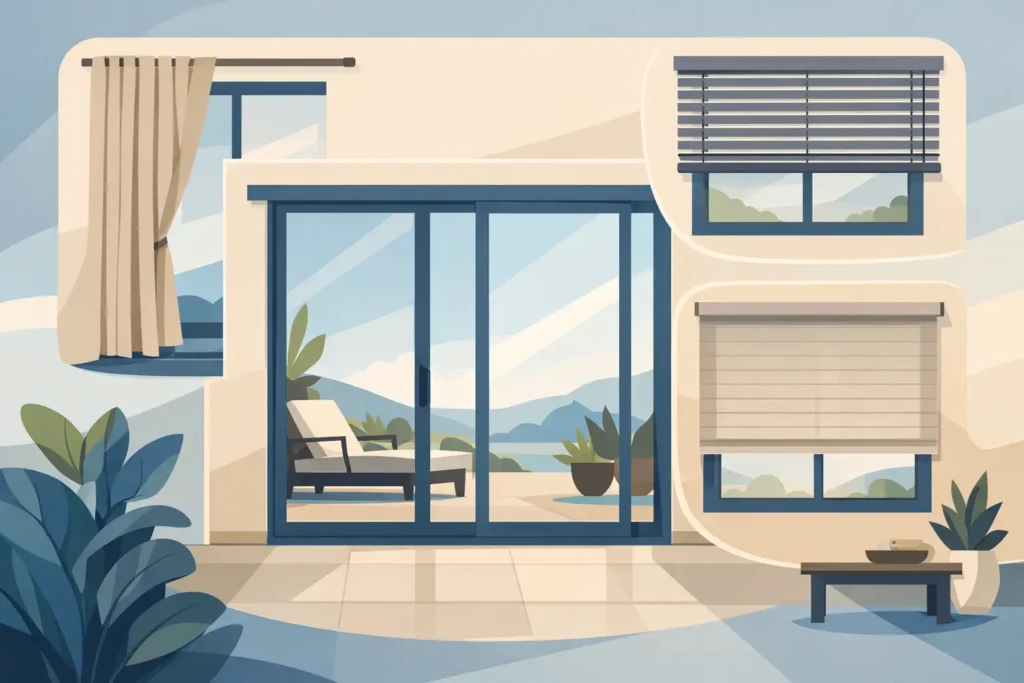
Sliding glass doors can make a room feel bigger, brighter, and more connected to the outdoors. They can also be one of the trickiest openings to cover well. The best window coverings for sliding glass doors need to do more than look good. They have to handle daily traffic, control light, protect privacy, and move easily without fighting the door every time you walk outside.
That is where custom selection matters. A sliding door is wider than a standard window, used more often, and usually placed in a highly visible part of the home. In Los Angeles area homes, it may also face strong afternoon sun, backyard entertaining spaces, or close neighboring properties. The right treatment should fit the way you live, not just the size of the opening.
What matters most when choosing window coverings for sliding glass doors
Most homeowners start with appearance, which makes sense. A large glass door has a big visual impact on the room. But function should come first, because a beautiful treatment that is hard to operate will quickly become frustrating.
Ease of movement is usually the first thing to evaluate. Since sliding doors open side to side, coverings that stack neatly and glide in the same direction tend to feel the most natural. Privacy is another major factor, especially in homes with patios, side yards, or nearby neighbors. Then there is light control. Some rooms need soft filtered light during the day, while others need stronger sun protection to reduce glare and heat.
Durability matters too. These treatments get touched more often than many window coverings, especially in family rooms, kitchens, and primary bedrooms. Materials and hardware should hold up to regular use. If the door is the main path to the backyard or balcony, smooth operation is not optional.
Vertical blinds still make sense in the right room
Vertical blinds have been used on sliding doors for years because they work. They travel in the same direction as the door, they cover wide spans well, and they are available in materials that range from simple and budget-friendly to more polished and modern.
They are a practical option for households that want straightforward light control and easy operation. You can tilt the vanes for filtered light or pull them aside for a clear opening. They also work well when cost is a significant factor.
The trade-off is style. Standard vertical blinds can look dated if the material, color, or headrail is not chosen carefully. In a more updated interior, wider vanes, textured finishes, or fabric-look options often create a cleaner result. Custom sizing and professional installation also make a noticeable difference in how finished they look.
Panel track shades offer a clean, modern look
For homeowners who want a more contemporary appearance, panel track shades are often one of the strongest choices. These wide fabric panels slide smoothly on a track and stack neatly when open, which suits the shape and movement of sliding glass doors.
Panel tracks tend to feel more architectural than traditional vertical blinds. They are especially appealing in updated living rooms, open floor plans, and homes with a minimal or modern design direction. Depending on the fabric, they can soften the room while still keeping the lines clean.
They do have some limitations. Because the panels are broad, the stack-back can take up more visual space when fully open. Fabric selection matters as well. A light-filtering fabric may look beautiful but may not provide enough privacy at night in every setting. This is one of those cases where seeing the material in the room before ordering can prevent disappointment later.
Sliding panels and shades for softer light control
Some homeowners want the door treatment to blend more closely with nearby windows. If the room already has shades, there are custom solutions that can coordinate the door without making it feel like a separate design element.
Solar shades can be an excellent fit when glare reduction is the priority. In sunny Southern California homes, they help cut brightness and UV exposure while preserving an outside view during the day. They are especially useful in spaces with televisions, home offices, or west-facing doors. The trade-off is nighttime privacy. If privacy is essential after dark, a different opacity or layered approach may be a better fit.
Roller shades designed for large openings can also work well, though the width and operation need careful planning. In some cases, multiple shade panels are more practical than trying to cover the full span with one oversized unit. This depends on the door size, mounting area, and how often the door is used.
Plantation shutters can work, but only in the right layout
Shutters are one of the most attractive and durable custom treatments available, and many homeowners ask about using them on sliding doors. They can absolutely work, but not every shutter style is appropriate for this type of opening.
Bypass shutters are often the best shutter solution for sliding doors because the panels slide on a track rather than swinging into the room. That makes them more practical in tighter spaces where furniture placement matters. They also create a tailored, high-end look that works well in traditional, transitional, and many California casual interiors.
The main consideration is space and budget. Shutters are a more substantial investment than many other options, and their framed structure creates a more permanent visual statement. They are ideal when durability, resale appeal, and a built-in look are top priorities. If you want something softer or less structured, shades may feel like a better match.
Drapery can add softness, but it should be planned carefully
Drapery is sometimes overlooked for sliding doors, but it can be a strong choice when the room needs warmth, texture, or a more finished decorative layer. In bedrooms and formal living spaces, drapery can make a large glass opening feel more intentional and balanced.
Function is the key. Panels should be wide enough, mounted properly, and easy to slide. The fabric weight matters too. Heavier fabrics offer better privacy and light blocking, while lighter fabrics feel airy but may be less effective in bright or exposed settings.
For some homes, drapery works best as part of a layered design rather than the only covering. Pairing drapery with another treatment can give you both softness and performance. It depends on whether your priority is blackout, day-to-day convenience, or a more decorative finish.
Motorized window coverings for sliding glass doors
Motorization is no longer just a luxury upgrade. For large openings, it can be one of the most practical decisions you make. Wide treatments are heavier to move, and daily use adds up over time. Motorized shades or panel systems can improve convenience, reduce wear from constant handling, and make operation more consistent.
They are particularly useful for hard-to-reach doors, multi-door walls, and homes where comfort and ease are top priorities. They also appeal to homeowners already investing in smart home features. That said, motorization is not necessary for every project. If the door is used constantly for backyard access, some clients still prefer a manually operated system that is simple and fast.
Why custom fit matters more on sliding doors
Off-the-shelf options often fall short on sliding glass doors because these openings vary more than people expect. Small measuring errors can affect how the treatment stacks, clears the handle, or covers the full glass area. A product that technically fits can still feel awkward in daily use.
Custom measuring helps account for door frame depth, nearby walls, floor clearance, and how the panels should open based on traffic flow. It also helps with design details, like matching adjacent windows or choosing materials that complement the room. These are the kinds of decisions that are hard to get right from a package label alone.
That is why many homeowners prefer working with a full-service company like Blinds by Design. Seeing samples in your own home, getting exact measurements, and having the installation handled professionally takes much of the guesswork out of the process.
How to choose the best option for your space
The best choice usually comes down to how the door is used. If you want affordability and easy light control, vertical blinds may still be the right answer. If your goal is a more updated look, panel track shades often make more sense. If you want long-term value and a built-in appearance, bypass shutters are worth considering. If softness and design impact matter most, drapery may be the better fit.
There is also the question of what happens around the door. A nearby dining area, a family room with constant outdoor access, or a primary bedroom with strong morning sun all call for different solutions. What works beautifully in one room may feel impractical in another.
A good starting point is to think about your top two priorities rather than trying to solve everything at once. If privacy and easy operation matter most, narrow your options there first. If style and sun control are your bigger concerns, that points the selection in a different direction.
The right sliding door treatment should feel effortless after it is installed. It should move easily, look like it belongs in the room, and make everyday living more comfortable without asking for extra attention.