
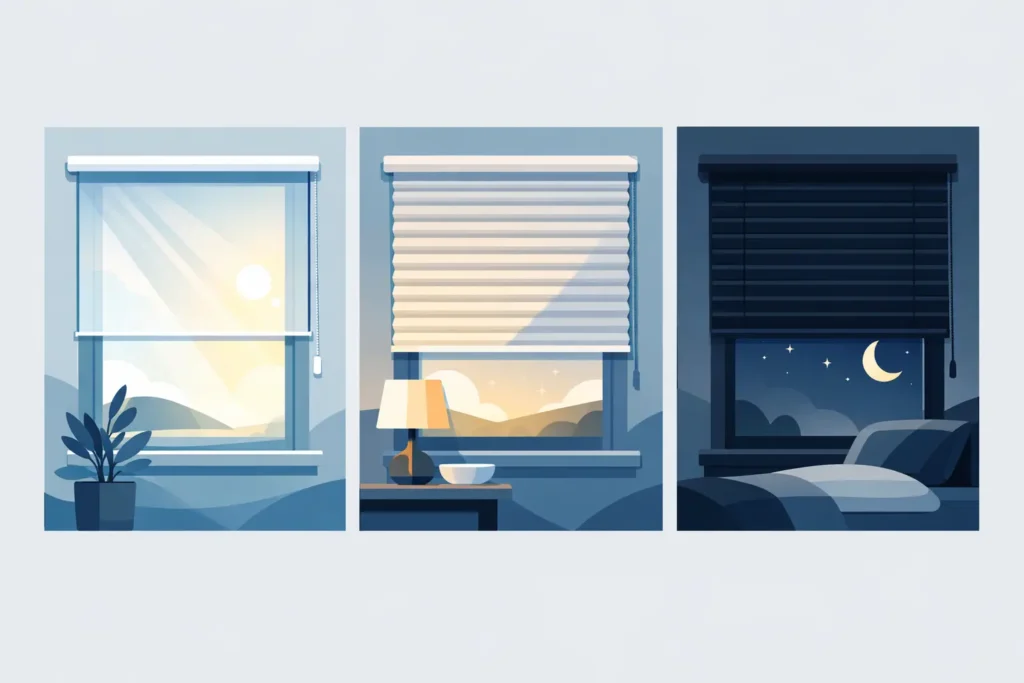
Morning sun in Los Angeles can be a gift or a problem, depending on which room it hits. In one space, you want a soft glow that makes the room feel open and warm. In another, you need to cut glare on a TV, protect flooring from harsh UV exposure, or help a bedroom stay dark enough for real sleep. That is why choosing the right window shades for light control matters more than most people expect. It is not just about blocking sun. It is about shaping how a room feels, functions, and looks throughout the day.
Why window shades for light control make such a difference
Light changes everything inside a home or office. It affects comfort, privacy, energy efficiency, and even how colors appear on your walls and furniture. A room with too much direct sun can feel hot, washed out, and difficult to use. A room with too little natural light can feel flat and closed in.
The right shade helps you manage that balance. Instead of choosing between fully open windows and complete darkness, you can fine-tune the amount of light entering the room. That flexibility is especially valuable in Southern California, where bright sun is part of everyday life.
Not every room needs the same solution, though. A west-facing living room, a nursery, a bathroom, and a conference room all have different priorities. Some need glare reduction. Some need privacy during the day. Others need blackout performance. Good light control starts with understanding the room, not just picking a style you like.
The main types of shades and how they control light
Shades do not all perform the same way, even when they look similar at first glance. Fabric type, weave, opacity, and construction all affect how much light gets through and how evenly it is filtered.
Roller shades
Roller shades are one of the most versatile options for light control. They come in a wide range of fabrics, from sheer and solar materials that reduce glare while preserving some view, to room-darkening and blackout fabrics that significantly limit incoming light.
They work well in modern, transitional, and even more traditional spaces because the profile is clean and simple. If a homeowner wants a streamlined look without heavy window treatments, roller shades are often a strong fit. The trade-off is that the final result depends heavily on fabric selection. A roller shade can be excellent for soft filtering or excellent for blackout, but not usually both unless layered.
Cellular shades
Cellular shades are often chosen for their energy efficiency, but they also provide excellent light control. Available in light-filtering and blackout options, they soften natural light well and can help reduce heat transfer at the window.
This makes them especially useful in bedrooms, upstairs rooms, or spaces that get intense afternoon sun. They are practical, quiet-looking, and comfortable in feel. The main consideration is style preference. Some clients love their clean, tailored appearance, while others prefer the more structured look of woven or layered shades.
Roman shades
Roman shades offer a softer, more decorative look while still giving strong control over light. Depending on the liner and fabric, they can gently diffuse daylight or provide substantial room darkening.
For homeowners focused on design, Roman shades are often appealing because they bring texture and warmth into the room. They are a strong choice for dining rooms, bedrooms, and formal living areas. The trade-off is that they are more fabric-forward, so the visual presence is stronger than with minimal roller shades.
Sheer and layered shades
If your goal is adjustable daylight rather than full blackout, layered shades can be a smart solution. These shades alternate bands of sheer and solid fabric, allowing you to shift between filtered light and more privacy without fully raising the shade.
They work well in rooms where you want flexibility throughout the day. A home office, for example, may need softer light during work hours and more privacy in the evening. These shades can create a polished look, but they are best for clients who want controlled filtering rather than total darkness.
How to choose the right level of light control
The best choice usually comes down to how you use the room. That sounds simple, but it is the step many people skip.
In a bedroom, blackout or room-darkening shades are often worth considering, especially for anyone sensitive to early morning light. In a media room or TV area, glare control is usually the top concern, so a shade that cuts brightness without making the room feel closed off may be the better fit. In kitchens and family rooms, many homeowners want natural light to remain part of the space, so light-filtering materials tend to work better.
Privacy also plays a role. Some fabrics look great in daylight but become more transparent at night when interior lights are on. If the room faces neighbors or a street, that matters. Bathrooms and street-facing bedrooms typically need a higher privacy level than a second-story den.
Window orientation matters too. South- and west-facing windows often receive stronger direct sun and more heat, so the shades need to do more work. East-facing windows can be challenging in bedrooms because of bright early sun. The same product can perform very differently depending on placement.
Why custom fit matters for better light control
Even a high-quality shade can underperform if it is not properly measured and installed. This is especially true when light control is the priority.
Small gaps at the sides of a shade may not seem like a big issue until morning light starts pouring through them. For blackout applications, precise measuring becomes even more important. Mount type also affects performance. An inside mount creates a clean built-in look, but it may allow more light around the edges. An outside mount can improve coverage and block more light, but it changes the visual profile of the window.
That is one reason many homeowners prefer a guided process rather than trying to figure out dimensions, fabric opacity, and mounting details on their own. When the shade is selected in the actual room, with attention to sunlight, wall color, and window size, the result is simply more accurate.
Style and function should work together
Light control should solve a practical problem, but it should also support the overall design of the room. The right shade should look intentional, not purely utilitarian.
A bright, airy living room may benefit from a light-filtering fabric that preserves openness while reducing harsh glare. A bedroom may need a richer fabric or blackout liner that gives the space a more restful feel. In an office, a clean-lined shade in a neutral tone can create a polished look while improving screen visibility during the day.
Color and texture matter as much as opacity. A white or soft neutral fabric can keep a room feeling open, even when the shade is lowered. Textured materials add depth and can make a space feel more finished. In many homes, the best outcome comes from balancing performance with a style that complements flooring, wall color, and furniture rather than competing with them.
Motorization adds convenience to window shades for light control
Motorized shades are not just a luxury feature. For many homes and offices, they are one of the easiest ways to improve daily comfort.
If a room has several windows, tall windows, or hard-to-reach placements, motorization makes light adjustment simple. It also helps with consistency. Instead of leaving shades half-open because adjusting them is inconvenient, you can control light levels more precisely throughout the day.
This is especially helpful in spaces with strong afternoon sun. Scheduling shades to lower at certain times can reduce glare and heat buildup before the room becomes uncomfortable. For clients who want convenience without sacrificing design, motorization is often a very practical upgrade.
What homeowners often get wrong
One common mistake is assuming darker fabric always means better light control. In reality, fabric construction and opacity matter more than color alone. Another is choosing based only on appearance in a showroom or online photo. Light behaves differently in every room, and a fabric that looks ideal in one setting may feel too dim or too transparent in another.
People also tend to underestimate installation. A shade that is slightly off in width, alignment, or mount position can affect both appearance and function. When the goal is privacy, glare reduction, or blackout performance, those details matter.
That is why an in-home consultation can be so valuable. Seeing options in your own space helps narrow choices quickly and avoids the frustration of selecting a product that looks right in theory but does not perform the way you need.
For homeowners and business clients who want a custom solution without a pieced-together process, Blinds by Design helps make those decisions easier by bringing product guidance, measurement, and installation together.
The best shade is the one that matches the way you live in the room. When light control is planned with the space, sun exposure, privacy needs, and design goals in mind, the result feels more comfortable every single day.