
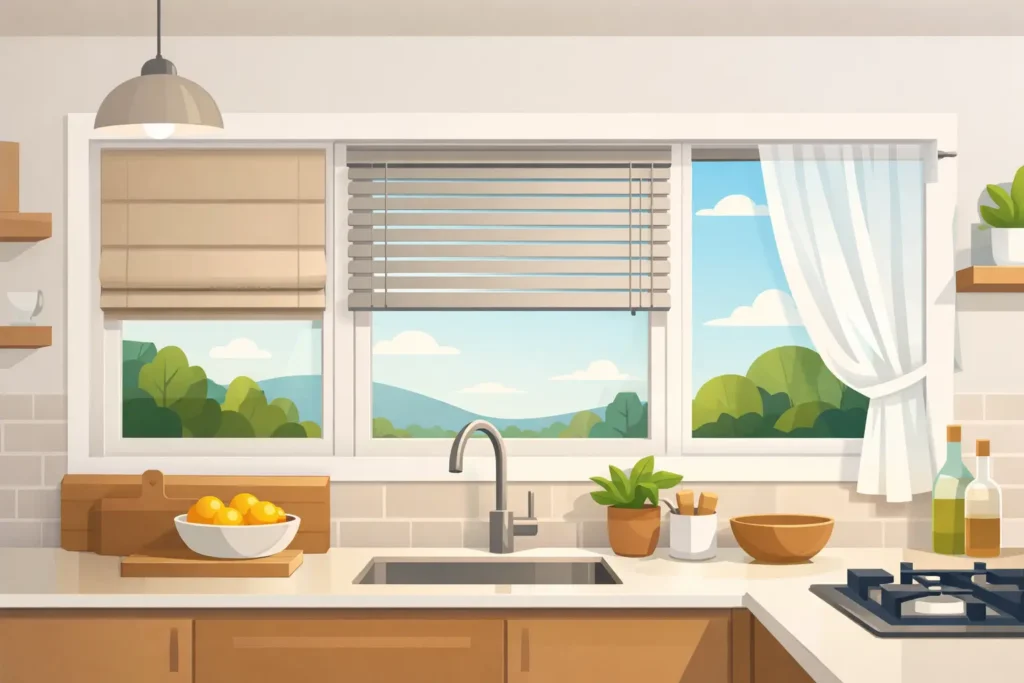
A kitchen window has to work harder than almost any other window in the house. It deals with steam, heat, grease, direct sun, and the daily rhythm of cooking, cleaning, and family life. That is why choosing the best window treatments kitchens need is less about chasing a trend and more about finding the right balance of durability, privacy, light control, and style.
In Southern California homes, that balance can look different from one kitchen to the next. A bright open kitchen in Lakewood may need glare control without losing natural light. A street-facing kitchen in Whittier may need more privacy. A remodel in Downey may call for a cleaner, more custom finish that ties together cabinets, countertops, and flooring. The best choice depends on how your kitchen is used and where the window sits in the room.
What the best window treatments for kitchens need to do
Kitchen window treatments are not just decorative. They have a job to do every day. They should stand up to moisture and temperature changes, clean easily, and fit the window well enough to look intentional instead of like an afterthought.
Light control is usually the first concern. Many homeowners want sunlight in the kitchen, but not harsh glare on counters or dining areas. Privacy matters too, especially if the kitchen faces a neighbor, sidewalk, or busy street. Then there is practicality. If the window is above the sink, you want something easy to operate and easy to wipe down. If it is near the stove, material choice becomes even more important.
This is where custom sizing makes a noticeable difference. A treatment that fits properly looks sharper, functions better, and avoids the gaps, dragging fabric, or awkward stacking that often happen with off-the-shelf options.
Best window treatments kitchens use most often
Faux wood blinds
Faux wood blinds are one of the most reliable choices for kitchens because they offer a clean look and practical performance. They handle humidity better than real wood, provide excellent light control, and are simple to maintain with regular dusting and occasional wiping.
They also suit a wide range of kitchen styles, from traditional to transitional. White faux wood blinds remain especially popular because they work with almost any cabinet color and keep the room looking bright. The trade-off is that blinds have more slats to clean than some other options, so they are best for homeowners who want adjustability and do not mind a little routine upkeep.
Roller shades
If you prefer a simpler, more streamlined look, roller shades are a strong option. They sit neatly at the top of the window when raised and can provide anything from filtered light to room-darkening coverage depending on the fabric.
For kitchens, the best roller shades are typically made from easy-care materials that resist moisture and wipe clean without much effort. They work especially well in modern kitchens or spaces where you want the window treatment to stay visually quiet. The limitation is that roller shades do not offer the same fine-tuned light control as blinds with tilting slats. You are usually choosing between open and closed, or partially lowered.
Solar shades
Solar shades are ideal for kitchens that get strong afternoon sun. They reduce glare and help protect finishes from UV exposure while still allowing you to keep a view outside. In a Los Angeles area kitchen with large windows, this can make the room feel more comfortable without making it feel closed off.
The amount of privacy depends on the openness of the fabric and the time of day. During daylight hours, they often perform very well. At night, with interior lights on, they may offer less privacy than some homeowners expect. That makes them a better fit for kitchens where sun control is the top priority.
Shutters
Shutters are often considered one of the best long-term window treatments for kitchens because they are durable, timeless, and easy to clean. Composite or other moisture-resistant shutter materials are especially well suited for kitchen conditions. They provide excellent light control, strong privacy, and a custom built-in appearance that adds value to the room.
They are a particularly smart choice if you want a finished, architectural look rather than a soft treatment. The main trade-off is budget. Shutters are more of an investment upfront, but many homeowners choose them because of their longevity and polished appearance.
Roman shades
Roman shades can work beautifully in a kitchen when the goal is softness and style, but material selection matters. In the right fabric, they can warm up a kitchen with hard surfaces and add color, texture, or pattern without overwhelming the space.
That said, they are not the first recommendation for every kitchen. If the window is directly over a sink or near heavy splatter zones, a fabric shade may require more maintenance than a blind or shutter. Roman shades make the most sense in lower-mess kitchen areas, breakfast nooks, or kitchens where design takes priority and the window is not exposed to constant moisture.
How to choose the best window treatments for kitchens by location
The placement of the window often decides the best product faster than style alone.
A window above the sink needs easy operation and low maintenance. Faux wood blinds, roller shades, and shutters are often the strongest choices here because they handle moisture better and are easier to keep clean. If reaching the window is awkward, motorized shades can make everyday use much easier.
A kitchen window near the stove needs extra caution. Fabric treatments are usually less practical in that area because they can absorb odors and require more cleaning. Hard window coverings with simple surfaces are often the safer and more functional choice.
A breakfast area or dining corner gives you more flexibility. This is where Roman shades or softer design-forward options may make sense, since the treatment is less exposed to steam and splatter. In these spaces, homeowners often care just as much about atmosphere as they do about function.
Large kitchen windows or sliding glass doors connected to the kitchen usually benefit from coordinated treatments that manage glare while keeping the room open and bright. Depending on the layout, solar shades, roller shades, or shutters may be the most effective fit.
Style matters, but so does maintenance
One of the most common mistakes in kitchen design is choosing a window treatment based only on appearance. A product may look perfect in a photo, but if it is hard to clean or does not hold up to moisture, it can quickly become frustrating.
That does not mean style should come second. It means style should be matched with the way the room functions. If your kitchen is used heavily every day, low-maintenance materials will usually serve you better over time. If your kitchen is part of a larger remodel, coordinating the treatment with nearby living spaces can create a more custom, finished result.
Color also plays a role. White and soft neutrals remain the most versatile choices for kitchens because they reflect light and pair easily with changing decor. Wood tones can add warmth, while darker shades can create contrast in a bright room. The right choice depends on your cabinets, wall color, countertop materials, and how much visual weight you want at the window.
Why custom window treatments make more sense in kitchens
Kitchen windows are often not standard. They may sit close to cabinets, have limited trim space, or require careful measuring to avoid interference with faucets, handles, or nearby doors. That is one reason custom window treatments tend to perform better in kitchens than ready-made options.
Professional measuring helps ensure the treatment fits the exact opening and operates correctly in the available space. Professional installation matters too, especially for shutters, motorized shades, or windows in difficult locations. A clean install not only looks better but also helps the treatment last longer.
For homeowners who want guidance instead of guesswork, working with an experienced local specialist can simplify the process. Blinds by Design helps clients compare styles, materials, and functional options in the home, where lighting, finishes, and layout can be evaluated properly before any decision is made.
The best choice is the one that fits your kitchen
There is no single answer for every home. The best window treatments kitchens need are the ones that match the room’s exposure, layout, design goals, and maintenance needs. For one homeowner, that may be moisture-resistant shutters with a custom painted finish. For another, it may be a simple roller shade that softens bright afternoon sun without taking attention away from a new remodel.
The right treatment should make the kitchen easier to live in. It should give you control over light, the privacy you need, and a finished look that feels right with the rest of your home. When those details are handled well, the window stops feeling like a problem to solve and starts feeling like part of the design.