
Roller Shades vs. Cellular Shades: Which One Belongs on Your Windows?
Somewhere in the middle of every shade consultation, the same question comes up. A client narrows things down from the whole universe of window treatments to “okay, I want shades” — and then discovers that “shades” is really two very different products wearing the same name. Roller shades and cellular shades sit side by side in every catalog, cost roughly similar money, and solve overlapping problems. So which one do you actually want?
We’ve hung both in just about every kind of home Los Angeles and Orange County have to offer, from beach condos to hillside ranches, and there’s a clear pattern to who ends up happier with which. Here’s the honest comparison, category by category.
The Thirty-Second Difference
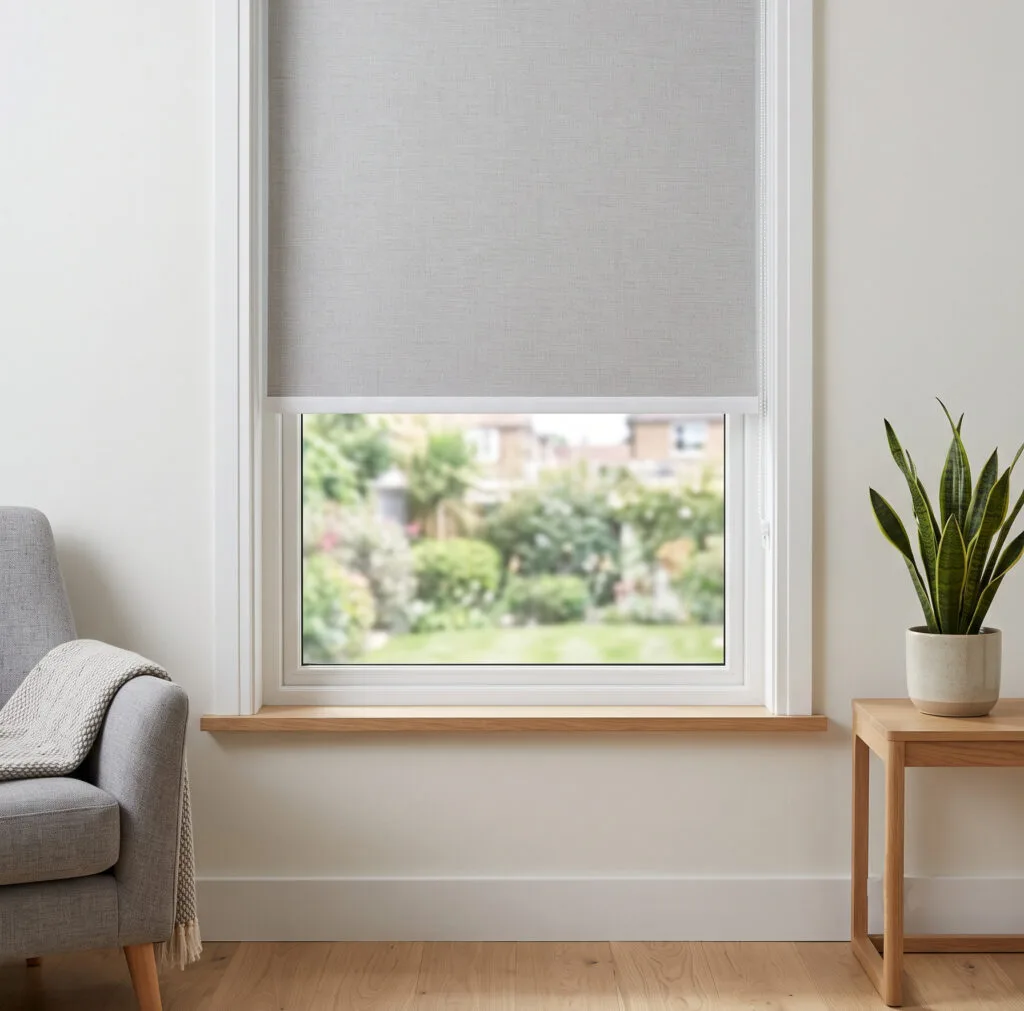
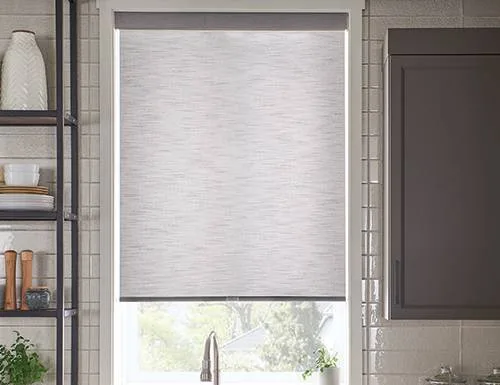
A roller shade is a single flat sheet of fabric wrapped around a tube at the top of your window. Pull it down, it unrolls; raise it, it disappears into a slim roll. Simple, sleek, and about as minimalist as window coverings get.
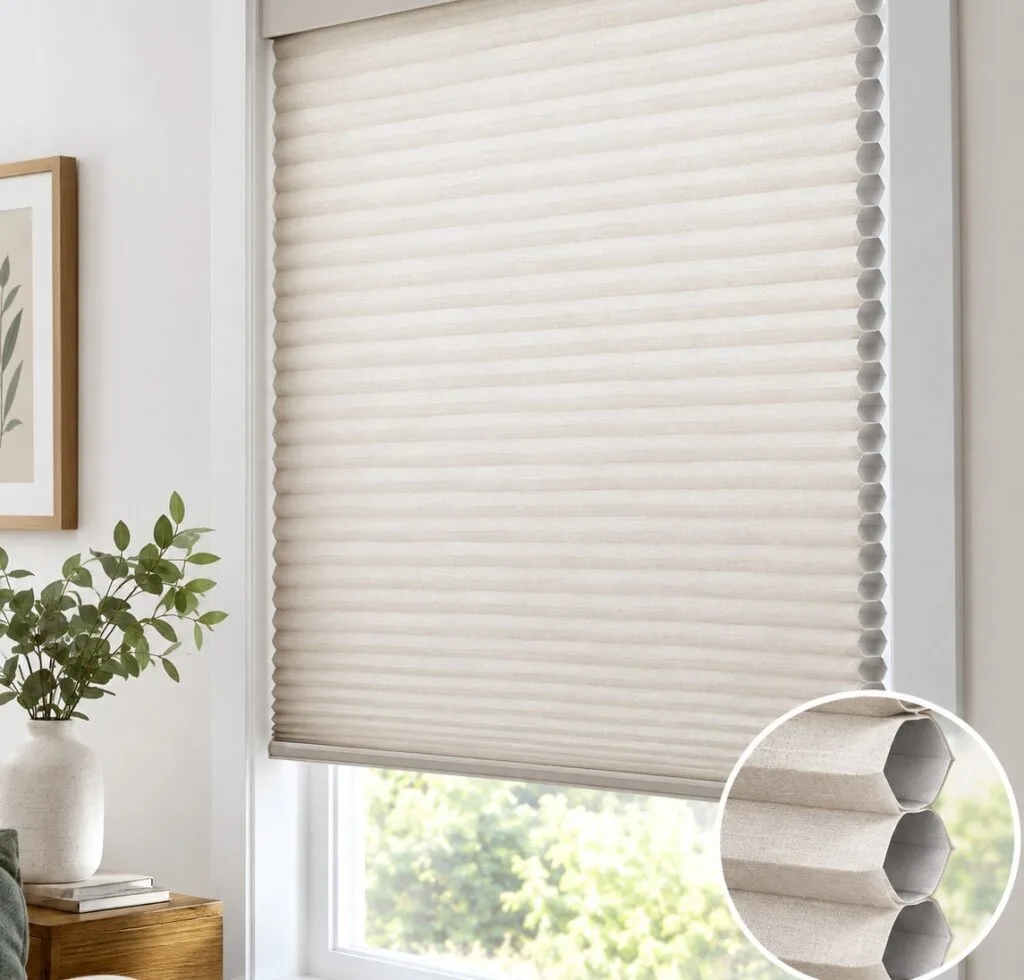
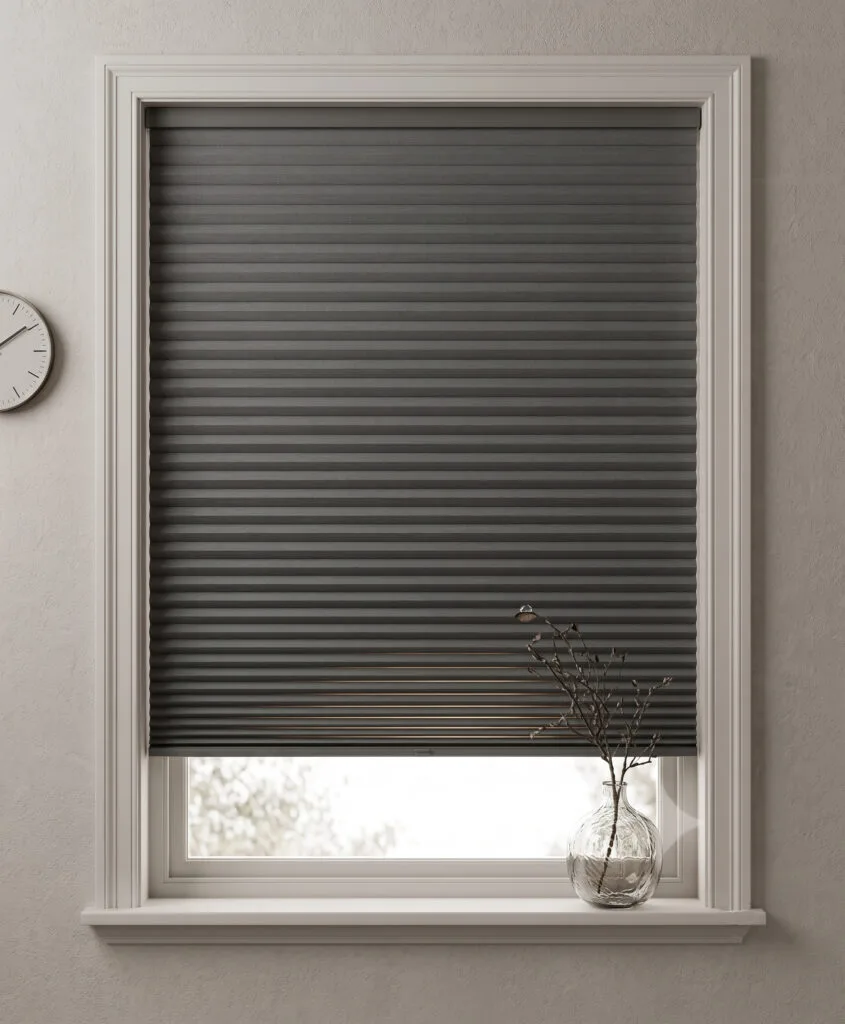
A cellular shade — also called a honeycomb shade — is made of crisp pleated fabric bonded into rows of hollow cells. Look at one from the side and you’ll see the honeycomb shape that gives it its name. Those cells aren’t decorative: each one traps a pocket of air, and that trapped air is the whole point. It turns the shade into a layer of insulation for your window.
Flat and sleek versus pleated and insulating. Nearly every difference that follows flows from that one distinction.
Style and Looks: Roller Shades Take the Round
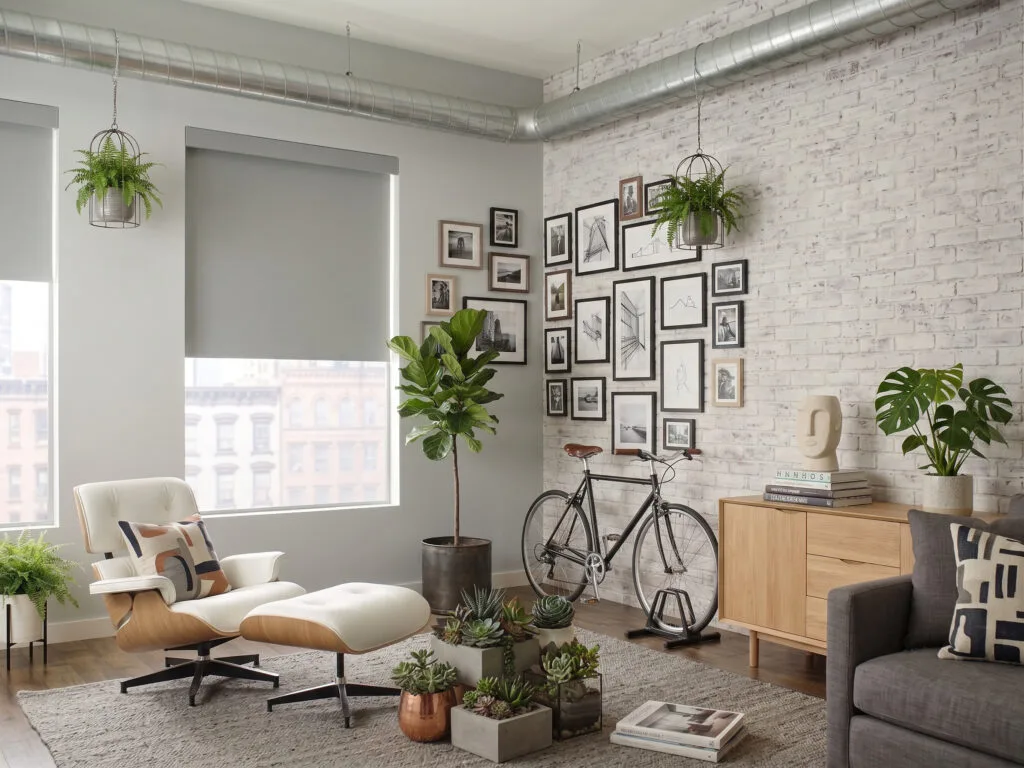
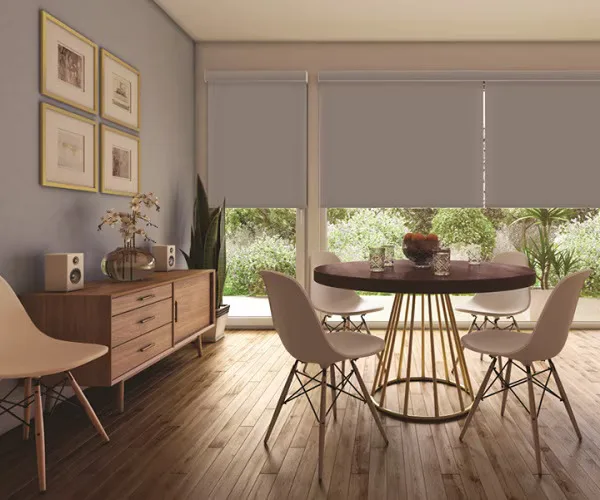
If your home leans modern, roller shades are almost certainly what you’ve been admiring in design photos. That clean, flat panel of fabric reads crisp and architectural, and the fabric range is enormous — soft linens and textures, bold patterns, muted solids, and screen materials that filter glare while preserving your view. Rollers also disappear almost completely when raised, leaving nothing but a slim tube at the top of the frame. For picture windows with a view worth keeping, that vanishing act is a real asset.
Cellular shades have a softer, quieter presence. The horizontal pleats add gentle texture, and the fabric diffuses light beautifully, giving rooms a warm glow rather than hard-edged brightness. They’re handsome, but they’re understated by design — you notice the light they create more than the shade itself. If rollers are the statement piece, cellulars are the supporting actor that makes the whole room feel comfortable.
Insulation and Energy Bills: Cellular Shades, and It Isn't Close
Windows are the weakest thermal link in most homes — heat pours in through the glass all summer and leaks out on winter nights. This is where cellular shades justify their existence. Those air-filled cells act as a buffer between the glass and your room, and double-cell designs add a second row of pockets for even more insulating power.
In practical terms, that means a west-facing bedroom stays noticeably cooler on a July afternoon, and your air conditioner cycles less to keep up. Roller shades block light and cut some solar heat, especially in room-darkening fabrics, but a flat sheet of fabric simply can’t match a honeycomb full of trapped air. If lowering your energy bills is a top priority, cellulars win this category decisively.
Light Control: A Tie, Decided by Your Goal
Both styles come in the full opacity range, from sheer to light-filtering to true blackout. The difference is in the character of the light and the details at the edges.
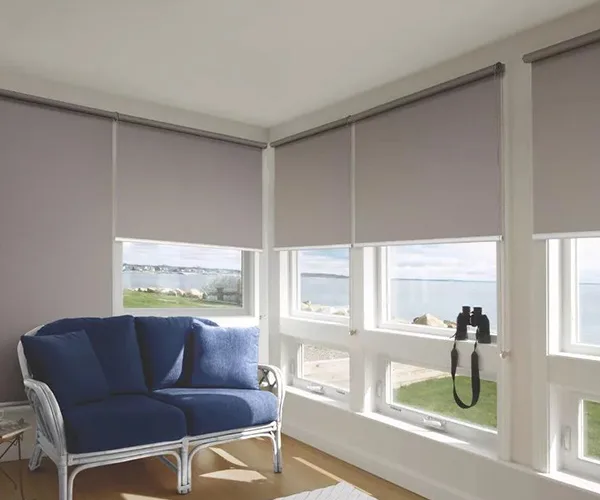
Roller shades offer something cellulars can’t: solar screen fabrics. These are woven materials rated by openness — a 3 or 5 percent screen knocks down glare and UV while still letting you see out to the yard or the street. For living rooms, offices, and any window with a view, that see-through quality is a genuine superpower.
Cellular shades counter with better light sealing. Their pleated construction sits closer to the glass and their side gaps run smaller, so blackout cellular shades tend to produce a darker room than blackout rollers, which usually show thin strips of light along the edges. For nurseries, bedrooms, and media rooms, cellulars generally get you closer to true darkness — one of the reasons we recommend them so often for sleep spaces.
Durability, Cleaning, and Daily Life
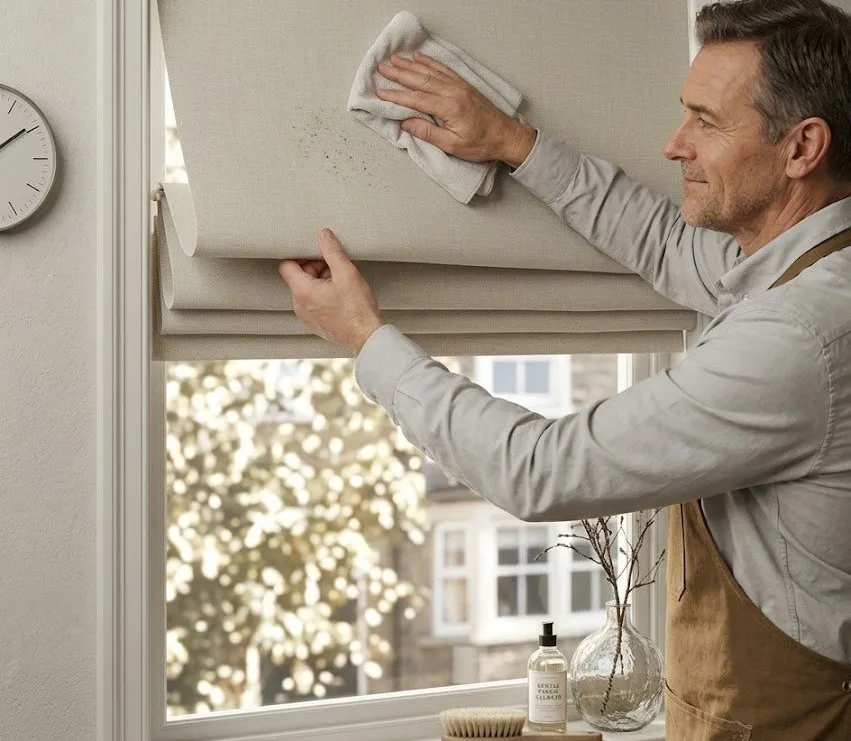
Roller shades are the easy-care option. One flat surface, no crevices — dust it, wipe it, done. Vinyl and screen fabrics in particular shrug off kitchens, bathrooms, and sticky fingers, and there’s very little that can go mechanically wrong with a tube and a bracket.
Cellular shades ask slightly more of you. Dust can settle into the pleats, and the cells occasionally collect a curious bug or, in humid rooms, a bit of moisture. A vacuum with a brush attachment handles routine care, but they’re better suited to bedrooms and living areas than steamy bathrooms. Both styles, importantly, come cordless or motorized — so households with kids and pets can go safe with either. (Our guide to child and pet safe window treatments covers why cordless matters so much.)
Price and Value
At comparable quality levels, the two are closer in price than most people expect, with basic rollers usually starting a bit lower and double-cell or specialty cellulars sitting a bit higher. The better way to think about cost is over time: if the window in question bakes in afternoon sun, a cellular shade quietly pays part of its own way through energy savings. If the window mostly needs style and glare control, the roller delivers more visual impact per dollar.
Both also pair beautifully with motorization — schedules, remotes, voice control, the works. If that idea appeals to you, our post on the reasons to invest in motorized shades makes the full case.
So Which One Is Right for You?
Compressed to a cheat sheet: choose roller shades for modern aesthetics, view-preserving solar screens, easy cleaning, and hardworking rooms like kitchens and offices. Choose cellular shades for bedrooms and nurseries, energy efficiency on sun-blasted windows, softer diffused light, and the deepest blackout. And know that plenty of homes should have both — rollers across the living areas, cellulars in the sleeping quarters is one of the most common (and most satisfying) combinations we install.
If neither feels quite right, the answer may live elsewhere in the catalog — custom blinds or plantation shutters solve different problems entirely, and we’re happy to walk you through those too.
Feel the Difference in Your Own Home
Fabric is a touch-and-see decision. The way a solar screen preserves your particular view, or how a double-cell shade glows in your bedroom’s morning light — no website can show you that. Our mobile showroom brings full sample collections of both styles directly to your door, so you can compare them on your actual windows before deciding.
Explore our complete range of custom shades, see recent installs in our portfolio, and if you’re in Los Angeles County or Orange County, contact us or call (562) 299-8743 to schedule your free in-home consultation. Roller or cellular, Blinds by Design will help you get it right — covering a window at a time.