
Wood vs. Faux Wood Shutters: Which Is Right for Your Home?
Ask ten homeowners why they chose plantation shutters and you’ll hear the same answers: they look timeless, they last forever, and they make every window feel finished. But there’s a fork in the road that catches almost everyone off guard once they start shopping — do you go with real hardwood, or one of the modern faux wood alternatives?
It’s a fair question, and the honest answer is that neither one “wins.” We’ve installed both in thousands of homes across Los Angeles and Orange County over the past 32 years, and the right choice depends entirely on the room, the climate inside your house, and what you want from your window treatments. Here’s the straight comparison we walk through with clients in their living rooms every week.
First, What's Actually the Difference?
Real wood shutters are exactly what they sound like: louvers, rails, and stiles milled from hardwood — most often basswood, a fine-grained, lightweight wood prized for its stability and smooth finish. Each panel is stained or painted, and no two are perfectly identical, because no two trees are.
Faux wood shutters are engineered alternatives, typically made from PVC, vinyl composites, or poly-based materials, sometimes reinforced with an aluminum core for rigidity. The best versions are convincingly wood-like at a glance, with a smooth painted finish and clean routed edges. The budget versions… less so. Quality varies enormously in the faux category, which is exactly why seeing samples in person matters.
Looks and Finish: Advantage, Real Wood — With a Catch
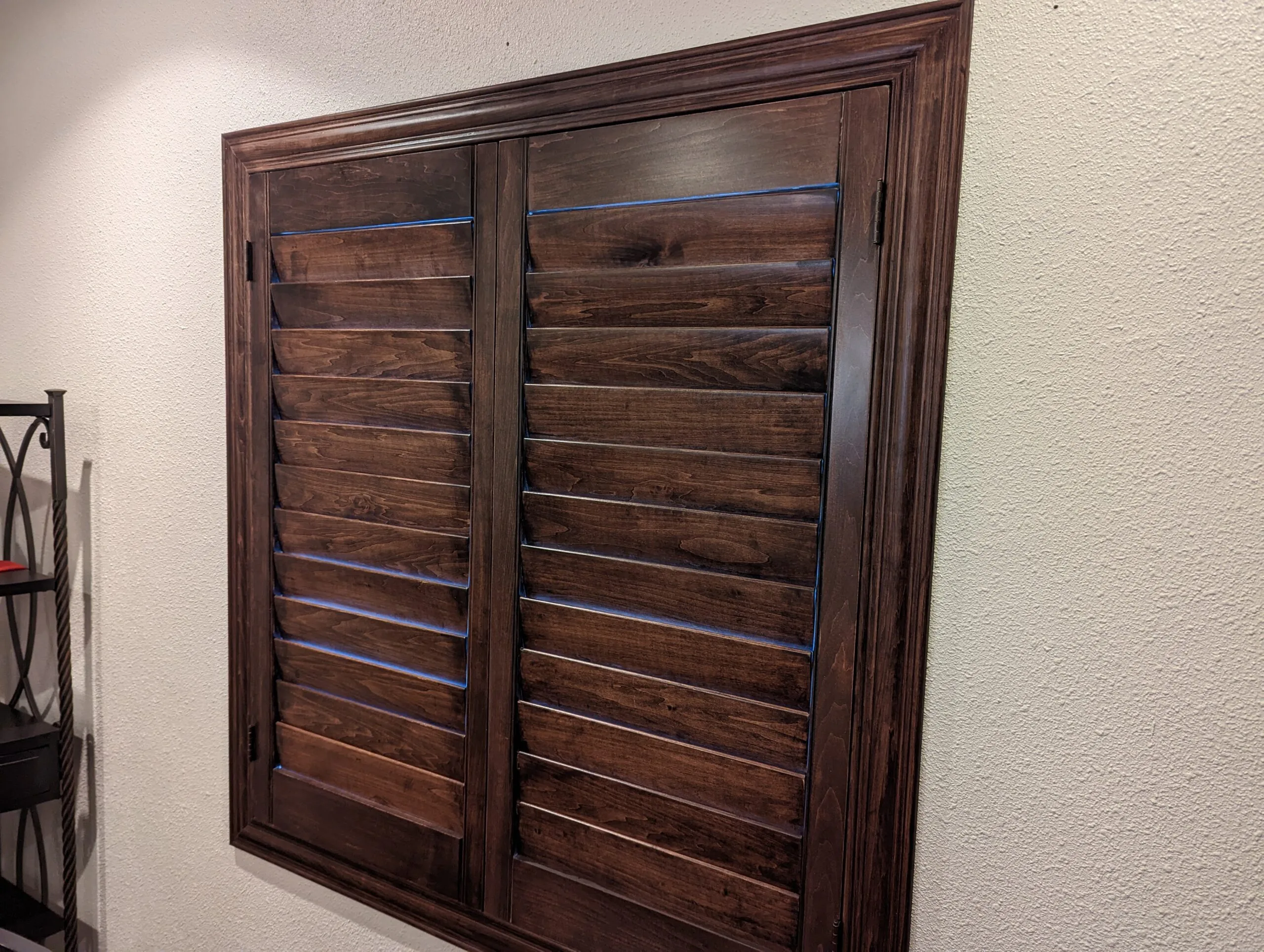
If you want a stained finish that shows actual grain — warm walnut, honeyed oak, rich espresso — real wood is the only game in town. Faux materials can’t be stained, only painted. Real wood also holds crisp detail in custom shapes, which is why arches, angles, and specialty windows are usually done in hardwood.
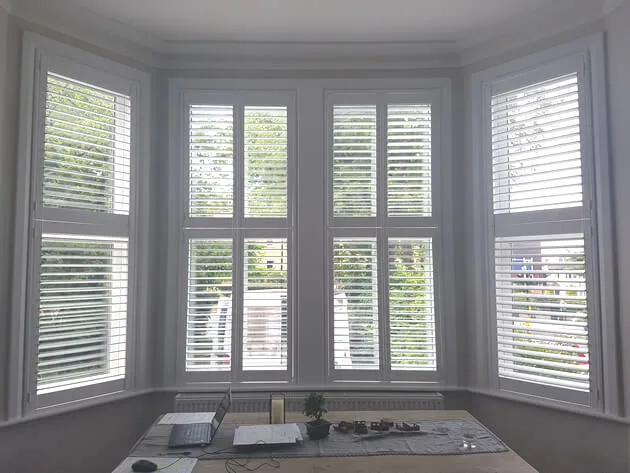
Here’s the catch, though: most homeowners choose painted white or off-white shutters anyway. And in a painted finish, a well-made faux wood shutter is genuinely difficult to distinguish from painted hardwood once it’s on the window. If your heart is set on “bright white plantation shutters,” the visual gap between the two materials nearly disappears — which changes the math on everything else below.
Moisture and Humidity: Advantage, Faux Wood
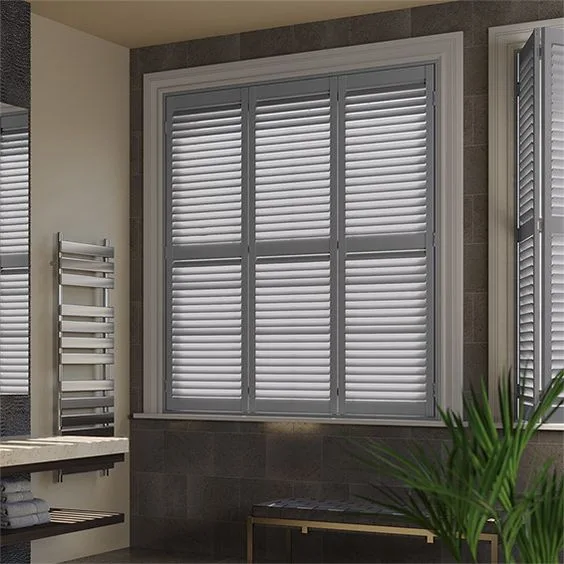
This is where faux wood earns its keep. Bathrooms, kitchens, laundry rooms, and any window that catches shower steam or sink splash are hard on real wood. Over years of humidity swings, hardwood can swell, warp, crack, or peel at the finish. Faux materials shrug all of it off — they’re essentially waterproof, which is why we steer nearly every bathroom project toward faux wood without hesitation.
Coastal homes deserve a mention here too. If you’re near the beach, salt air and marine-layer moisture work on real wood slowly but persistently. Faux wood handles ocean-adjacent living far better over the long haul.
Weight, Size, and Sun: A Split Decision
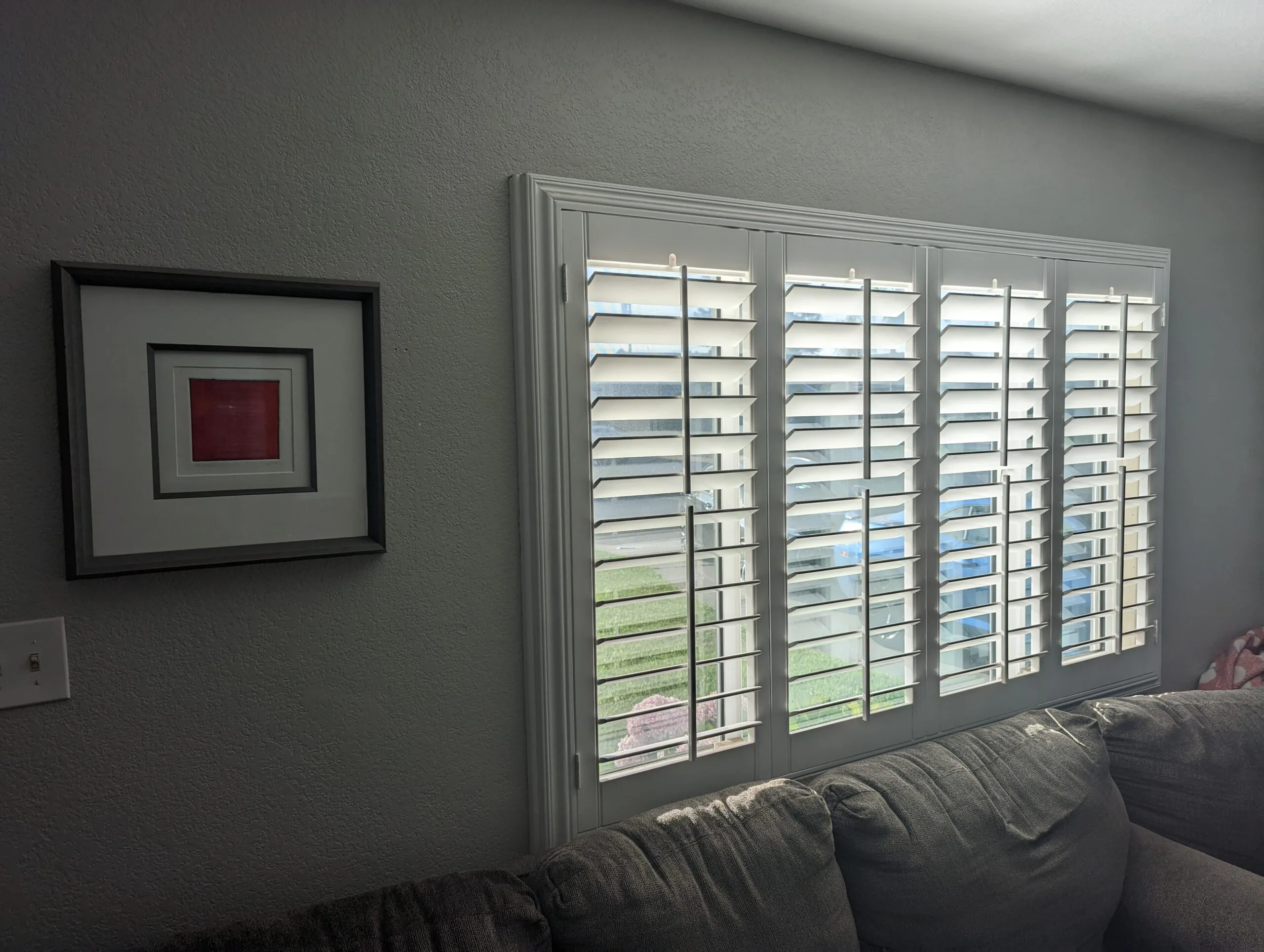
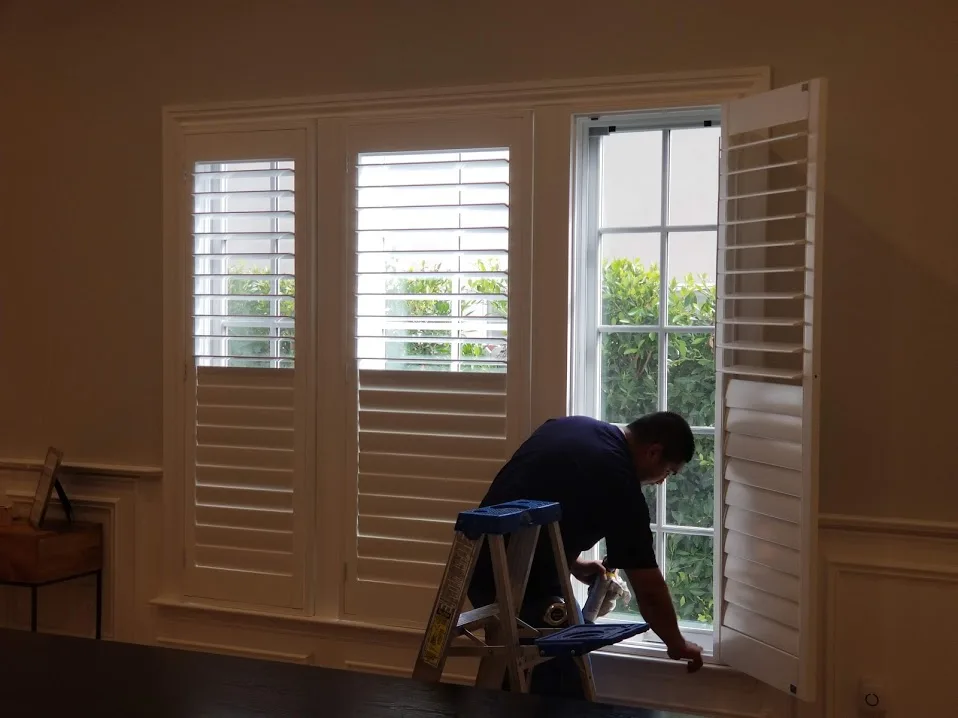
Real wood is significantly lighter than PVC and composite materials. That matters more than people expect: on wide windows and sliding doors, lighter panels put less strain on hinges, swing more easily, and can span larger widths without sagging. For big openings, wood is often the practical choice, not just the premium one.
Sun exposure cuts the other way — mostly. Intense, direct Southern California sun can yellow or slightly distort lower-grade vinyl shutters over time, while painted hardwood holds its color well. That said, today’s better poly shutters are UV-stabilized and warrantied against yellowing, so this old knock against faux wood applies mainly to bargain products. It’s one more reason the brand and build quality you choose matters as much as the material.
Durability and Everyday Life: Advantage, Faux Wood
Real wood is durable in the heirloom sense — properly cared for, it lasts for generations. But day to day, faux wood is the tougher customer. It doesn’t dent as easily, doesn’t scratch to reveal bare wood underneath, and wipes clean with a damp cloth instead of requiring careful dry dusting.
If your household includes kids ricocheting off the furniture or pets who treat the windowsill as a lookout post, faux wood forgives the abuse better. (And if safety is on your mind, both wood and faux shutters are inherently cord-free — we covered why that matters in our guide to child and pet safe window treatments.)
Price: It Depends on the Product and Specifications
Pricing shouldn’t be reduced to a simple wood-versus-faux comparison. High-quality wood and vinyl shutters can be similarly priced, with the final cost depending on factors such as the specific product, construction, size, finish, customization, and features. In some cases, polymer or synthetic shutter options may actually be slightly more expensive.
Rather than choosing a material based on an assumption about price, it’s better to compare the quality, appearance, performance, and features of the specific shutter options you’re considering. That way, you can choose the material that makes the most sense for each room and your home’s overall design.
One thing that doesn’t change with material: both options can add real, lasting value to your home. Shutters are one of the few window treatments buyers view as a permanent upgrade rather than décor, so whichever material you choose, you’re investing in the house itself.
The Room-by-Room Cheat Sheet
If we had to compress two decades of installs into a few lines, it would look like this: bathrooms and laundry rooms, faux wood, always. Kitchens, faux wood for anything near the sink or stove. Living rooms, dining rooms, and offices, either — let your preferred finish, performance needs, and overall design decide. Stained-wood look, real hardwood, no substitute. Oversized windows and specialty shapes, real wood for weight and workability. Beach-adjacent homes, lean faux. For a whole-home project, consider the needs of each room and choose the material that best fits its environment and design.
And remember that shutters aren’t the only door worth opening. In some rooms, shades or blinds may complement your shutters beautifully — plenty of our clients pair shutters in front rooms with soft shades in bedrooms for the best of both.
See Both Materials Side by Side — In Your Own Light
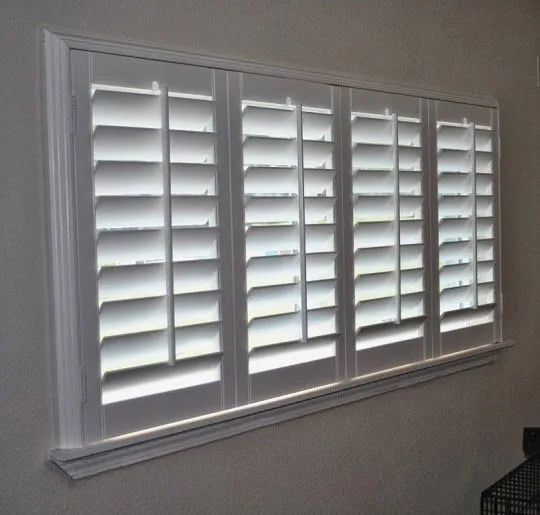
Photos flatten the differences between wood and faux wood. In person, you can feel the weight, see how each finish catches your room’s light, and judge for yourself whether the painted finishes look as close as we claim. That’s why our showroom travels: we bring samples of both materials directly to your home, hold them up to your actual windows, and give you honest guidance on where each one belongs.
Explore our full range of custom shutters, browse recent installations in our portfolio, and if you’re anywhere in Los Angeles County or Orange County, contact us or call (562) 299-8743 to schedule your free in-home consultation for window treatments, professional measurement, and product selection. Wood or faux, Blinds by Design will make sure it’s done right — covering a window at a time.