
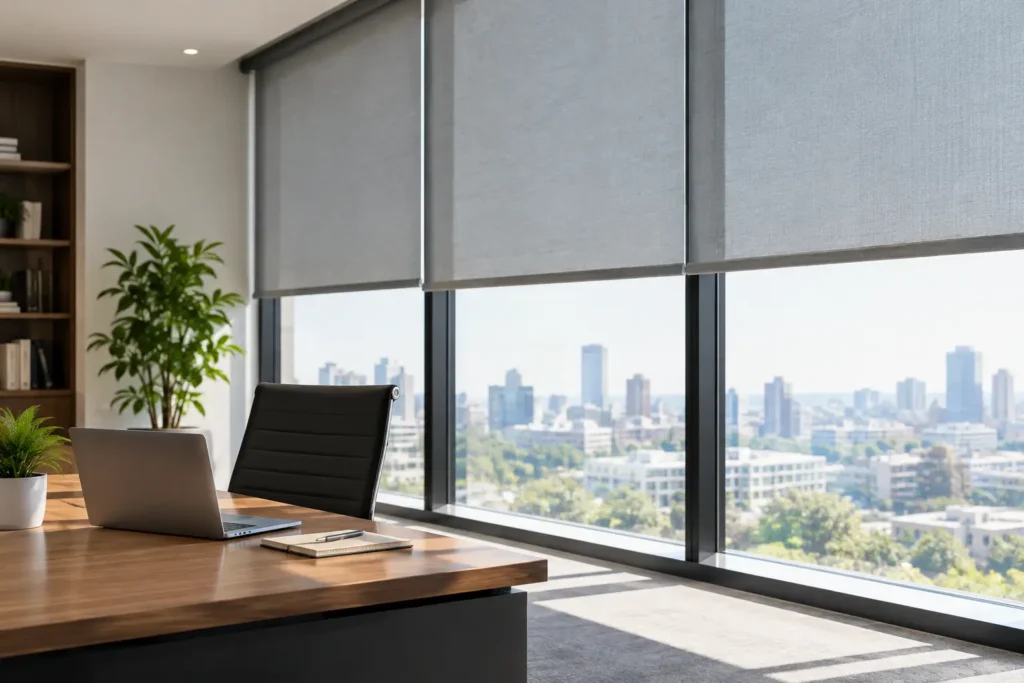
A west-facing conference room at 3 p.m. can tell you more about window treatments than a showroom display ever could. Screens become difficult to read, employees lower makeshift blinds unevenly, and the room feels warmer than it should. This guide to office window shades helps Los Angeles business owners, facility managers, and office decision-makers choose treatments that solve those daily problems while supporting a polished, professional space.
Office shades are not simply a finishing touch. The right choice affects comfort, privacy, energy use, visual presentation, and how easily a team can use a room throughout the workday. Custom measurement and professional installation matter because office windows are rarely identical, and even a small gap or poorly placed control can affect performance.
Start With How Each Office Space Is Used
The best office shade is not necessarily the one that looks best in a sample book. It is the one that responds to what happens near that window. A reception area may need a clean, welcoming appearance with filtered daylight. Private offices may need stronger privacy. Conference rooms often require dependable glare control for presentations, while open work areas need daylight without heat and distracting reflections.
Walk through the office at different times of day before making a decision. Note which windows receive direct morning or afternoon sun, where computer monitors face the glass, and which rooms are visible from neighboring buildings or the street. In Southern California, sun exposure can be intense even when the weather feels mild, particularly along large west- and south-facing window walls.
Also consider who will operate the shades. A single executive office can work well with a manual lift. A conference room with multiple tall windows may be a better candidate for motorized shades that can be adjusted together. The more frequently a shade needs to move, the more valuable simple, reliable operation becomes.
A Guide to Office Window Shades by Performance
Different shade styles can look equally appropriate in an office, but they manage light and privacy in very different ways. Choosing on appearance alone can lead to a treatment that feels wrong once the workday begins.
Roller shades for a clean, modern look
Roller shades are a popular office choice because they have a streamlined profile and suit many design styles. They are available in a wide range of fabrics, from open weaves that preserve a partial exterior view to room-darkening materials that provide much stronger coverage.
Solar screen roller shades are often a good fit for offices with views and persistent glare. Their openness factor determines how much light and view pass through the fabric. A more open fabric allows a clearer view and brighter room, but it offers less daytime privacy and less glare protection. A tighter weave improves glare control and privacy but reduces the view outside.
For meeting rooms, a dual-shade setup can be especially practical. A solar shade handles daytime light, while a room-darkening shade is available when presentations or video calls require greater control. This solution costs more than one shade, but it gives a multipurpose room more flexibility.
Cellular shades for comfort and insulation
Cellular shades have a honeycomb structure that traps air, helping reduce heat gain near windows. They are worth considering in offices where certain rooms run hot, windows receive direct sun for long periods, or employees work close to the glass.
They also provide a softer visual effect than roller shades and can improve the feel of a smaller office or private workspace. The trade-off is that their fabric texture may not match the crisp, minimal look some contemporary commercial interiors prefer. They are usually best selected when comfort and light diffusion are priorities alongside appearance.
Roman shades for client-facing spaces
Roman shades bring a tailored fabric look to offices where design makes a strong impression, such as reception areas, boutique professional offices, studios, and client meeting spaces. They can make a room feel more finished and residential without losing professionalism.
Because they use more fabric and stack when raised, Roman shades are not always the most practical answer for heavily used workstations or windows that must remain clear throughout the day. They are often most effective when paired with a functional light-control plan for the rest of the office.
Woven wood shades for warmth and texture
Woven wood shades introduce natural texture that works beautifully in design-forward offices, creative spaces, and businesses seeking a warmer atmosphere. Optional liners can increase privacy and light control.
This style needs thoughtful selection in spaces with strong direct sun or frequent cleaning needs. Natural materials can vary in texture and may allow small amounts of light through without a liner. That character is part of the appeal, but it should align with the office’s privacy expectations.
Balance Daytime Privacy With Light Control
Many offices need privacy without wanting to feel closed off. This is where fabric selection matters as much as the shade style. A solar shade may limit visibility into an office during the day, but that effect can reverse at night when interior lights are on. If the office faces a parking lot, sidewalk, or neighboring building, nighttime privacy should be part of the conversation from the start.
Room-darkening fabrics offer more coverage, but “room darkening” does not always mean complete blackout. Light can still enter around the edges of the shade, especially with inside-mounted products. For offices that need near-total darkness for projection, media work, or sensitive meetings, side channels, outside mounting, or a layered treatment may be appropriate.
The same principle applies to glare. A shade that makes a room slightly dimmer may not solve glare on a screen. Ask where monitors, televisions, and presentation walls are located. The most effective treatment is often one that is planned around the room layout, not installed after furniture is already causing a problem.
Choose Colors and Materials That Support the Space
Office window shades should feel connected to the furnishings, wall colors, flooring, and brand image. Neutral whites, soft grays, warm beiges, and charcoal tones tend to wear well and suit changing décor. Lighter fabrics reflect more light and can help a room feel open, while darker colors may reduce visible glare and create a stronger visual frame around large windows.
Fabric samples should be viewed at the actual window, not only under indoor lighting. Sunlight can make a color appear cooler, warmer, or more transparent than expected. This is one reason an in-office consultation is useful: you can compare materials against the room’s light, paint, furniture, and exterior surroundings before committing.
Durability is also a design consideration. In busy offices, select materials that are easy to maintain and suited to the environment. A reception area near an entrance may need a forgiving fabric. An office near food service or a workshop may need materials that can be cleaned more easily than delicate woven textiles.
Decide Between Manual and Motorized Shades
Manual shades remain a sensible, cost-conscious option for windows that are easy to reach and adjusted only occasionally. Modern cordless systems provide a cleaner look than older corded options and reduce visual clutter around the window.
Motorization is especially helpful for tall windows, banks of shades, conference rooms, executive spaces, and offices where adjustments happen often. With motorized shades, multiple windows can move together, which creates a more uniform appearance and makes it easier to set the room for presentations or changing sun conditions.
The decision is not only about convenience. If staff members avoid using difficult shades, the office loses the benefit of the treatment. Motorization can encourage consistent use, though it adds to the project budget and should be planned around power options, controls, and the way the office will use the space.
Why Custom Measurement and Installation Matter
Office windows can include deep frames, mullions, doors, unusual dimensions, and obstacles such as handles, trim, or sprinkler clearances. A treatment that is slightly too wide, too narrow, or mounted at the wrong depth can leave unwanted gaps, interfere with operation, or look unfinished.
A professional measure identifies these details before products are ordered. It also helps determine whether inside mounting, outside mounting, or a combination of treatments will produce the best coverage. For large or hard-to-reach windows, proper mounting is equally important for safe, dependable operation over time.
Blinds by Design brings product options and experienced guidance directly to the office, so decision-makers can evaluate color, material, privacy, and functionality where the shades will actually be used. From measuring through installation, a custom approach reduces guesswork and helps keep the project coordinated.
Plan the Project Around Budget and Priorities
A well-designed office shade project does not require choosing the same treatment for every window. A practical approach may place motorized solar shades in the conference room, privacy-focused shades in private offices, and a design-forward treatment in reception. This directs investment to the rooms where performance and appearance matter most.
Before scheduling a consultation, gather a few basics: which rooms cause the most discomfort, whether privacy is needed during the day, at night, or both, and whether the office needs manual or automated operation. Bring photos or a simple floor plan if available. Those details make product recommendations more precise and help create a result that looks intentional from the first window to the last.
A good office should not ask employees to choose between natural light and usable space. Schedule a professional consultation when you are ready to see the materials in your own office and make each window work with the way your team does.