
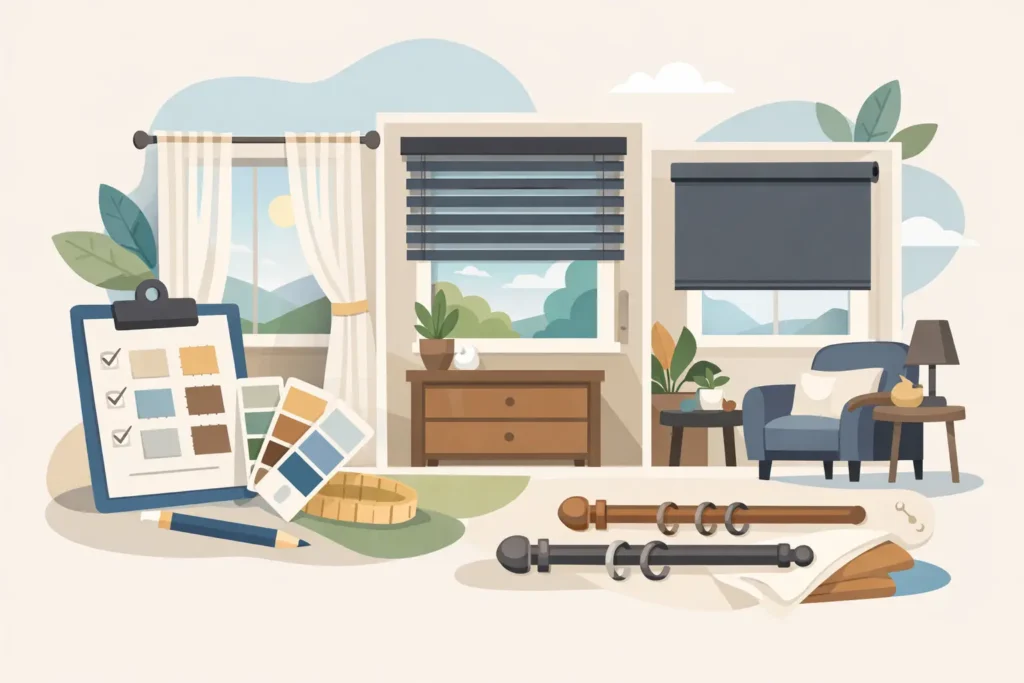
A window treatment buying guide should save you from one of the most common home upgrade mistakes – choosing something that looks great in a showroom but feels wrong once it is installed in your space. In Los Angeles homes and offices, window coverings need to do more than look polished. They need to handle strong sun, support privacy, fit the room’s style, and work well day after day.
That is why the buying process matters as much as the product itself. The right choice usually comes from seeing materials in your actual room, comparing light levels at different times of day, and making sure the final selection is measured and installed correctly.
What this window treatment buying guide should help you decide
Most buyers start by asking a simple question: blinds, shades, or shutters? The better question is what you need the treatment to do first. Some rooms need privacy above all else. Others need glare reduction, insulation, child-safe operation, or a cleaner architectural look.
When you start with function, the options become easier to sort through. If your living room gets intense afternoon sun, that points you in a different direction than a bedroom that needs darkness and softness. If you are updating a front-facing room in a busy neighborhood, privacy and appearance from the street may carry equal weight.
Budget also matters, but it should not be the only filter. A lower-cost option that wears out quickly or does not solve the room’s main problem can cost more in the long run. A custom fit, durable material, and professional installation often make the difference between a treatment that feels temporary and one that looks finished.
Start with the room, not the product
Every room asks for something different. Kitchens and bathrooms usually benefit from materials that handle humidity and are easy to clean. Bedrooms often need better light control and more privacy. Family rooms may need a balance of filtered daylight, UV protection, and a style that works with the rest of the home.
This is where many homeowners get stuck. A product may be popular, but that does not mean it is the right answer everywhere. Wood blinds can look beautiful, for example, but high-moisture areas may call for a more practical material. A delicate fabric shade may suit a formal room, while a heavily used space may need something simpler and more durable.
If you are furnishing an office, the priorities can shift again. Glare control, a neat professional look, and easy operation usually move to the top of the list. In workspaces, the best choice is often the one that disappears into the routine and does its job quietly.
Blinds, shades, and shutters each solve different problems
Blinds are a strong choice when you want adjustable light control and a clean, tailored appearance. They work well in many rooms and come in materials that range from classic wood looks to more moisture-resistant options. They are practical and versatile, though they can feel a bit more structured than soft treatments.
Shades offer a wider range of softness and style. Depending on the fabric and construction, they can gently filter light, darken a room significantly, or add texture without visual clutter. They tend to work especially well for homeowners who want a more streamlined look or a softer finish than slats provide.
Shutters are often chosen for their long-term value and architectural presence. They create a built-in look that many homeowners appreciate, especially in rooms where curb appeal and durability matter. They are not the right fit for every budget or style, but when they match the home, they can make the whole room feel more complete.
There is no universal winner. The right option depends on how you live, how much sun the room gets, and how permanent you want the upgrade to feel.
Style matters, but so does light
A lot of buying decisions are made based on color, texture, and whether the treatment matches the room. That is reasonable, but performance should be tested at the same time. In Southern California, sunlight can be harsh, and windows that seem manageable in the morning may become difficult by late afternoon.
That is why samples matter. A white fabric may look crisp in one room and too bright in another. A darker material may add needed depth, but it can also change how open the room feels. The same treatment can read differently depending on wall color, flooring, and the direction the window faces.
Light control also has layers. Some clients want filtered natural light without losing privacy. Others want room-darkening performance for sleep, media viewing, or conference spaces. These are not small details. They shape whether you will actually be happy with the treatment after installation.
Custom sizing is not a luxury detail
Window treatments only look easy until you reach the measuring stage. Small errors can lead to gaps, poor operation, uneven stacking, or a finished look that never quite feels right. This is especially true in older homes, where window openings are not always perfectly square.
Custom sizing helps the treatment fit the window and the room the way it should. It also gives you more flexibility with mounting, control options, and proportions. Off-the-shelf products can work in some situations, but they often ask the homeowner to compromise on fit, finish, or both.
Professional measuring also helps prevent a common problem: choosing a treatment first and realizing later that the window depth, trim, or opening creates limitations. It is better to know those details before ordering than after.
Think about operation before installation day
Operation is one of the easiest things to overlook and one of the first things you notice once the treatment is in daily use. A beautiful product that is awkward to raise, lower, or tilt can become frustrating quickly.
Cordless designs are popular for good reason. They offer a cleaner look and are often a better fit for homes with children or pets. Motorization is also worth considering, especially for hard-to-reach windows, wide openings, or rooms where convenience matters. For some homeowners, motorized shades feel like a luxury at first and then become the feature they appreciate most.
That said, not every room needs the same level of automation. It depends on the size of the window, how often you adjust it, and whether ease of use is part of the goal. The best buying decisions usually come from balancing convenience with budget rather than assuming every upgrade is necessary.
Installation affects the final result more than people expect
Even a high-quality product can look off if it is installed poorly. Uneven alignment, loose brackets, and improper mounting can affect appearance and performance right away. Over time, those issues can lead to extra wear or repairs that could have been avoided.
Professional installation gives the treatment the finished look most buyers are hoping for. It also ensures the product operates correctly from the start. For custom shutters, blinds, and shades, that precision matters.
A full-service process can make this much easier. Instead of managing separate steps with different vendors, homeowners can move from consultation to measurement, product selection, and installation with one experienced team. For many clients, that convenience is part of the value. It saves time, reduces guesswork, and creates a smoother result.
A practical window treatment buying guide for better decisions
If you want this window treatment buying guide to lead to the right purchase, focus on four things: what the room needs, how much light control you want, how permanent you want the upgrade to feel, and how important convenience is in everyday use. Those answers usually narrow the field quickly.
From there, it helps to compare real samples in your space instead of making a choice from small online images or store displays. Seeing color, texture, and opacity in your home changes the decision. It also gives you confidence that the finished result will suit the room, not just the catalog.
For homeowners and property decision-makers who want a polished result without a fragmented process, working with a local specialist can simplify everything. Blinds by Design brings product options, measuring expertise, and installation support together in one service experience, which is often the easiest path to getting the look and performance you want.
The best window treatment is not the trendiest one or the one with the longest feature list. It is the one that fits your room, supports the way you live, and still feels right every time you open the blinds or lower the shade.