
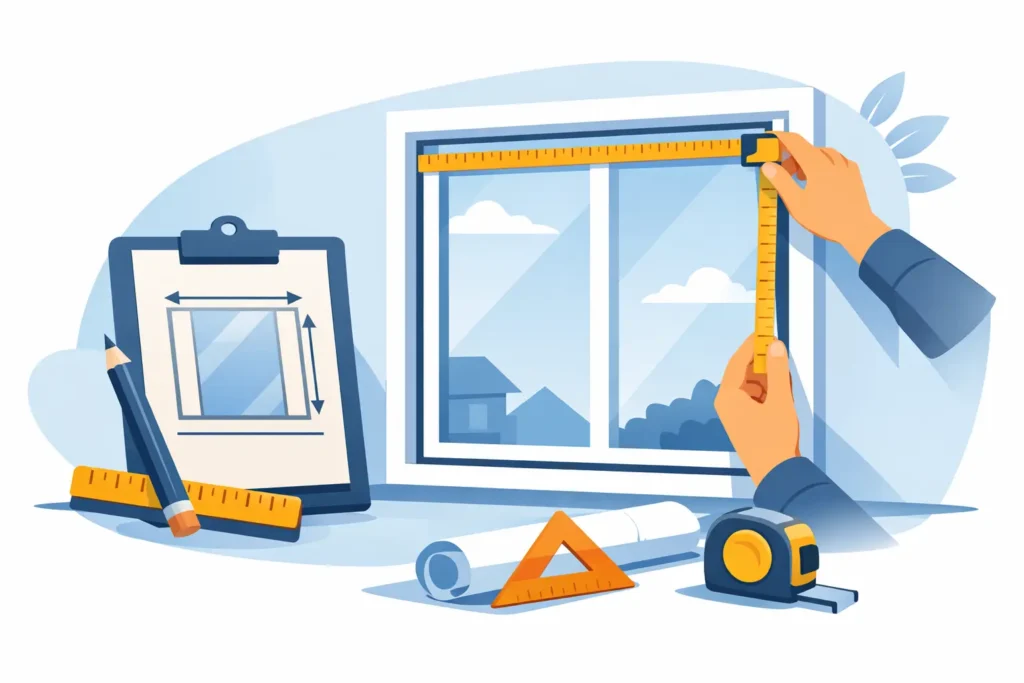
A window that looks straightforward can be surprisingly unforgiving once you start ordering custom treatments. A difference of even 1/4 inch can affect how blinds sit, how shades operate, or whether shutters fit at all. If you are wondering how to measure windows correctly, the goal is not just getting numbers on paper. It is getting the right numbers for the specific product and mount style you plan to install.
That is where many homeowners run into trouble. Window openings are rarely perfectly square, trim can change what is possible, and different products need different clearances. A roller shade and a plantation shutter do not get measured the same way, even when they are going on the same window.
Why accurate window measurements matter
Custom window treatments are built to the measurements you provide. That means there is very little room for guesswork. If the width is off, an inside-mounted blind may bind against the frame or leave larger light gaps than expected. If the height is off, a shade may stop short or stack differently than you imagined.
Accurate measurements also affect appearance. Clean lines, even spacing, and a tailored fit are a big part of what makes custom treatments look polished. In homes across Los Angeles and Orange County, where design details matter just as much as privacy and light control, those small measurement errors can stand out quickly.
What you need before you measure
Start with a steel tape measure rather than a cloth tape. Cloth can stretch or bend too easily, which creates inaccurate readings. Measure in inches and record to the nearest 1/8 inch unless a product specification says otherwise.
You will also want a pencil or notes app and a simple way to label each window. If you are measuring more than one room, note which window is left, center, or right. Two windows may look identical and still measure differently.
Before taking any numbers, decide whether you want an inside mount or outside mount. That choice changes the entire measuring process.
Inside mount vs. outside mount
An inside mount places the treatment within the window frame. This gives a clean, built-in look that many homeowners prefer for blinds and shades. It works best when the frame has enough depth and the opening is reasonably square.
An outside mount places the treatment above or beyond the window opening. This can make a window appear larger, improve light blocking, and solve issues when the frame is too shallow or uneven. It is often a smart choice for blackout shades or when you want to cover unattractive trim.
If you are not sure which mount is right, that decision should come before ordering. The best-looking treatment is not always the one you first pictured. Sometimes the structure of the window makes the choice for you.
How to measure windows correctly for an inside mount
For an inside mount, measure the width at the top, middle, and bottom of the window opening. Use the narrowest of the three measurements. This matters because window frames are often slightly tapered, and the narrowest point tells you what can fit without rubbing.
Next, measure the height at the left, center, and right side of the opening. For many products, you will use the tallest measurement, but product requirements can vary. Record all three so you or your installer can confirm the best final size.
Then check the depth of the window frame. This step gets overlooked all the time. Some products need a minimum mounting depth just to install, while others need more depth to sit fully recessed and flush with the frame. If depth is limited, an inside mount may still be possible, but the finished look may be different than expected.
Finally, check for obstructions. Cranks, locks, handles, and uneven trim can all affect fit and operation. A window may technically have enough width and height, but still create problems once the treatment is installed.
A common inside-mount mistake
Many people assume they should measure the existing blinds or shutters and reorder the same size. That can work in some cases, but it is not the safest method. Previous treatments may have been undercut by the manufacturer, installed slightly off-center, or sized for a different product type. Measuring the actual opening is usually the better approach.
How to measure windows correctly for an outside mount
For an outside mount, start by measuring the width of the area you want to cover, not just the glass. Most outside-mounted treatments should extend beyond the window opening to improve coverage and reduce light gaps. A common approach is to add extra width on both sides, but the right amount depends on trim, wall space, and the product style.
Next, measure the height from the top of the intended mounting point to where you want the treatment to end. For some homeowners, that is just below the window sill. For others, especially in living rooms or offices, extending lower creates a more finished look.
When measuring outside mounts, wall conditions matter. Check whether there is enough flat surface above the window for brackets or a headrail. Crown molding, decorative trim, and tight corners can all limit placement.
Why outside mounts can be the better option
An outside mount is not a compromise. In many situations, it is the stronger design and performance choice. If you want better room darkening, need to hide an uneven frame, or are covering a shallow window opening, outside mounting can give you a cleaner result than forcing an inside fit.
Product-specific details that affect measuring
Blinds, shades, and shutters all have their own requirements. Horizontal blinds usually need accurate width and depth to operate smoothly inside the frame. Cellular and roller shades may be more forgiving visually, but mounting brackets and fabric deductions still matter. Shutters are the most exacting of the group because they are rigid, built to fit the opening or frame with very little flexibility.
Motorized treatments add another layer. You may need space for a larger headrail, battery wand, or charging access. If your goal is a sleek motorized shade, the window dimensions are only one part of the equation. Power source and mounting conditions matter too.
This is one reason professional measuring is so valuable. Knowing how to measure windows correctly is helpful, but knowing how those measurements translate into a specific product is what prevents expensive mistakes.
What to do with bay windows, corner windows, and sliding doors
Specialty openings should be measured with extra care. Bay windows often require separate measurements for each section, along with attention to projection and angle. Corner windows may need enough clearance so treatments do not collide when raised or tilted.
Sliding glass doors are different from standard windows in both scale and function. You are measuring for coverage, stack, and everyday traffic flow. A treatment that fits mathematically can still feel awkward if it blocks access or does not stack where you need it.
For these openings, measurements alone are not the whole job. Planning how the treatment will move is just as important as the raw dimensions.
When DIY measuring makes sense and when it does not
If you are comparing options early in the process, rough measurements are useful. They can help you estimate pricing, narrow product choices, and decide whether an inside or outside mount is realistic.
If you are placing a final custom order, precision matters more than speed. That is especially true for shutters, motorized shades, unusually shaped windows, or large openings. In those cases, professional measuring can save time, money, and frustration. Blinds by Design provides in-home measuring as part of a full-service process, which helps homeowners avoid the mismatch between what looks good online and what actually works in the room.
A few final tips before you order
Measure every window, even if they appear identical. Write down width first, then height, every time. Do not round up to a whole inch. Do not assume the manufacturer will fix unclear numbers. And if the trim, frame, or wall condition looks unusual, pause before ordering.
The best custom window treatment starts with a clear understanding of the space. Good measurements do more than help a product fit. They set up everything that follows – smoother installation, better function, and a finished look that feels intentional from day one. If you are unsure about a tricky opening, getting expert eyes on it is often the easiest path to getting it right.