
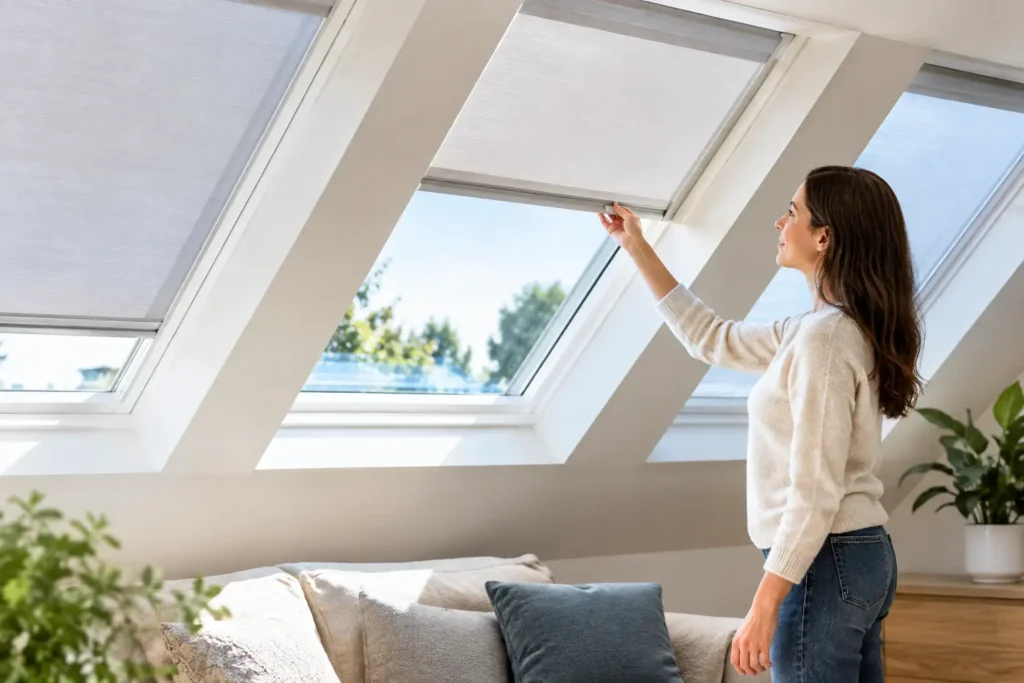
A skylight can make a room feel larger, brighter, and more connected to the outdoors. It can also create intense afternoon glare, unwanted heat, fading furnishings, and an early morning wake-up call. Custom shades for skylights address those concerns without giving up the architectural feature that made the space appealing in the first place.
For homeowners throughout Los Angeles and Orange County, the right skylight treatment is rarely a one-size-fits-all decision. Skylights vary in size, shape, ceiling height, direction, and accessibility. A treatment that looks right in a catalog may not provide the light control, insulation, or day-to-day convenience your room needs. That is why professional measurement and thoughtful product selection make such a difference.
Why Custom Shades for Skylights Change the Room
Unlike a standard vertical window, a skylight receives direct overhead light. In Southern California, that can mean a dramatic increase in heat and glare during the brightest parts of the day. Kitchens, living rooms, lofts, bedrooms, and home offices can all become less comfortable when sunlight pours in at the wrong time.
A properly selected skylight shade helps moderate that exposure. Depending on the material and opacity, it can soften harsh sunlight, reduce glare on screens, improve privacy in nearby multi-story homes, and help protect flooring, artwork, and upholstery from excessive UV exposure. In bedrooms, a room-darkening option can make it easier to sleep later than sunrise. In a living area, a light-filtering fabric can preserve a bright, open feel while taking the edge off direct sun.
The key is matching the shade to the way the room is actually used. A skylight over a rarely used stairwell may only need occasional light control. One above a media room or nursery may call for more consistent coverage and easier operation.
A Custom Fit Matters More Overhead
Skylights often look simple from below, but they are not simple openings to cover. Many are angled, recessed, unusually sized, or positioned beyond comfortable reach. Even small measurement errors can lead to light gaps, uneven tension, a loose appearance, or a shade that does not operate as intended.
Custom sizing allows the treatment to follow the skylight’s exact dimensions and mounting conditions. It also accounts for the frame, recess depth, ceiling angle, and the space needed for hardware. The result is a more polished appearance and more dependable function than a ready-made option designed for a generic window size.
Professional installation matters just as much. Overhead shades must be mounted securely and aligned correctly so they remain stable over time. An installer can also identify practical concerns before the order is placed, such as limited access, obstructing trim, or an operating method that will be difficult for the homeowner to use after installation.
The Best Shade Style Depends on Your Goals
There is no single best skylight shade for every home. The best choice depends on how much light you want to keep, how much heat enters the room, and whether the shade needs to blend quietly into the design or make a visual statement.
Cellular shades are a popular option for skylights because their honeycomb construction can help provide an added layer of insulation. They are available in light-filtering and room-darkening fabrics, making them practical for bedrooms, offices, and sunny upper-floor rooms. Their clean, tailored look works well in contemporary and traditional interiors alike.
Roller shades offer a streamlined profile and a wide selection of fabrics. Solar screen materials can reduce glare while preserving some outward view during the day, while more opaque fabrics offer stronger privacy and light control. They are often a smart choice when a homeowner wants a simple, modern appearance.
Roman shades bring softness and decorative fabric appeal to a space. They can be especially attractive in a primary bedroom, sitting room, or formal living area where the skylight treatment should feel connected to drapery, bedding, or other upholstered elements. Because the shade is overhead, material selection and operating method deserve careful attention.
Room-darkening shades are often the right answer when sleep, screen visibility, or complete light management is the priority. They can significantly reduce incoming light, but homeowners should understand that total darkness depends on the skylight frame, mounting details, and any small perimeter gaps. A consultation is the best time to set realistic expectations.
Manual or Motorized Skylight Shades?
For a skylight within easy reach, manual operation may be perfectly practical. Some systems use extension poles or specialized controls that make opening and closing the shade straightforward. This can be a cost-conscious solution for a treatment that will only be adjusted occasionally.
For high ceilings, hard-to-reach skylights, or shades used throughout the day, motorization offers meaningful convenience. With motorized custom shades for skylights, you can adjust light levels without climbing on furniture or searching for a pole. Depending on the system selected, operation may be controlled by a remote, wall control, app, or scheduled settings.
Scheduled operation is particularly useful in bright Southern California rooms. A shade can close during the hottest, brightest window of the afternoon and reopen later to bring back natural light. In a bedroom, it can be set to stay closed until you are ready for the day.
Motorization does add to the initial investment, and the right power option depends on the location. Some skylights can accommodate battery-powered systems, while others may benefit from a hardwired solution. The best approach depends on accessibility, frequency of use, and whether electrical work is practical during a remodel.
Consider Light Direction Before Choosing Fabric
The same shade can perform very differently based on the skylight’s orientation. A south- or west-facing skylight typically receives stronger, warmer afternoon sun and may need greater heat and glare control. East-facing skylights can be beautiful in the morning but disruptive in bedrooms. North-facing skylights tend to provide gentler, more even light and may allow for a lighter-filtering material.
It also helps to consider what sits beneath the skylight. A light-filtering fabric may be ideal above a dining area, where ambiance matters and moderate sunlight is welcome. Above a television, computer workstation, or glossy countertop, glare reduction may take priority. Above a bed, a room-darkening fabric is often worth considering.
Color plays a role as well. Lighter fabrics can blend into a white ceiling and keep the treatment visually subtle. Darker shades may offer a more defined design element, but they can make the opening feel more noticeable when closed. Seeing samples in the actual room is far more useful than choosing from a small online image because natural light changes color and texture throughout the day.
What to Expect From a Professional Skylight Shade Consultation
A productive consultation begins with your goals: more comfortable temperatures, better sleep, less glare, added privacy, or a finished design. From there, a window treatment professional evaluates the skylight dimensions, location, orientation, mounting surface, and access requirements.
This is also the time to compare fabric samples, opacity levels, operating options, and colors in your home. Rather than guessing how a shade will look against your ceiling, flooring, and furniture, you can make decisions in the space where the treatment will live. A mobile showroom makes that process easier, especially when coordinating several window treatments within the same room.
Blinds by Design provides this kind of guided process, from in-home measurement and product selection through professional installation. With more than 23 years of experience, the focus is on helping each client choose a treatment that works for the room, the budget, and the way the home is used.
A Better Way to Enjoy the Light
A skylight should add beauty to your home, not force you to rearrange your routine around heat, glare, or uncomfortable brightness. The right custom shade lets you keep the natural light you enjoy while taking control when conditions change.
If a skylight is making a room harder to use, schedule a free in-home consultation before settling for a generic solution. Accurate measurements, fabric samples in your own light, and dependable installation can turn an overlooked opening into one of the most comfortable features in the room.