
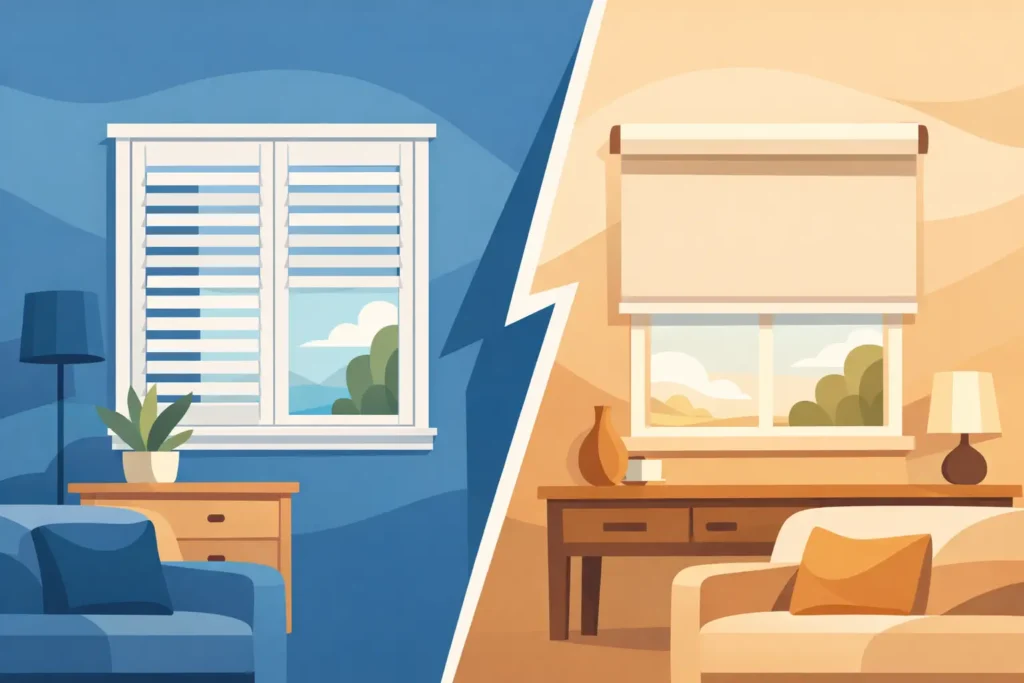
A window treatment can change more than the look of a room. It affects privacy, light, comfort, and how finished the space feels day to day. If you are weighing a shutters vs shades comparison, the right choice usually comes down to how you live in the room, how much control you want, and whether you are prioritizing a clean architectural look or softer design flexibility.
In Los Angeles homes, that decision matters even more. Strong sun, heat, street-facing windows, and open-plan living spaces all put different demands on window coverings. What works beautifully in a formal dining room may not be the best fit for a bedroom, office, or family room that gets used constantly.
Shutters vs Shades Comparison: The Core Difference
Shutters and shades solve similar problems in very different ways. Shutters are structured window coverings with fixed frames and adjustable louvers. They become part of the window itself, which gives them a built-in, custom appearance. Shades are fabric-based window treatments that raise, lower, or adjust depending on the style, offering a softer and often more flexible look.
That basic difference shapes almost everything else. Shutters tend to feel permanent, tailored, and architectural. Shades usually feel more decorative, versatile, and easy to coordinate with changing interiors. Neither is automatically better. The better option depends on whether you want the window treatment to act more like a design feature or a softer layer within the room.
Style and Overall Look
Shutters are often the choice for homeowners who want a clean, polished finish. They work especially well in spaces where you want the windows to feel substantial and intentional. In many homes, shutters add visual structure and can make a room look more refined without needing much else around the window.
They are also a strong match for interiors that lean traditional, transitional, coastal, or classic California casual. Because they are custom fit and framed, they tend to look neat from every angle. That matters in living rooms, front-facing rooms, and offices where the windows are a visible part of the design.
Shades offer a broader design range. If you want texture, softness, pattern, or a more layered look, shades usually give you more options. Roman shades can feel tailored and elegant. Roller shades can feel minimal and modern. Woven shades add warmth and texture. Cellular shades can look simple while improving insulation.
If your design direction may change over time, shades can be easier to refresh. They allow more freedom with color, fabric, and opacity, which helps when a room needs personality rather than structure.
Privacy and Light Control
Privacy is one of the biggest deciding factors in any shutters vs shades comparison. Both can provide privacy, but they do it differently.
Shutters let you tilt the louvers to control visibility and light at the same time. That is helpful in rooms where you want daylight without fully opening the window treatment. A street-facing living room or home office is a good example. You can keep the room bright while still limiting direct views from outside.
Shades tend to offer privacy through fabric opacity. Light-filtering fabrics soften sunlight and provide some daytime privacy, while blackout options block far more light and visibility. This can be ideal in bedrooms, nurseries, and media rooms where you want stronger control over glare or darkness.
The trade-off is that many shades are either up or down in their basic function. Some styles offer top-down or dual-function options, but in general, shutters give more in-between control throughout the day. Shades can offer better room darkening, depending on the fabric and installation.
Energy Efficiency and Comfort
In sunny Southern California, comfort matters. West-facing windows and afternoon heat can quickly make a room harder to use.
Shutters can help reduce solar gain by blocking direct light and creating a solid barrier at the window. Their fitted design can be effective for managing light and heat, especially when installed well. They also hold up nicely in areas where sun exposure is intense.
Some shades, especially cellular shades, are specifically designed to improve insulation. Their honeycomb structure traps air and can help moderate indoor temperatures. Solar shades can also reduce glare and UV exposure while maintaining some outward visibility, which many homeowners appreciate in living spaces with large windows.
This is one area where room use matters more than general preference. If your priority is a durable, sun-ready solution with adjustable light control, shutters may be the better fit. If your goal is softness plus targeted energy performance, certain shades may be the stronger option.
Durability and Maintenance
Shutters are known for durability. Because they are made from solid materials and mounted as a fixed installation, they generally stand up well to daily use. They are often a smart choice for busy households, especially in main living areas where window treatments get touched often.
Cleaning shutters is usually straightforward. A light dusting or wipe-down is often enough. They do not need laundering, and they are less likely to show wear the way some fabrics can over time.
Shades vary more by material and style. Some are very low maintenance, while others require more care. Fabric shades can collect dust and may need gentler cleaning. In high-traffic homes or rooms with pets and kids, certain fabrics may show wear sooner than a hard treatment would.
That does not mean shades are fragile. High-quality shades perform very well when chosen for the right setting. It simply means durability is less universal across the category, so selection matters more.
Cost and Long-Term Value
Cost is often where homeowners expect a simple answer, but it depends on window size, material, customization, and operation.
Shutters usually come with a higher upfront investment. They are custom built, professionally installed, and intended to function as a long-term feature of the home. For many homeowners, the value is in their durability, timeless look, and the way they elevate a room.
Shades often offer a wider pricing range. That makes them appealing when you are covering multiple windows or trying to balance style with a specific budget. You can choose from practical, streamlined options or higher-end designer fabrics and motorized systems.
If you are comparing purely on initial price, shades often come out lower. If you are comparing on permanence and lifespan, shutters can justify the investment. The better value depends on whether you are furnishing a forever home, updating one room, or improving a property before sale or lease.
Best Rooms for Shutters
Shutters often work best where you want a finished, upscale appearance and reliable daily performance. They are a strong choice in living rooms, dining rooms, home offices, and primary bedrooms. They also suit street-facing windows where privacy and appearance both matter.
In areas with moisture, the material matters. Some shutter options are well suited for bathrooms or kitchens, while others are better reserved for drier rooms. A proper recommendation depends on the product and the environment.
Best Rooms for Shades
Shades shine in spaces where softness, flexibility, or specialized light control is the priority. Bedrooms are a natural fit, especially when blackout or layered light control is needed. Family rooms, nurseries, and media rooms also benefit from shade options that manage glare and soften the room visually.
They are also useful for large windows and sliding doors, particularly when a clean stack or minimal profile is important. Motorized shades can be especially practical in hard-to-reach windows or modern spaces where convenience matters as much as appearance.
When the Right Answer Is Both
Some of the best-designed homes do not choose one category for every room. They mix shutters and shades based on function. Shutters may make sense in formal areas and front-facing rooms, while shades work better in bedrooms or spaces that need blackout control.
This approach often creates a better result than forcing one product throughout the entire house. Consistency matters, but so does using the right treatment for each room. A custom plan can keep the overall design cohesive while giving each space what it actually needs.
How to Make the Right Choice
If you are still deciding, start with three questions. How much privacy do you need during the day? How soft or structured do you want the room to feel? And how permanent do you want the solution to be?
From there, look at the windows themselves. Their size, shape, sun exposure, and visibility from the street all affect what will perform best. Budget matters too, but it should be considered alongside daily use. A lower upfront cost is not always the better long-term fit, and a higher-end product only makes sense if it solves the right problem.
For most homeowners, the easiest path is seeing samples in the actual space. Color, texture, and light behave very differently at home than they do in a showroom. That is where expert measuring, product guidance, and professional installation make the decision much simpler. Blinds by Design helps homeowners compare options in person, match the treatment to the room, and get a custom-fit result without piecing the process together on their own.
The best window treatment is the one that feels right every morning when you open the room to light and every evening when you want comfort, privacy, and a space that feels complete.