
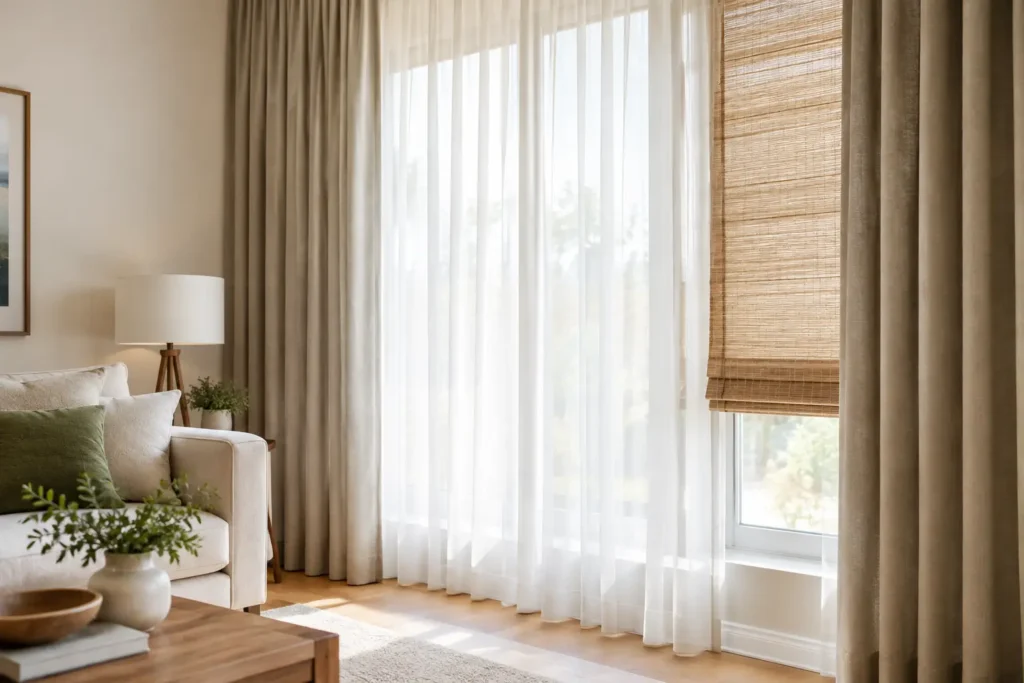
Los Angeles light can be one of a home’s best features – until afternoon glare hits the television, a street-facing bedroom feels too exposed, or a home office becomes difficult to use. Learning how to layer window coverings gives you more control without sacrificing the open, finished look you want. The right combination can soften a room, improve privacy, reduce harsh sun, and make everyday living more comfortable.
Layered window treatments simply pair two coverings at the same window. Usually, one layer handles practical needs such as privacy and light control, while the other adds softness, depth, or additional insulation. The best approach is not to add treatments just for decoration. It is to choose each layer for a clear purpose and make sure both work well in the space.
Why Layer Window Coverings?
A single custom shade, blind, or shutter can solve many window concerns. Layering becomes especially useful when one product alone cannot provide the exact balance of light, privacy, and style you need.
For example, a solar shade may preserve an exterior view and reduce daytime glare, but it will not offer complete privacy after dark. Adding drapery panels or a lined side panel can make the room feel more private at night while introducing color and texture. In a bedroom, room-darkening shades paired with decorative drapery can provide better sleep conditions and a more polished design than either treatment on its own.
Layering also gives a room greater visual dimension. Windows can feel flat or unfinished when they are the only bare surface on a wall. A carefully selected outer layer can frame the window, connect with furniture and wall colors, and make standard-size windows look more substantial. The trade-off is that two layers require thoughtful measuring, proper mounting space, and a coordinated color plan. This is where custom design guidance makes a meaningful difference.
How to Layer Window Coverings in the Right Order
The most reliable order is to place the functional treatment closest to the glass and the decorative or secondary treatment toward the room. This arrangement protects the inner layer, keeps the window’s operation practical, and creates a clean, intentional look.
Start With the Layer That Solves the Main Problem
Before choosing fabrics or finishes, identify what the room needs most. Is direct sun fading floors or furniture? Is privacy the priority? Do you need to reduce glare for a computer screen, darken a nursery, or keep a first-floor room from feeling exposed?
For daytime glare and UV management, solar shades are often a strong base layer. They filter light while maintaining a degree of outward visibility, making them well suited to living rooms, offices, and spaces with large windows. For more flexible light control, consider blinds with adjustable slats or light-filtering shades that can be raised when you want a clearer view.
Bedrooms and media rooms usually benefit from a more light-blocking foundation. A room-darkening roller shade, cellular shade, or similar custom option can provide dependable coverage. Keep in mind that no inside-mounted treatment eliminates every edge gap. If near-total darkness matters, an outer drapery layer can cover more of the window perimeter and improve the result.
Shutters can also serve as a substantial primary layer. Their tailored structure, adjustable louvers, and durability make them a popular choice for homeowners who want privacy and light control without adding fabric. In many rooms, shutters look complete on their own. If you add an outer layer, keep it simple so the shutter remains the focal point rather than becoming visually crowded.
Add an Outer Layer for Softness, Privacy, or Darkness
Once the base treatment is selected, the outer layer should add a benefit the first layer does not provide. Drapery panels are the most familiar option. They can be stationary for a framed, decorative appearance or operable when you need to open and close them. Lined panels offer added privacy and insulation, while blackout-lined panels can help block more light in bedrooms.
For a lighter look, consider sheer panels over a functional shade. Sheers diffuse bright sunlight and soften hard lines without making a room feel heavy. This combination works beautifully in formal living areas, dining rooms, and spaces where you want a welcoming, layered look but do not need complete darkness.
Valances and cornices are another option, especially when the goal is to conceal shade hardware or create a more traditional finish. They are best used with restraint. In a contemporary Los Angeles home, a clean shade paired with tailored panels may feel more current than a large, heavily detailed top treatment.
Choose Combinations That Fit the Room
The best layered window treatment changes from room to room. A combination that feels right in a bedroom may be impractical in a kitchen or office.
In a living room with strong western exposure, a solar shade close to the glass and drapery panels at the sides can provide daytime comfort without closing off the room. Choose a fabric that complements the wall color rather than competing with it. If the view is a major feature, select panels that stack fully clear of the glass when open.
In bedrooms, pair a room-darkening shade with lined drapery for a comfortable balance of function and finish. This setup is useful for shift workers, young children, and anyone bothered by early morning light. If privacy is the larger concern, shutters or blinds with adjustable louvers can be paired with stationary panels for a softer visual effect.
For home offices, practicality usually comes first. A solar shade can reduce screen glare while preserving daylight, and side panels can improve the room’s acoustics and make the space feel less utilitarian. Motorized shades are particularly convenient for tall windows, hard-to-reach areas, or rooms where light conditions change throughout the day.
In kitchens and bathrooms, fabric needs extra consideration. Moisture, cooking residue, and frequent cleaning may make a durable blind, shade, or shutter the better choice near the window. If you want a layered appearance, use a simple, easy-care top treatment positioned away from sinks and cooking surfaces.
Get Scale, Mounting, and Color Right
Layered treatments need room to operate. Before choosing products, measure the depth of the window, surrounding wall space, trim, and clearance around doors or furniture. An inside-mounted shade may fit neatly within the frame, while an outside-mounted drapery rod needs enough wall width for panels to stack without blocking the glass.
Mounting height has a major effect on the finished look. Installing drapery hardware higher than the top of the window can make ceilings appear taller, while extending the rod beyond the frame can make the window seem wider. These proportions are especially helpful in smaller bedrooms, condos, and offices where every visual improvement counts.
Color and texture should be coordinated, not identical. If your shade is smooth and neutral, drapery can introduce a subtle woven texture or a color pulled from nearby upholstery. If your shutters have a strong architectural presence, choose panels in a quiet fabric that supports rather than overwhelms them. Too many competing patterns can make a window feel busy, particularly when the room already has bold flooring, artwork, or furniture.
Plan for Everyday Use and Safety
A beautiful layered treatment should remain easy to use. Think through which layer will be adjusted daily and which will stay mostly in place. For example, a solar shade might be raised each morning while stationary drapery panels remain open at the sides. In a bedroom, both the shade and drapery may be closed every evening, so smooth operation matters.
Motorization can simplify layered installations, particularly on large windows or in homes with multiple treatments in the same room. It allows you to manage glare, privacy, and light levels with consistent positioning rather than manually adjusting several coverings. Cordless and motorized options are also worth considering in homes with children or pets.
Professional measurement is valuable because layered treatments leave little room for error. A rod installed too close to the shade, panels that are too short, or a shade that interferes with window handles can affect both appearance and function. Custom sizing also helps ensure that each treatment aligns properly with trim, doors, and neighboring windows.
A layered window design should make your home easier to enjoy, not give you another design decision to second-guess. For homeowners and offices in Los Angeles and Orange County, Blinds by Design can bring samples directly to your space, evaluate light and privacy needs, and help create a custom combination that looks right from every angle.