
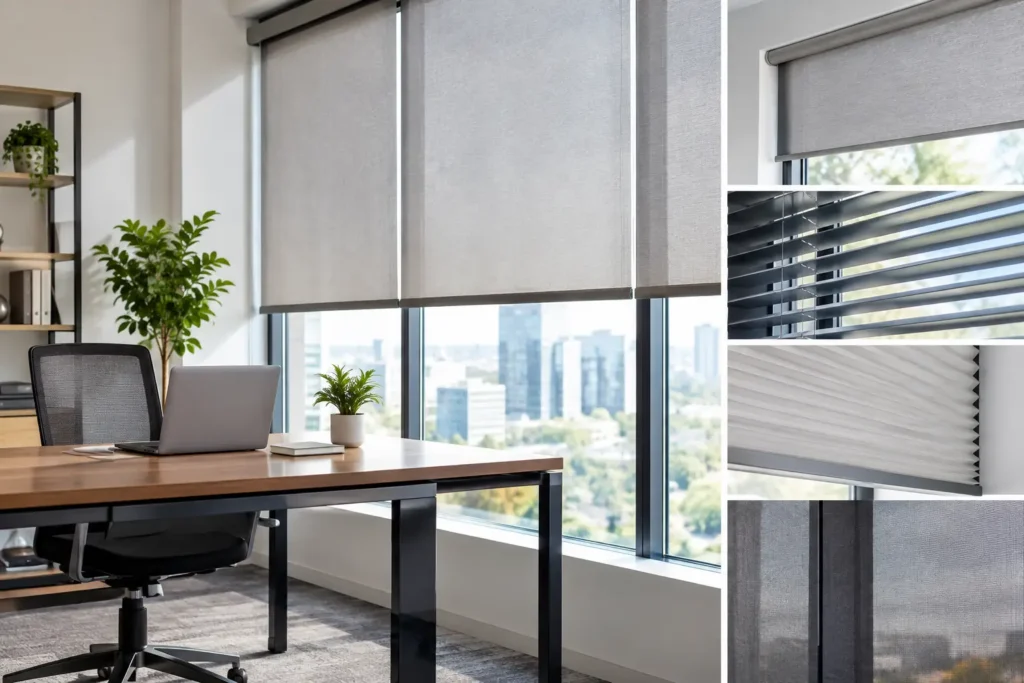
A street-facing conference room, a glass-walled executive office, and a workstation beside a west-facing window all need privacy, but not in the same way. The right treatment has to handle more than a view. This office privacy shade guide helps Los Angeles-area businesses choose shades that support confidential work, reduce screen glare, and complement the look of the space.
Privacy is often treated as a simple yes-or-no feature. In a working office, it is more nuanced. Employees may need to see daylight without feeling exposed. Clients need a meeting room that feels private without becoming dark or closed off. And property managers need window coverings that look polished, operate reliably, and stand up to daily use.
Start With the Type of Privacy Your Office Needs
Before selecting fabric, color, or operating style, consider what people can see from outside and what people inside need to do near the window. A reception area usually benefits from daytime screening and a clean first impression. A medical, legal, financial, or HR office may require stronger visual privacy during business hours and after dark. Conference rooms often need both privacy and glare control for presentations.
Daytime privacy and nighttime privacy are not the same. A light-filtering or solar shade can soften views into an office during the day, especially when exterior light is brighter than interior light. After sunset, the effect changes. If the office is brightly lit inside, people outdoors may be able to see silhouettes or activity through a sheer fabric.
For spaces that need dependable privacy at all hours, consider a room-darkening shade, blackout roller shade, or a layered treatment. The best choice depends on whether the room also needs daylight, outside visibility, or full darkness for screens and presentations.
Office Privacy Shade Guide: Match the Shade to the Room
Reception areas and street-facing offices
Reception windows set expectations before a visitor walks through the door. Roller shades and solar shades are popular here because they create a neat, modern profile and can be raised quickly when more light is welcome. A solar fabric with a low openness factor can reduce visibility from the sidewalk while still bringing in filtered daylight.
If the reception area faces heavy pedestrian traffic or a neighboring building at close range, a dual-shade system can be a practical solution. It provides a light-filtering layer for daytime use and a more private layer for evenings or sensitive moments. This approach costs more than a single shade, but it gives the space flexibility without adding a bulky appearance.
Conference rooms and training spaces
Conference rooms need control. Video calls, presentations, whiteboards, and client conversations all place different demands on the windows. Room-darkening roller shades are often a strong fit because they reduce glare and help keep conversations less visible from outside.
True blackout shades provide the highest level of light blockage, but small light gaps can remain at the sides unless the installation includes side channels or a carefully planned fit. For many offices, room-darkening fabric is sufficient and can feel less severe than blackout. If presentations happen regularly, motorization also makes sense. One touch can prepare the room for a meeting without someone walking around the table to adjust several shades.
Private offices and glass partitions
Windows are not the only privacy challenge in modern workplaces. Glass partitions can make an office feel open while leaving employees exposed during one-on-ones, interviews, and confidential calls. Roller shades mounted inside or outside a glass partition can create privacy on demand while preserving the open look when raised.
For exterior windows in private offices, consider the balance between focus and connection. A darker solar shade may reduce glare and outside visibility while preserving some view out. A room-darkening shade offers stronger privacy but can make a smaller office feel more enclosed. The right fabric depends on the window orientation, nearby buildings, and how often the room is used for confidential work.
Workstations and open office areas
Open offices rarely need total privacy at every window. Their bigger concerns are glare, heat, and visual comfort. Solar shades can help reduce harsh sunlight on monitors while maintaining a brighter, more connected workspace. They are especially useful on broad banks of windows where individual blinds would create a busy, uneven appearance.
For workstations facing east or west, shade selection should account for low-angle sun. A fabric that performs well at noon may not control glare early in the morning or late in the afternoon. During an in-office consultation, observing the window direction and surrounding conditions helps identify the right openness level and coverage.
Understand Fabric Openness and Light Control
Solar shades are commonly described by their openness factor, which refers to the weave of the fabric. A lower percentage means a tighter weave. This offers more privacy and glare control, but less view through the shade. A higher percentage preserves more of the view and daylight, but it provides less privacy.
For example, a 1% to 3% openness fabric may suit offices with close neighboring buildings, bright sun exposure, or screen-heavy work. A 5% fabric can be a balanced choice where daylight and outward visibility matter. Higher openness fabrics may work in offices with a private exterior view, but they are usually not the first choice for street-facing or confidential spaces.
Color matters, too. Darker solar fabrics often offer a clearer view outward during the day, while lighter fabrics can brighten a room and reflect more light. Neither is automatically better. The right choice depends on the room’s lighting, furniture, wall colors, and privacy priorities.
Choose an Operating Style That People Will Actually Use
A privacy shade only works when it is easy to operate. Chain-driven roller shades are a reliable, cost-conscious option for many offices. Cordless systems create a cleaner look and eliminate dangling cords, which can be helpful in client-facing spaces.
Motorized shades are particularly useful for large windows, hard-to-reach glass, conference rooms, and offices with multiple shades that should move together. They can be controlled by remote, wall switch, or selected smart-home-style systems, depending on the product. Motorization adds to the initial investment, but it can improve consistency, convenience, and the professional feel of the space.
When considering motorization, think beyond the first day of installation. Ask how the shades will be powered, whether charging or battery replacement is needed, and who will be responsible for controls. A well-planned system is simple for staff to use and does not become another maintenance task.
Do Not Overlook Custom Measurement and Installation
Offices often have uneven window openings, deep sills, mullions, door clearances, or window frames that make ready-made shades a poor fit. Even a high-quality privacy fabric can underperform if the shade is mounted incorrectly or leaves larger-than-expected gaps.
Custom measurement helps determine whether an inside mount or outside mount will provide better coverage. An inside mount creates a tailored, built-in appearance, while an outside mount may cover more of the opening and reduce side light gaps. There is no universal answer. The window construction and the desired level of privacy should guide the decision.
Professional installation also matters for smooth operation, level alignment, and safe mounting. This is especially true with wide commercial windows and motorized products. A treatment that looks straight and functions properly reinforces the professional image your office is trying to create.
Coordinate Privacy With Your Office Design
Privacy shades should feel like part of the interior, not an afterthought. Neutral roller fabrics can support a clean, contemporary office. Woven textures can add warmth to professional suites, while tailored Roman shades may suit smaller offices where a softer residential feel is appropriate.
Keep the rest of the space in mind. If the office already has patterned flooring, artwork, and branded colors, a quiet shade fabric may provide balance. If the space feels stark, texture or a carefully chosen color can add character without compromising function. The goal is a treatment that employees and clients barely have to think about because it simply works and looks right.
Blinds by Design can bring product samples directly to your office so you can compare fabrics, colors, privacy levels, and operating options in the actual light of the room. Seeing the materials at the window makes it easier to avoid a choice that looks good in a showroom but feels too dark, too sheer, or too formal once installed.
A thoughtful shade plan gives your team control over what is seen, what is reflected, and how the workspace feels throughout the day. Schedule a free consultation before settling on a fabric, and let the windows themselves guide the decision.