
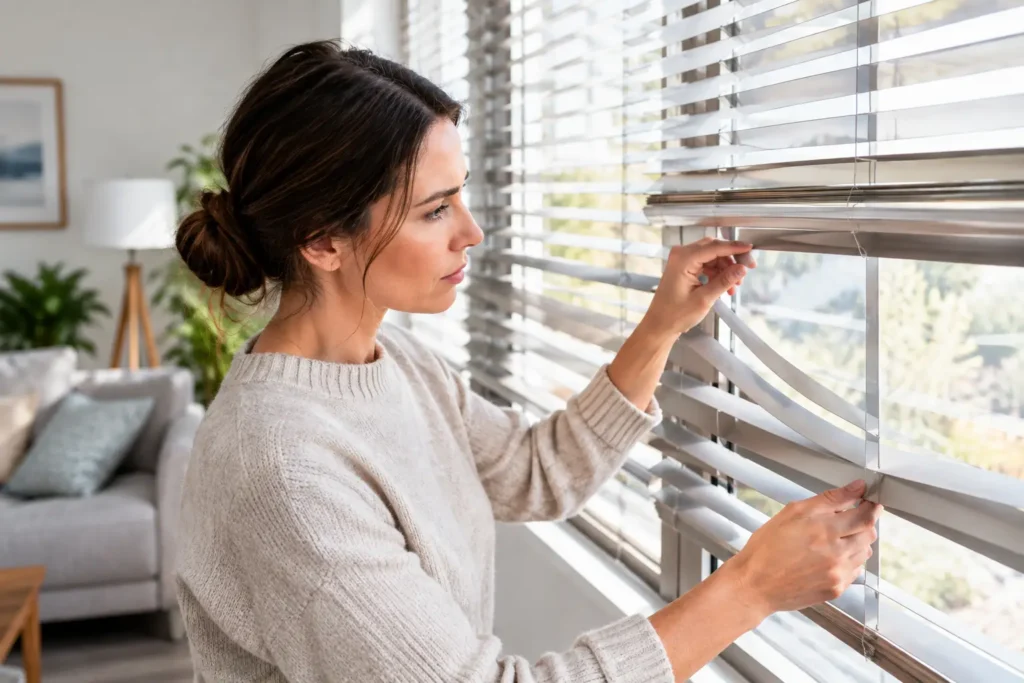
A blind that sticks halfway up on a sunny afternoon, slats that will not stay tilted, or a cord that catches every time you reach for it can turn a small annoyance into a daily frustration. Knowing when to replace window blinds helps you protect privacy, manage heat and glare, and keep your rooms looking finished rather than worn down.
Blinds do not need to be visibly broken to be ready for replacement. Sometimes the clearest signal is that they no longer work for your home, whether that means harsh afternoon sun in a living room, a lack of privacy in a bedroom, or a style that feels out of place after a remodel. The right time depends on condition, performance, and the role each window treatment plays in the space.
When to Replace Window Blinds: The Signs to Watch For
1. The operating parts are unreliable
Blinds should raise, lower, and tilt without a struggle. If the wand will not turn, the lift mechanism slips, cords fray, or slats repeatedly fall out of alignment, the window covering is no longer doing its job reliably. Minor issues can sometimes be repaired, especially when the blinds are otherwise in good condition and the needed part is available.
However, repeated repairs are often a sign that replacement will be the better value. Older mechanisms may not have compatible replacement parts, and fixing one worn component does not prevent another from failing soon after. For homes with children or pets, damaged cords should be addressed promptly rather than treated as a cosmetic issue.
2. Slats are bent, cracked, warped, or missing
A few small dents on aluminum mini blinds may not affect daily use. But bent slats can catch against one another, create gaps when closed, and make the entire window look uneven. Vinyl blinds can become brittle with age, while faux wood or wood slats may warp from moisture, direct sun, or changes in humidity.
If several slats are damaged, replacement usually creates a cleaner result than trying to swap individual pieces. This is particularly true on prominent windows in living rooms, kitchens, entryways, and offices, where uneven blinds are easy to notice.
3. Your blinds no longer provide enough privacy
Privacy needs can change as landscaping grows, nearby homes are built, or a room’s use changes. A nursery, primary bedroom, bathroom, or street-facing office may need more coverage than standard blinds can provide. Wide gaps between slats, warped materials, and poor fit can all leave sightlines into a room.
A custom-fit shade, shutter, or blind can offer more dependable coverage without making the room feel closed in. Top-down/bottom-up shades, for example, can bring in daylight from above while keeping the lower part of the window covered. The best option depends on the window placement, the view, and how much privacy you need at different times of day.
4. Sun glare and heat have become a constant problem
Los Angeles and Orange County homes often deal with strong sunlight for much of the year. If you are constantly adjusting blinds to see a television screen, work at a desk, or keep a room comfortable, the issue may be less about the condition of your blinds and more about their design.
Basic blinds can direct light, but they may not sufficiently soften glare or reduce solar heat. Cellular shades can add insulation, solar shades can preserve an outside view while filtering glare, and layered treatments can give you greater flexibility throughout the day. Replacing a functional but poorly matched treatment can make a noticeable difference in comfort, especially on west-facing windows.
5. Fading or discoloration is changing the look of the room
Sun exposure takes a visible toll. White vinyl may yellow, painted finishes can fade, and wood tones may lose consistency across a wall of windows. Fabric treatments can also fade unevenly, particularly when one window receives more direct light than another.
Fading does not always mean a blind is unusable, but it can make an otherwise well-designed room feel dated. If you have updated flooring, furniture, paint, or cabinetry, old window coverings may be the remaining element preventing the space from feeling cohesive. New treatments give you the chance to coordinate color, texture, and scale with the rest of your design.
6. They are difficult to clean or show permanent staining
Dust, kitchen residue, pet hair, and everyday handling build up over time. Aluminum and faux wood blinds are usually straightforward to wipe down, while fabric shades may require more careful cleaning. When discoloration, stains, or embedded grime remain after proper cleaning, replacement can be more practical than continued upkeep.
This matters most in kitchens, bathrooms, and busy family spaces. Moisture and grease can shorten the useful life of materials that are not suited to the room. Choosing a more durable, easy-care material during replacement helps prevent the same issue from returning.
7. The blinds do not fit the window correctly
Poor fit is one of the strongest reasons to replace window blinds. Treatments that are too narrow can leave large side gaps. Treatments that are too long may bunch at the sill or interfere with a door handle. Outside-mounted blinds that sit unevenly can make even a quality product look unfinished.
Off-the-shelf sizes are convenient, but they cannot account for every window’s exact dimensions, depth, trim, or hardware. Custom measurement is especially valuable for wide windows, bay windows, French doors, unusually shaped openings, and rooms with several windows that should look coordinated.
8. Your needs have changed since the blinds were installed
A room rarely stays the same forever. A guest room becomes a home office. A bright family room becomes a media room. An aging parent moves in and needs easier operation, or you simply want fewer cords and less daily adjustment.
Motorized shades and blinds can be a practical upgrade for hard-to-reach windows, large groups of windows, and homeowners who want more convenient light control. They are not necessary for every room, but they can be worth considering when accessibility, safety, or routine use is the priority. The best replacement is not always the most elaborate option. It is the one that supports how you use the space now.
Repair or Replace? Make the Decision by Condition and Cost
Repair makes sense when the issue is isolated: one damaged tilt wand, a loose valance clip, or a component that can be replaced without affecting the blind’s appearance or performance. It can also be a sensible choice for a newer custom treatment that still matches the room and functions well overall.
Replacement is often the better path when problems are widespread, the treatment is visibly dated, or the product no longer meets your needs for privacy, light control, or style. Consider the total cost of repeat repairs, the inconvenience of living with a failing treatment, and what you would gain from a better-fitting solution. In many cases, upgrading one highly used room first is more practical than replacing every window covering at once.
Choosing a Replacement That Lasts
The material should fit the room as much as the design. Faux wood blinds are popular for their classic look and easy maintenance. Real wood offers warmth and a refined finish but may not be ideal for damp spaces. Roller, cellular, Roman, and solar shades each create a different balance of softness, insulation, privacy, and light filtering. Shutters provide a more architectural look and can be a long-term choice for many homes.
Before selecting a color or style, think about how the room faces, when you use it, and what you need the treatment to do. A west-facing family room may call for strong glare control. A bathroom may need moisture-resistant materials and complete privacy. An office may benefit from filtered natural light that reduces screen glare without making the room dark.
Professional measuring and installation help ensure that the finished treatment operates properly and looks intentional. This is where a mobile in-home consultation can be especially helpful: you can compare materials and colors in the actual light of your home, rather than under store lighting or on a small screen.
If your current blinds are frustrating, faded, or simply no longer right for the room, schedule a free consultation with Blinds by Design. Seeing custom options in your own space can turn an uncertain replacement decision into a clear, comfortable next step.