
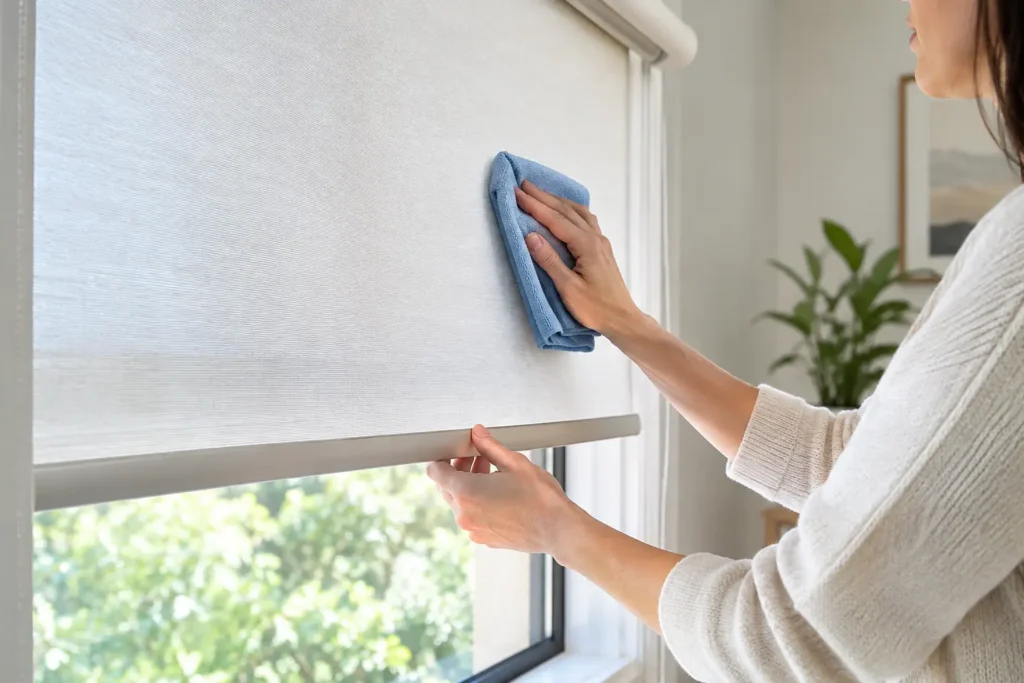
Roller shades are often chosen for their clean lines, practical light control, and easy everyday use. To maintain roller shade fabrics well, however, it helps to treat them differently than curtains or upholstered furniture. The right routine protects the fabric’s finish, keeps dust from becoming embedded, and helps your shades continue to look polished in bright Los Angeles homes and offices.
Start With the Shade Fabric You Have
Not every roller shade should be cleaned the same way. Some fabrics are designed for solar control and have an open weave that preserves a view while filtering glare. Others are room-darkening or blackout materials with a more tightly coated surface. Decorative woven shades, linen-look fabrics, and moisture-resistant options can also have different cleaning needs.
Before using any cleaner, check the manufacturer’s care instructions if they are available. This is especially important for custom roller shades with specialty coatings, printed patterns, or blackout backing. A cleaning method that works on a smooth vinyl-backed shade may not be appropriate for a textured fabric or delicate woven material.
When in doubt, begin with the gentlest option. Dry dusting and light vacuuming solve most routine concerns without introducing moisture or chemicals that could leave marks, affect the coating, or change the way the shade rolls.
Build a Simple Dusting Routine
Dust is the main enemy of roller shade fabrics. In Southern California, open windows, dry conditions, nearby construction, pets, and daily traffic can leave a fine layer of dust on window coverings faster than many homeowners expect. Left alone, that dust can settle into the weave and make light-colored shades appear dull.
A quick dusting every few weeks is usually enough for most rooms. Lower the shade fully so the fabric is taut, then use a clean microfiber cloth or a feather-free duster. Work from the top of the shade to the bottom with light, even strokes. Avoid pressing hard, especially on woven or textured fabrics.
For shades in kitchens, entryways, children’s rooms, or homes with pets, dusting may be needed more often. The goal is not to deep-clean the shade constantly. It is to prevent everyday buildup from turning into a larger cleaning job.
Vacuum Carefully When Dust Is Set In
A vacuum with a soft brush attachment can lift dust that a microfiber cloth leaves behind. Use the lowest suction setting possible and move in smooth vertical passes. Keep the attachment flat against the fabric without pulling or dragging it.
Do not use a narrow crevice tool directly on roller shade fabric. Strong suction concentrated in one small area can stretch delicate material, catch a loose thread, or leave uneven pressure marks. If the shade has a blackout backing, vacuum the room-facing fabric surface only unless the manufacturer specifically recommends otherwise.
Spot-Clean Stains Without Spreading Them
A small fingerprint, splash, or pet mark does not always require a full cleaning. Spot-cleaning is usually the safer approach, but it needs a light touch. Rubbing aggressively can push a stain deeper into the fabric or create a visible cleaned spot around it.
First, lower the shade completely and test your method in a discreet area near the bottom edge. Dampen a white microfiber cloth with water, then blot the stain gently. A white cloth matters because colored towels can transfer dye onto lighter fabrics.
If water alone does not help, use a very mild soap solution only when the fabric’s care instructions permit it. A small amount of gentle dish soap mixed into water is often sufficient. Blot rather than scrub, then use a second cloth lightly dampened with plain water to remove soap residue. Let the shade air-dry fully in the lowered position before rolling it up.
Avoid bleach, alcohol, abrasive cleaners, stain sprays, and upholstery shampoos unless the shade manufacturer has approved them. These products can weaken coatings, alter color, leave rings, or reduce the effectiveness of blackout and solar-control materials.
Be Extra Careful With Blackout and Solar Shades
Blackout roller shades often include a backing or coating that blocks light. Solar shades are engineered to manage glare and UV exposure while maintaining varying degrees of outward visibility. Both are hardworking materials, but their performance layers deserve careful treatment.
For blackout shades, excessive moisture is the common concern. Saturating the fabric can cause water marks, affect adhesive layers, or make the shade stick to itself when raised too soon. Use only a lightly dampened cloth and allow ample drying time.
Solar shades can collect dust within their open weave. Vacuuming with a soft brush is often more effective than wet cleaning, particularly when the material has a textured appearance. Do not poke at the weave or use stiff brushes, as that can distort the openings and affect how evenly the shade filters light.
Keep Moisture and Heat in Check
Bathrooms, kitchens, and sunny west-facing rooms ask more of roller shade fabrics. Humidity, cooking residue, and intense heat can all affect how a shade looks and operates over time.
In a bathroom, run the exhaust fan during and after showers to reduce lingering moisture. If condensation forms on the shade or window, lower the shade and allow it to dry completely. For kitchen shades, address grease early with approved gentle spot-cleaning rather than waiting for a sticky film to build.
Direct sun is not a reason to avoid roller shades – it is often exactly why homeowners choose them. Still, repeated heat exposure can be hard on any window treatment. Quality materials are designed to resist fading, but no fabric is completely immune to years of harsh sunlight. Selecting the right openness, color, and fabric type for the window at the start makes long-term care much easier.
Protect the Roller Mechanism, Too
A shade that looks clean but rolls unevenly can still make the room feel unfinished. When cleaning your roller shade fabrics, take a moment to inspect the hardware. Make sure the fabric is winding evenly around the tube and that the bottom rail is level when fully lowered.
Operate the shade gently rather than snapping it up or pulling it down at an angle. For chain-operated shades, keep the chain free of tangles and avoid forcing it if movement feels stiff. Motorized shades should move smoothly and stop at their programmed limits. If a shade begins to skew, bind, fray at the edges, or stop operating consistently, avoid repeated force. A minor alignment or hardware issue is often easier to repair before it causes fabric damage.
Do not apply household lubricants directly to shade fabric, chains, or motorized components. The wrong product can attract dust, stain fabric, or interfere with the system. Professional service is the better choice when the mechanism needs adjustment.
Know When Professional Help Makes Sense
Routine maintenance handles most dust and small surface marks, but certain issues deserve an experienced eye. Stubborn grease stains, discoloration, mildew concerns, damaged edges, frayed fabric, or a roller that no longer tracks straight may require repair or replacement rather than more cleaning.
This is particularly true for custom-fitted shades, where the fabric, roller tube, brackets, and control system are designed to work together. Replacing only one component without proper measuring or installation can affect fit, light gaps, and daily performance.
For homeowners and office clients, Blinds by Design can help evaluate whether an existing roller shade needs professional repair, a fabric replacement, or a new custom solution better suited to the room. A consultation is also a useful time to discuss fabrics that match your lifestyle, whether that means easy-clean materials for a busy kitchen, moisture-resistant shades for a bathroom, or solar fabrics for glare-heavy windows.
A little regular care keeps roller shades looking intentional rather than overlooked. Treat the fabric gently, address dust before it settles in, and call for support when operation changes. Your window treatments should make the room more comfortable every day, not become another item on the weekend cleaning list.