
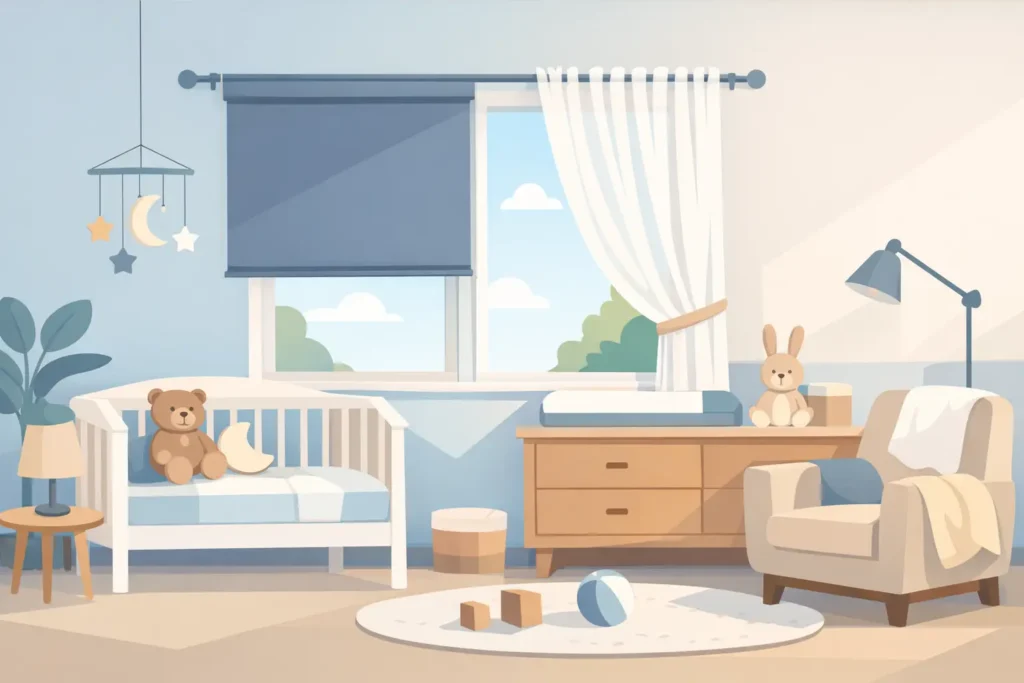
A nursery can look calm and beautifully finished, yet still be difficult to use if early morning sun wakes the baby, afternoon heat builds near the crib, or a street-facing window feels too exposed. The best window coverings for nurseries solve those everyday concerns without adding avoidable safety risks or clashing with the room you have carefully planned.
For most families, the right answer is not simply the darkest shade or the most decorative fabric. It is a custom-fit treatment that supports safe operation, better sleep, privacy, and a comfortable room temperature. It should also work as your nursery becomes a toddler’s room and eventually a space with its own changing style.
Start With Safety and Daily Use
A nursery window treatment should be easy for adults to use and difficult for a child to interfere with. Cordless shades and blinds are a strong choice because they remove the hanging cords that can become hazardous near cribs, changing tables, and climbing furniture. When a treatment has cords, chains, or continuous loops, those components must be properly secured and kept inaccessible to children. In a nursery, cordless is usually the simpler and more reassuring route.
Motorized window coverings are another practical option, especially for tall windows or rooms where parents want to adjust light without disturbing a sleeping child. A remote, wall control, or smart-home control can raise and lower shades quickly at nap time or bedtime. The best setup depends on the product and room layout, but controls should always be positioned out of a child’s reach.
Placement matters as much as the covering itself. Keep the crib away from windows whenever possible, including the treatment, hardware, and any furniture a child could later use to climb. Professional measurement and installation help ensure brackets are securely mounted and that the finished treatment operates as intended.
Best Window Coverings for Nurseries by Need
Every nursery has different light, privacy, and design challenges. A sunny second-story room in Orange County may need more heat control than a shaded room in Downey, while a ground-floor nursery may put privacy at the top of the list. These are the options that most often deliver the right balance.
Cordless Cellular Shades for Comfort and Insulation
Cellular shades are one of the most versatile nursery choices. Their honeycomb-shaped cells trap air, helping reduce heat gain and heat loss through the window. That can make a noticeable difference in Los Angeles-area rooms that receive direct afternoon sun.
They are available in light-filtering and room-darkening fabrics, so parents can choose the amount of light control that fits the room. A top-down/bottom-up design can be particularly helpful when privacy is needed but you still want daylight entering from above. For a nursery facing a neighbor or busy street, that flexibility is valuable.
The trade-off is style preference. Cellular shades have a clean, tailored look rather than the architectural presence of shutters or the softness of drapery. For many modern, transitional, and minimalist nurseries, that simplicity is exactly the appeal.
Room-Darkening Roller Shades for Nap Time
Roller shades offer a streamlined look and are available in a wide range of colors, textures, and opacity levels. A room-darkening fabric is an excellent option for nurseries where strong daylight interferes with daytime naps or causes early wake-ups. For the best result, choose a custom shade sized closely to the window and consider a cassette or other design features that reduce light around the top.
No standard shade can promise a completely dark room when light can enter around the sides of a window or through gaps in the frame. If near-blackout conditions are a priority, a room-darkening roller shade paired with properly fitted side panels or drapery can offer more effective coverage.
Roller shades are easy to coordinate with a nursery’s changing décor. A neutral woven texture can feel warm and relaxed, while a smooth fabric in white, beige, soft blue, or muted green creates a more polished look. Cordless and motorized options keep the operation clean and child-conscious.
Plantation Shutters for Lasting Style and Light Control
Custom shutters are a favorite for homeowners who want a permanent, furniture-quality window treatment. Their adjustable louvers let you direct sunlight upward, preserve privacy, or open the view without fully exposing the room. They are especially well suited to homes with a traditional, coastal, farmhouse, or elevated transitional design.
Shutters do not provide the same near-blackout performance as a layered shade-and-drapery combination because some light can pass between louvers and around the frame. Still, they provide dependable light control, privacy, and a clean finished appearance. Their durable surfaces are also simple to wipe down, which is useful in a room that will see years of fingerprints, dust, and activity.
For a nursery, consider wider louvers if you want a more open view and a contemporary feel. Smaller louvers can create a more classic look. The right frame and color should complement the window trim and the rest of the home’s design, not just the nursery’s current theme.
Layered Shades and Drapery for a Softer Look
Some nurseries need more than one layer. A light-filtering shade can provide daytime privacy and soften glare, while decorative drapery panels add warmth, color, and more room-darkening support at night. This approach works well for parents who want a designed, finished look instead of a single minimal treatment.
If you choose drapery, installation details are essential. Panels and rods must be securely mounted, and cords, tiebacks, or other accessories should not be within a child’s reach. Drapery can also collect more dust than hard treatments or simple shades, so washable fabrics or a regular cleaning routine may be helpful.
A layered treatment is often ideal for large windows, sliding doors near a nursery, or rooms with challenging light exposure. It does cost more than a single shade, but it gives you the greatest control over light, privacy, and visual softness.
Match the Opacity to the Room’s Light
Terms such as light-filtering, room-darkening, and blackout are often used interchangeably, but they serve different purposes. Light-filtering materials diffuse sunlight and limit visibility from outside while keeping the room bright. They are well suited to nurseries that receive gentle morning light or have another layer for nighttime.
Room-darkening fabrics block substantially more light and are usually the practical choice for nap schedules. Blackout materials can block light through the fabric itself, but the finished room may still have light gaps at the sides, top, or bottom. The window’s shape, treatment style, and installation all affect the final result.
Before choosing a fabric, consider when the room gets direct sun. West-facing windows may need stronger afternoon protection, while east-facing windows may require better morning coverage. A local in-home consultation makes this easier because you can see the actual exposure, window depth, and surrounding privacy conditions before making a decision.
Choose a Design That Can Grow Up
It is tempting to select a nursery treatment around a particular theme, but the most enduring choices are usually flexible. A neutral shade, white or wood-tone shutter, or subtle textured fabric can transition easily from a baby nursery to a child’s room, guest room, or home office.
If you want personality, use a removable layer such as drapery panels rather than making the entire window treatment highly theme-specific. A small floral pattern, a soft stripe, or a playful color can bring character to the room without forcing a full replacement when tastes change.
Custom sizing also matters. Ready-made treatments may leave uneven gaps, operate poorly, or look undersized on larger windows. A professionally measured treatment is designed for the exact opening, which improves both appearance and light control.
Why Professional Installation Is Worth It
Nursery window coverings need to look good, but they also need to operate reliably every day. Accurate measuring determines how much light enters around the edges, how a shade clears trim or a window handle, and whether the treatment can be mounted inside or outside the frame. Installation affects safety, alignment, and long-term performance.
Blinds by Design brings product samples and design guidance directly to your home, making it easier to compare colors, materials, and light-filtering options in the nursery itself. With custom measurement and professional installation, you can choose a treatment that fits the window, supports your routine, and complements the rest of your home.
A nursery should feel restful for the baby and practical for the adults caring for them. Choose a cordless, custom-fit covering that gives you the level of darkness and privacy your room truly needs, then let the design be something your family can enjoy well beyond the baby years.