
A bright kitchen with afternoon sun, a steamy primary bathroom, and a formal living room rarely need the same shutter material. When comparing composite shutters versus wood shutters, the best choice comes down to the room, the window size, the look you want, and how you expect the shutters to perform over time.
Both options can provide the tailored fit, privacy, and light control homeowners expect from custom plantation shutters. The differences become clearer when you look beyond color samples. Material affects the weight of each panel, how it handles heat and humidity, which window openings it can cover, and the character it brings to the room.
Composite Shutters Versus Wood Shutters at a Glance
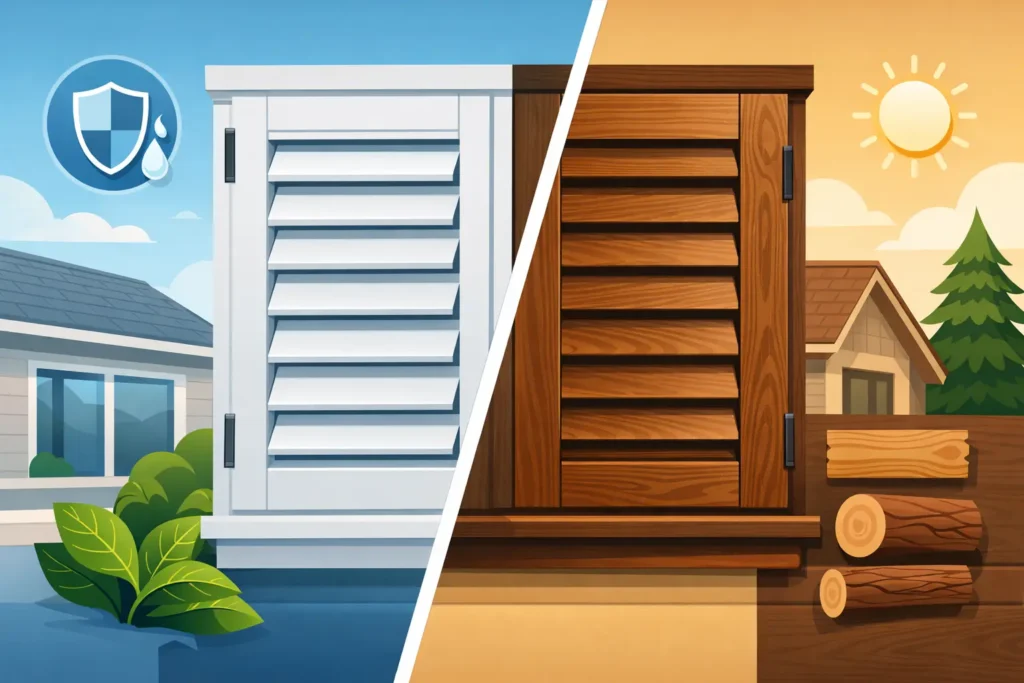
Composite shutters are manufactured from engineered materials, often with a durable finish designed to resemble painted wood. They are valued for their consistent appearance, practical maintenance, and resistance to moisture. For many homes, especially those with high-humidity rooms or busy family spaces, they offer a polished look without demanding much upkeep.
Wood shutters are made from natural hardwood and bring a depth that manufactured materials cannot completely duplicate. They can be painted or stained, allowing for more flexibility when coordinating with cabinetry, flooring, furniture, and architectural details. Wood is also lighter than composite material, which matters on wide windows and large panels.
Neither material is automatically better. A homeowner updating a bathroom may prioritize moisture resistance, while someone restoring a traditional living room may care most about the grain, finish options, and lighter weight of real wood.
Where Composite Shutters Make the Most Sense
Composite shutters are often a strong fit for rooms that experience humidity, changing temperatures, or frequent use. Bathrooms, laundry rooms, kitchens, and pool-adjacent spaces are common choices. Their finish is generally easy to wipe clean, making them practical where splashes, fingerprints, and everyday messes are likely.
For Los Angeles and Orange County homes, composite shutters can also be appealing in spaces that receive intense sun. Quality shutters are built to hold their shape and color, but every window treatment should be selected with the direction of the window and amount of direct exposure in mind. Professional measuring and product guidance help ensure the material, louver size, and panel configuration suit the conditions of the room.
Composite can be a sensible choice when a clean, uniform painted finish is the goal. White and off-white shutters work well with many interior styles, from coastal and transitional spaces to modern kitchens and rental property upgrades. They deliver a crisp architectural look that does not compete with the rest of the room.
Composite trade-offs to consider
The primary consideration is weight. Composite shutters are heavier than wood, which can limit their use on especially wide or tall openings. Larger installations may require more panels, divider rails, or a different configuration to keep the shutters operating properly and looking balanced.
Composite products also tend to offer fewer stain-like finish options. If you want to showcase a warm walnut, espresso, or natural wood appearance with visible grain, real wood may be the more convincing and flexible choice. Not every composite shutter is built the same, either, so the construction quality and warranty deserve attention alongside the price.
Why Homeowners Choose Wood Shutters
Wood shutters are often selected for their visual warmth and design flexibility. Natural wood has subtle variation in grain and texture, creating a more custom, furniture-like presence at the window. In rooms with wood beams, built-ins, traditional millwork, or high-end cabinetry, wood shutters can help tie the design together rather than simply cover the glass.
Wood is also notably lighter. That advantage allows it to work well on larger windows, oversized openings, and installations where fewer, wider panels create a cleaner view. A lighter panel places less stress on hinges and frames, which supports smooth operation over the life of the shutter.
For homeowners who need a precise color match, wood provides more finishing options. It can be painted in a custom color or stained to complement surrounding woodwork. That degree of customization is particularly valuable in homes with an established design scheme where bright white is not the right answer.
Wood requires the right environment
Natural wood is durable, but it is not the first choice for every location. Repeated exposure to steam, excessive moisture, or significant humidity can affect wood over time. A well-ventilated bathroom may still be suitable for wood shutters, but a shower-adjacent window or poorly ventilated laundry room is usually better served by a moisture-resistant composite option.
Wood shutters also need gentle routine care. Dusting with a soft cloth and avoiding overly wet cleaning methods will help preserve the finish. This is not difficult maintenance, but it is a consideration for homeowners who want the most worry-free material possible.
Compare Cost by Long-Term Value, Not Just the Quote
Price matters, but it should be considered in the context of custom sizing, materials, finish options, and installation requirements. Composite shutters may be more budget-friendly in some standard applications, while wood can cost more because of the material and finishing process. The gap can change based on the size and complexity of the windows.
The less expensive option is not always the better value if it does not suit the opening. For example, choosing a heavier composite shutter for a large window when wood would allow a cleaner configuration may create compromises in appearance or function. On the other hand, paying for wood in a moisture-heavy bathroom may not be the wisest long-term investment.
A useful approach is to set priorities for each room: moisture resistance, natural texture, budget, wide-window coverage, color matching, or easy maintenance. That prevents one material from being applied throughout the house simply for the sake of consistency when different rooms have different demands.
Light Control and Privacy Are More About Design Than Material
Both composite and wood shutters can provide excellent privacy and adjustable light control. The louver size, panel layout, and placement of divider rails often have a greater effect on daily function than the material itself.
Larger louvers create a more open view when tilted and can make a room feel less visually busy. Smaller louvers may suit more traditional interiors or windows where tighter light control is preferred. A divider rail lets the top and bottom louvers operate independently, which is helpful when you want daylight from above while maintaining privacy at street level.
The quality of the custom fit is equally important. Shutters should follow the window opening accurately, account for handles and trim, and operate without rubbing or gaps. This is where in-home measuring is especially valuable. Seeing samples against your walls, flooring, and natural light also makes the difference between materials much easier to judge than viewing a small swatch in isolation.
Choosing the Right Shutter for Each Room
Composite shutters are usually the practical front-runner for bathrooms, laundry rooms, kitchens, and other high-moisture areas. They are also a strong choice for homeowners who want a simple painted finish and easy-care routine.
Wood shutters are often the better fit for living rooms, dining rooms, bedrooms, offices, and large window openings where lightweight panels and richer finishing options matter. They are especially compelling when the shutters are intended to be a meaningful part of the room’s design, not just a source of privacy.
For a whole-home project, mixing materials can be a thoughtful solution. A home may use composite shutters in bathrooms and wood shutters in formal or expansive living areas, while keeping colors and louver sizes coordinated for a cohesive result.
Blinds by Design helps homeowners evaluate these decisions in the actual room, with product samples, accurate measurements, and professional installation from start to finish. Schedule a free in-home consultation to see which shutter material feels right in your light, on your windows, and within your plans for the space.