
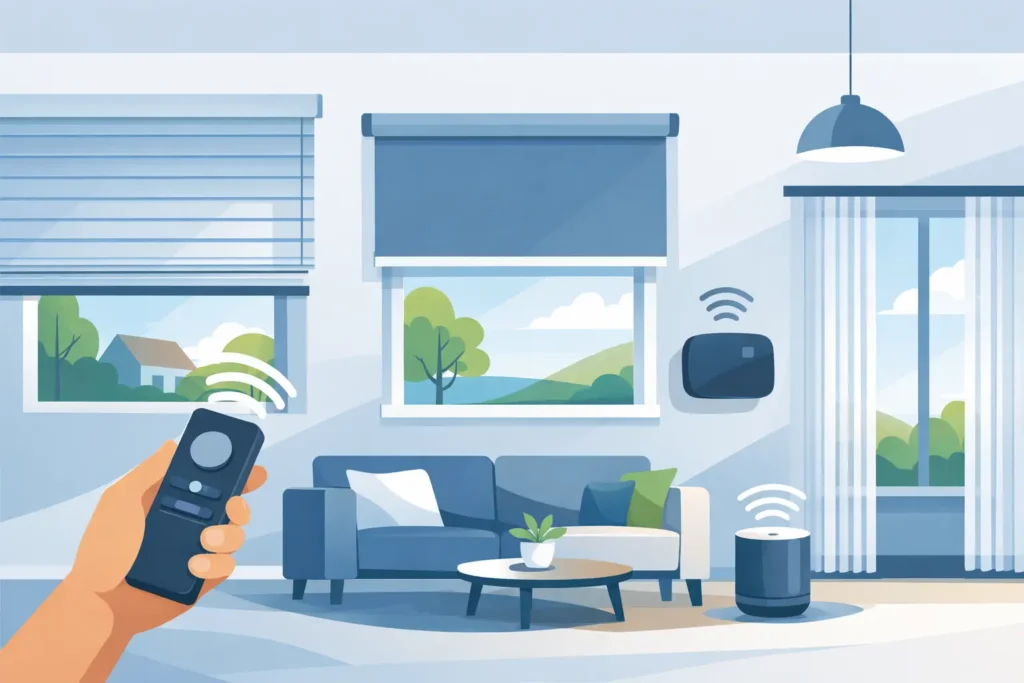
A bright west-facing living room can be beautiful at 4 p.m. until glare turns the television into a mirror and afternoon heat starts building behind the glass. A guide to motorized window treatments begins with that everyday reality: these systems are not simply a luxury feature. When selected and installed correctly, they make privacy, light control, comfort, and energy management easier to handle throughout the day.
For homeowners and office decision-makers in Los Angeles and Orange County, motorized shades, blinds, and shutters are especially useful on large windows, hard-to-reach openings, and rooms that receive strong sun. The best option depends on the window, the room’s purpose, the desired level of privacy, and how you want to operate the treatment.
What Motorized Window Treatments Can Do
Motorized window treatments use a small motor to raise, lower, tilt, or adjust a covering without manual cords or wands. Depending on the product, you may control it with a wall switch, handheld remote, mobile app, voice assistant, or programmed schedule.
The practical benefit is consistency. Instead of leaving shades open because it is inconvenient to adjust several windows, you can close them together before the afternoon sun arrives, then reopen them when you want natural light. In a bedroom, scheduled blackout shades can create a more dependable sleep environment. In an office, motorized treatments can help reduce screen glare without interrupting a meeting.
Cordless operation is another meaningful advantage for families with children or pets. It removes dangling control cords while giving the window a cleaner, more tailored appearance.
Guide to Motorized Window Treatments: Start With the Room
Choosing the right motorized treatment starts with the room, not the remote control. A product that works well in a sunny family room may not be the best choice for a bathroom, bedroom, or conference room.
In living rooms and open-plan spaces, roller shades, solar shades, woven wood shades, and cellular shades can provide broad coverage with a clean look. Solar shades help preserve daytime views while reducing glare and filtering harsh sunlight. Their openness level matters: a more open weave offers a clearer view out but less daytime privacy and less light filtering. A tighter weave increases privacy and sun control but softens the view.
Bedrooms often call for room-darkening or blackout materials. Motorized roller shades with blackout fabric are a straightforward choice, though some light may still appear at the sides of an inside-mounted shade. For a darker result, a professional can discuss outside mounting, side channels when available, or layered treatments that pair a shade with drapery or panels.
For bathrooms and kitchens, moisture-resistant materials and easy-clean surfaces should guide the decision. Faux wood blinds or shutters can be a strong fit where humidity is a concern. Motorization can tilt louvers for privacy while still allowing daylight into the room.
Large or high windows are where motorization often makes the most immediate difference. Clerestory windows, tall entryways, sliding doors, and windows over staircases are difficult to reach safely. A motorized system makes those openings usable rather than decorative windows that remain in one position year-round.
Choose the Right Treatment Style
Motorization is available across many window treatment categories, but each creates a different visual effect and level of light control.
Motorized roller shades offer a minimal, contemporary profile. They work well in modern homes, offices, and rooms where the window trim should remain visible. Fabric choices range from sheer to blackout, making roller shades one of the most flexible options.
Motorized cellular shades are valued for their soft appearance and insulating design. Their honeycomb-shaped cells can help reduce heat transfer at the window, which may be appealing for rooms with long afternoon sun exposure. The exact benefit depends on fabric, fit, window orientation, and how often the shade is closed.
Motorized Roman shades bring a more decorative, fabric-forward look. They can complement traditional, transitional, and layered interiors, but their fold style and fabric weight should be selected carefully to ensure an attractive stack when raised.
Motorized blinds and shutters are ideal when you want adjustable light rather than a fully raised or lowered shade. Tilting slats or louvers lets you manage privacy and direct sunlight while retaining some daylight. Shutters also create a substantial, architectural finish, particularly in dining rooms, bedrooms, and street-facing windows.
Power Options: Battery, Plug-In, or Hardwired
Power selection affects both convenience and installation planning. Battery-powered motors are popular because they avoid visible wiring and can often be installed without electrical work. Battery life varies with shade size, weight, usage, and motor type, so expect periodic charging or battery replacement. They are often an excellent solution for existing homes where walls are already finished.
Plug-in motors offer continuous power but require access to a nearby outlet. This can work well when an outlet is discreetly located behind furniture or near the window, although cord placement needs to be planned so it does not detract from the finished appearance.
Hardwired motorization is typically best considered during construction or a major renovation. It provides a clean, permanent power source and eliminates battery maintenance, but it may require coordination with an electrician. For expansive homes, multiple large shades, or a fully integrated smart-home plan, that extra planning can be worthwhile.
Control Options Should Match Your Routine
A remote is simple and reliable, especially for one room or a small group of windows. Wall controls are convenient near entryways, beds, or seating areas because anyone can operate the shades without finding a device.
App-based and voice-controlled systems are useful when you want presets and schedules. You might set east-facing shades to open in the morning, lower west-facing shades before the hottest part of the afternoon, or close bedroom treatments at bedtime. Automation should support your actual routine, not create another system to manage.
Before choosing smart controls, consider your home’s Wi-Fi reliability, the platforms you already use, and who will need access. A simple remote-controlled system can be the better choice for clients who prefer straightforward operation. Smart controls are most valuable when they solve a recurring problem, such as managing many windows or reducing heat and glare on a daily schedule.
Why Measurement and Installation Matter
Motorized treatments need more than an accurate width and height. The installer must account for mounting depth, trim, handles, locks, window cranks, obstructions, fabric clearance, motor placement, and the position of power sources. A shade that fits on paper can still operate poorly if it rubs against molding or lacks adequate clearance.
Professional installation also helps ensure the treatment is level, securely anchored, paired correctly with its control system, and programmed for proper upper and lower limits. This is particularly important for heavier shades, wide windows, and shutters with motorized louvers.
For custom solutions, an in-home consultation is valuable because color and texture look different in the actual room than they do in a sample under showroom lighting. Seeing fabrics against wall color, flooring, furniture, and natural light helps avoid a choice that feels too stark, too warm, or too transparent once installed.
Questions to Ask Before You Buy
A good consultation should make the decision clearer. Ask how the selected fabric will perform in direct sun, whether the treatment provides nighttime privacy, how it will look when fully raised, and what maintenance the motor requires. If blackout is a priority, ask where light gaps may occur. If a view is important, ask about openness levels and daytime versus nighttime privacy.
It is also wise to discuss warranty coverage, battery access, replacement parts, and whether the system can be expanded later. A home may begin with motorized shades in the primary bedroom and living room, then add coordinated treatments as other spaces are remodeled.
Blinds by Design helps clients evaluate these details in the home, with custom measurements, product guidance, and professional installation designed around the window and the way the room is used. That approach is especially helpful when balancing style preferences with practical needs such as glare reduction, privacy, and child-safe operation.
The right motorized treatment should feel easy after installation: a room stays comfortable when the sun is strongest, privacy is available when needed, and the windows look intentionally finished. Schedule a free in-home consultation to see the materials, controls, and custom-fit options in the space where they will matter most.