
How to Choose a Window Treatment Style That Actually Fits Your Home
Walk into any showroom — or scroll through any design feed — and you’ll find hundreds of window treatment options staring back at you. Shutters, roller shades, Roman shades, wood blinds, verticals, sheers. They all look great in photos. The tricky part is figuring out which one will look great on your windows, in your rooms, with your light, and within your budget.
After more than 32 years of measuring windows across Los Angeles and Orange County, we’ve learned that the right choice rarely starts with the product. It starts with a handful of honest questions about how you live. Answer those first, and the style tends to choose itself.
Start With the Job, Not the Look
Every window treatment has a primary job to do, and it isn’t always decoration. Before you fall in love with a fabric or a finish, get clear on what you actually need each window to accomplish.
A street-facing bedroom needs privacy after dark. A west-facing living room needs serious help with afternoon heat and glare. A nursery needs true blackout. A kitchen window over the sink needs something that shrugs off steam and splashes. A dining room with a garden view might need almost nothing at all — just a soft frame for the scenery.
Walk through your home room by room and jot down the one or two things each window must do. Privacy, light control, insulation, durability, view preservation. That short list will do more to narrow your options than any catalog ever could.
Understand the Big Three: Shutters, Shades, and Blinds
Most window treatments fall into three broad families, and each one has a distinct personality.
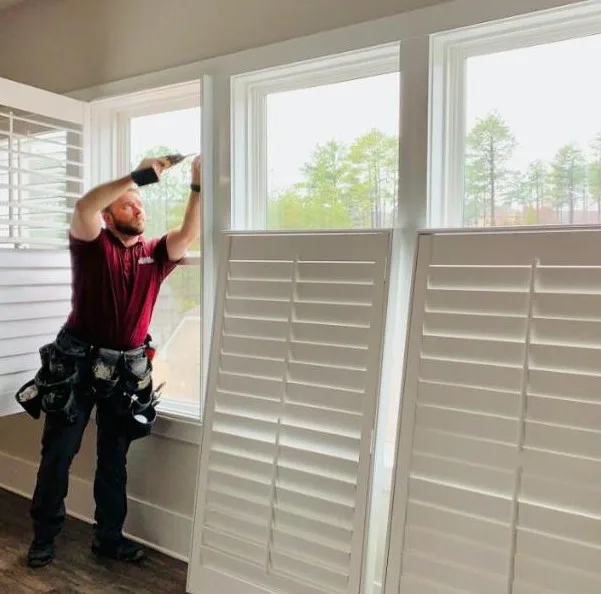
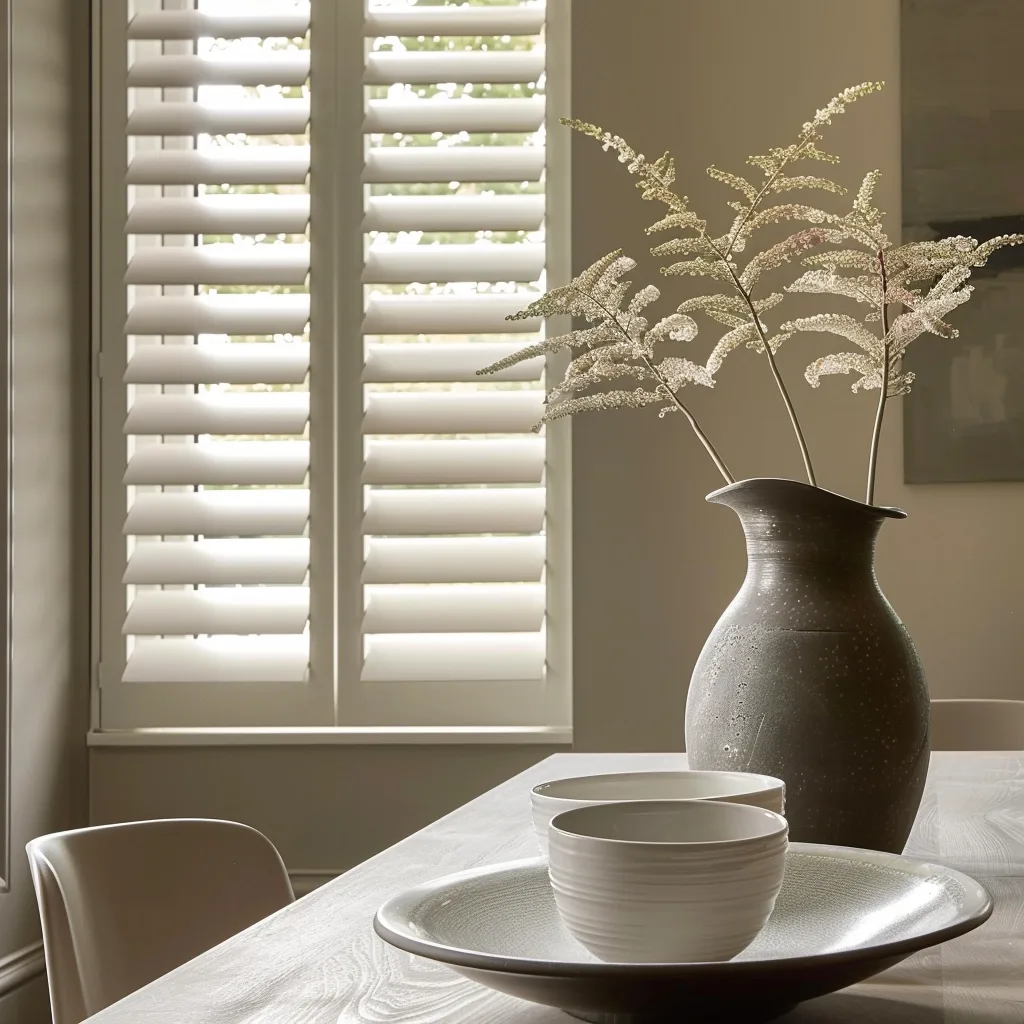
Shutters are the permanent, architectural option. Plantation shutters attach to the window frame itself, which means they become part of the house rather than an accessory to it. They’re substantial, they last for decades, and they add real resale value. If you love clean lines, hate replacing things, and want a treatment that looks equally at home in a Spanish-style bungalow or a modern build, shutters are hard to beat.
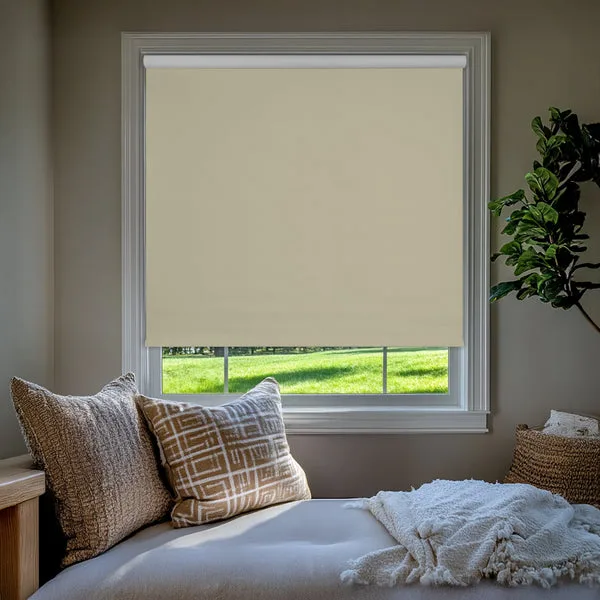
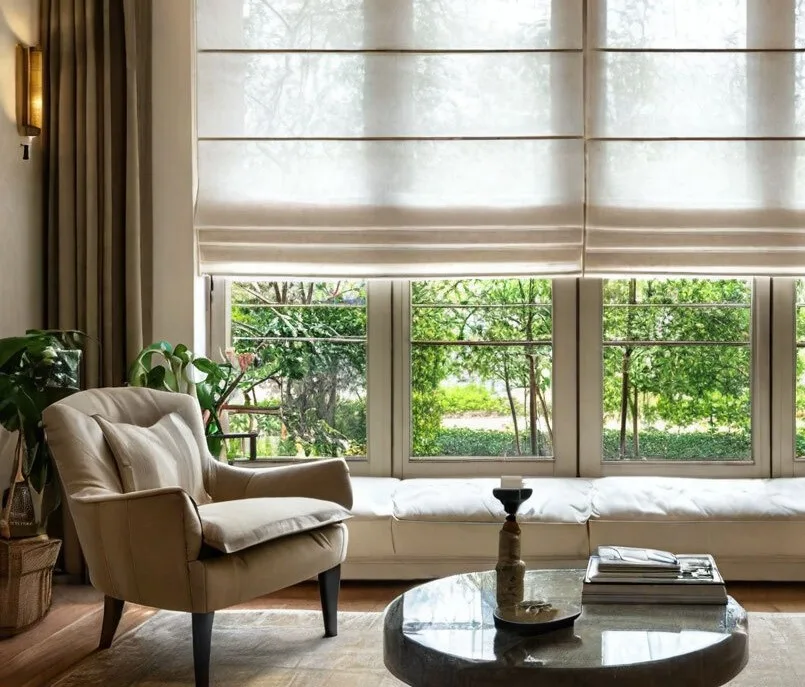
Shades are the soft, versatile middle ground. From sleek rollers to tailored Romans to energy-saving cellulars, shades come in an enormous range of fabrics, opacities, and textures. They can disappear completely when raised, filter light beautifully when lowered, and take on nearly any color or pattern your design calls for. If you want warmth and softness — or precise control over light — shades give you the most room to play.
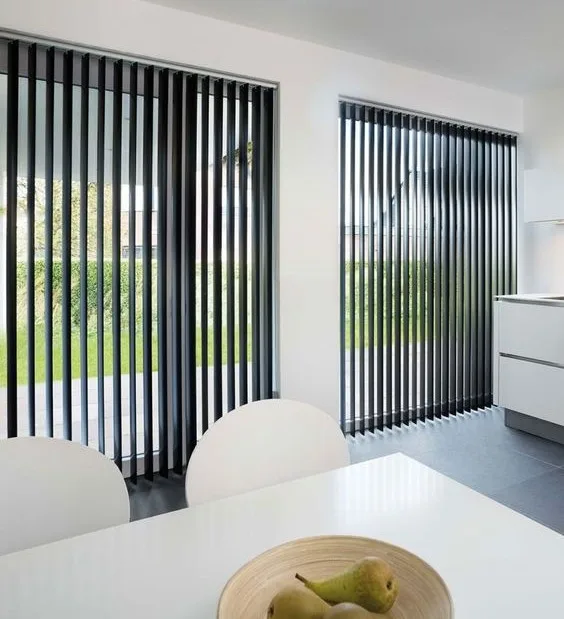
Blinds are the adjustable workhorses. With tilting slats, blinds let you fine-tune light and privacy at the same time — something neither shutters nor most shades can match at their price point. Horizontal wood and faux-wood blinds bring warmth to bedrooms and offices, while verticals remain the practical champion for sliding doors and extra-wide openings.
Let the Room Tell You What It Wants
The same product can be perfect in one room and wrong in the next. A few room-by-room truths we’ve picked up over the years:
Bedrooms reward layering. A blackout roller shade behind a soft drapery, or room-darkening cellular shades on their own, will do more for your sleep than any mattress upgrade. Kitchens and bathrooms need moisture-resistant materials — faux wood, vinyl, or polymer shutters — because real wood and steam are not friends. Living rooms usually want flexibility: enough openness to enjoy daylight and views, enough coverage for evenings and movie nights. Home offices need glare control above all, especially if you’re on video calls with a window behind you.
And don’t forget the windows themselves. Arched, angled, or extra-tall windows often look best with custom shutters or motorized shades, since standard off-the-shelf sizes rarely fit them gracefully.
Match the Treatment to Your Home's Character
Style-wise, the goal isn’t to follow trends — it’s coherence. Your window treatments should feel like they belong to the same story as your floors, trim, and furniture.
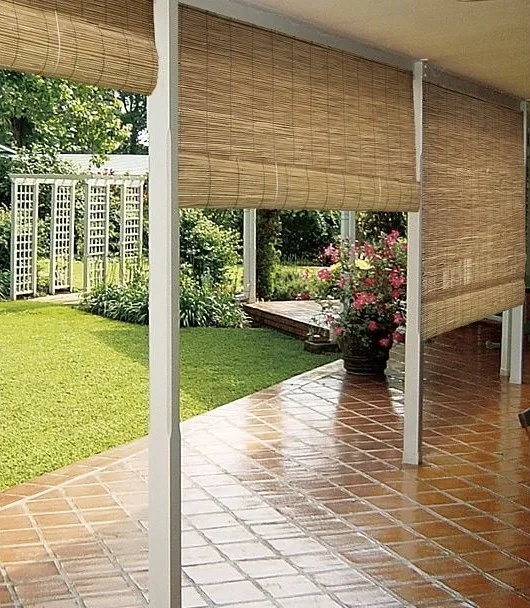
Traditional and transitional homes tend to pair naturally with plantation shutters, wood blinds, and Roman shades. Modern and minimalist spaces lean toward roller shades, solar screens, and slim-profile treatments that keep sightlines clean. Coastal and casual interiors love woven woods and light-filtering sheers that let sunshine do the decorating. If your home mixes styles — as most real homes do — a consistent color temperature (warm woods throughout, or crisp whites throughout) will tie different treatments together from room to room.
One tip that saves a lot of second-guessing: step outside and look at your house from the curb. Treatments visible from the street look most polished when they’re uniform, even if the rooms behind them differ.
Think About How You'll Live with Them
A window treatment isn’t a painting — you’ll touch it, adjust it, and clean it for years. So be honest about maintenance and daily use.
Households with young children or pets should go cordless or motorized, full stop; dangling cords are both a hazard and a magnet for tiny hands and paws. If you have hard-to-reach windows or a whole wall of glass, motorization turns a daily chore into a button press — and pairs neatly with smart home systems. Allergy-prone? Smooth surfaces like shutters and roller shades collect far less dust than heavy fabrics.
Budget belongs in this conversation too, but think in years, not price tags. The cost of a quality shutter depends on factors such as the material, construction, size, finish, and features, and high-quality wood and vinyl shutters can be similarly priced. In some cases, polymer or synthetic shutter options may even cost slightly more. What matters most is choosing a treatment that delivers the durability, appearance, functionality, and long-term value you want for each room.
When in Doubt, See It in Your Own Light
Here’s the thing no website can fully solve: color and opacity look different in every home. A fabric that reads soft white in a showroom can turn gray in a north-facing room. That’s exactly why our showroom is mobile — we bring samples directly to your home, so you can see how each option behaves in your actual light, against your actual walls.
If you’re weighing options anywhere in Los Angeles County or Orange County, we’d love to help you think it through. Browse our portfolio for inspiration, then contact us or call (562) 299-8743 to schedule a free in-home consultation. From the first measurement to the final install, Blinds by Design handles it all — covering a window at a time.