
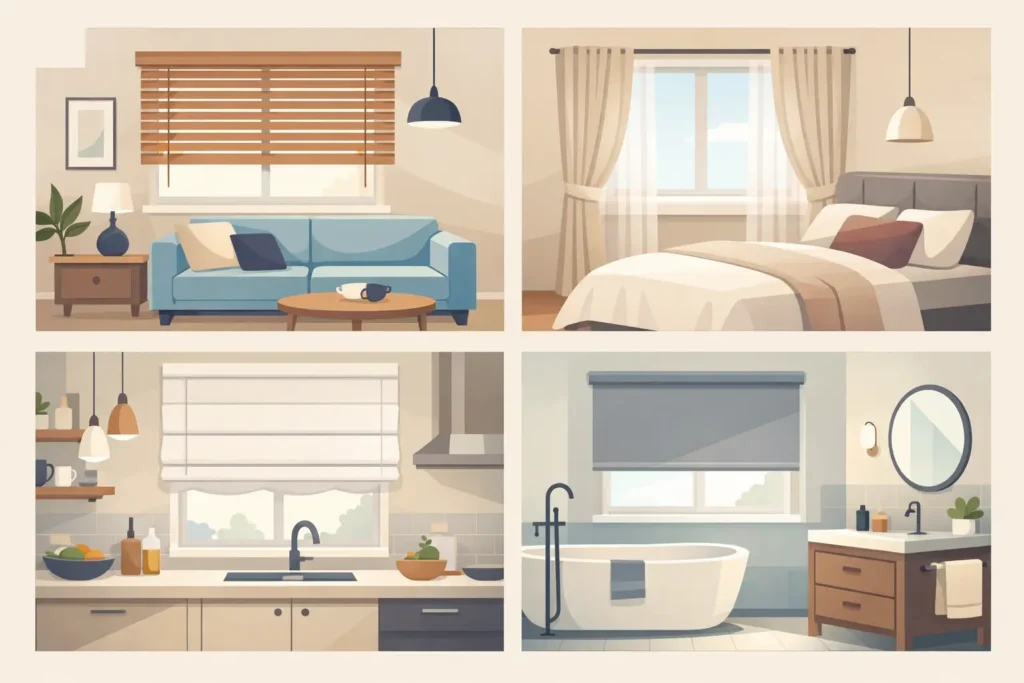
A white faux wood blind may look clean and practical in a bright Los Angeles kitchen, but that same treatment can feel out of place in a formal dining room with warm wood furniture and layered fabrics. Knowing how to match blinds style is less about following one decorating rule and more about making the window treatment feel intentional in the room around it.
Custom blinds, shades, and shutters affect the way a room looks from every angle. They frame the view, filter sunlight, add texture, and influence privacy. The right choice supports your furnishings and architecture while solving everyday needs such as glare, heat, or nighttime privacy.
Start With the Room’s Design Direction
Before choosing a color or product, identify the overall style the room is already moving toward. Look at the floor, cabinetry, wall color, furniture lines, hardware, and fabrics. A window treatment does not need to match every finish exactly, but it should belong in the same visual conversation.
For a traditional or transitional home, plantation shutters, wood blinds, woven shades, and Roman shades often add the right amount of warmth and detail. Shutters have a substantial, built-in appearance that works especially well with detailed trim, classic furniture, and homes where a finished architectural look is the goal.
Modern and contemporary spaces usually benefit from cleaner lines. Roller shades, solar shades, cellular shades, and wide-slat blinds can create a more streamlined result. Neutral fabrics, simple valances, and minimal visible hardware keep the look focused rather than busy. In an office, this approach can also create a polished backdrop for meetings and video calls.
Coastal, relaxed, or organic interiors often look best with natural texture. Woven wood shades can bring in an easy, layered feel, while light-filtering shades soften strong Southern California sun. If privacy is a concern, a liner or a secondary shade can provide coverage without losing the casual character of the room.
Match Blinds Style to Color and Materials
The most successful window treatments usually coordinate with the room’s dominant undertones instead of trying to copy one exact color. For example, white is not always simply white. A crisp white blind beside creamy cabinets can look blue or stark, while an ivory shade can look yellow against cool gray walls.
Start by deciding whether the space reads warm, cool, or neutral. Warm interiors often include beige, tan, honey wood, brass, terracotta, or creamy whites. Cool rooms may feature bright white, charcoal, blue-gray, black accents, or silvery hardware. Neutral rooms can go in either direction, but they still benefit from a deliberate choice.
Wood blinds and faux wood blinds can coordinate beautifully with flooring, beams, and furniture, yet they do not have to be an exact stain match. In fact, an almost-but-not-quite match can look accidental. Choose a tone that is clearly lighter or darker than the major wood finish, or select a painted finish that connects with trim or cabinetry.
Fabric shades offer more freedom with color and pattern. A soft neutral shade can blend into the wall for a quiet look. A textured fabric in linen, taupe, charcoal, or oatmeal can add depth where the room feels flat. Patterned Roman shades can become a focal point, but they work best when the rest of the room has simpler fabrics. In a small room, too much pattern at the window may make the space feel crowded.
Consider Scale Before You Choose a Product
Window size, ceiling height, and the amount of trim around the opening all affect which treatment will look balanced. Large sliding doors and wide picture windows often need a solution with a clean, broad visual span. Vertical blinds, panel track systems, or carefully selected shades may be more proportional than narrow horizontal blinds.
For smaller windows, bulky treatments can overwhelm the opening. A tailored roller shade, cellular shade, or inside-mounted blind may preserve more glass and make the room feel larger. Bedrooms with several matching windows often look best when the same treatment is used throughout, even if each window has a different exposure.
Mounting also changes the final appearance. An inside mount creates a neat, recessed look and allows attractive window trim to remain visible. An outside mount can make a small window appear larger, improve light control, and cover a shallow or uneven window frame. Professional measurement matters here because a few fractions of an inch can affect both function and the finished look.
Let Light Control Guide the Design
Style matters, but a beautiful treatment that does not control light properly will quickly become frustrating. In Los Angeles and Orange County homes, direct afternoon sun can create glare, fade furnishings, and make rooms uncomfortably warm. The best choice often comes from balancing the desired look with how the room is used.
Solar shades preserve a connection to the outdoors while reducing glare and filtering harsh sunlight. They are a strong option for living rooms, offices, and areas with views, though their privacy level at night depends on lighting conditions. If privacy is a priority after dark, a more opaque shade or a layered solution may be better.
Cellular shades suit homeowners who want a soft appearance with added insulation. They can help reduce heat transfer at the window, which is useful in sun-facing bedrooms and rooms that become warm during the day. Blackout shades are ideal for bedrooms, nurseries, and media rooms, but consider side light gaps if near-total darkness is the goal.
Shutters and adjustable blinds give you precise control over light direction. You can tilt the louvers to reduce glare while still bringing daylight into the room. This is especially useful for street-facing rooms where you want privacy without closing off the space completely.
Create Consistency Without Making Every Room Identical
A home feels more polished when window treatments relate from room to room. That does not mean every window must have the same blind or shade. It means the choices should share a common thread, such as a similar color family, material, mounting style, or level of formality.
For example, a homeowner may use white shutters in public-facing spaces, blackout cellular shades in bedrooms, and solar shades in a home office. The products differ because the needs differ, but the clean white and neutral palette keep the home connected. Another approach is to use coordinated fabrics in different shade styles, such as roller shades in the living room and Roman shades in a nearby dining area.
Open-concept spaces deserve extra attention because several windows are visible at once. If the kitchen, dining area, and living room share one sightline, treatments should look compatible in color, scale, and overall weight. A dark woven shade in one area and a bright white aluminum blind in the next may compete unless other finishes intentionally tie them together.
Do Not Forget Function, Safety, and Daily Use
The right style needs to work for the people who live or work in the space. A frequently used patio door may need an easy-to-operate vertical treatment. A high window may be a good candidate for motorization. In a nursery or home with young children, cordless options create a cleaner look and reduce accessible cord concerns.
Motorized blinds and shades can be a practical design choice, not just a luxury feature. They eliminate hanging cords, make tall or hard-to-reach windows easier to use, and allow multiple treatments to move together. For rooms with intense afternoon light, scheduled operation can help manage glare without requiring constant adjustment.
Material should also fit the room. Faux wood blinds are durable and well suited to kitchens, bathrooms, and other areas where humidity may be a factor. Natural wood brings warmth to living spaces but may not be the best fit for every wet environment. Fabric shades add softness, though the fabric selection should match the room’s level of use and maintenance needs.
See Samples in the Actual Space
Color and texture can shift dramatically between a showroom, a phone screen, and your home. Natural daylight, interior bulbs, wall paint, and nearby furnishings all change how a blind or shade will read. This is why viewing samples at the window is one of the most reliable ways to make a decision with confidence.
A professional consultation can also clarify details that are easy to overlook, including mounting depth, window obstructions, privacy from neighboring homes, and the best lift system for the treatment. Blinds by Design brings product options and design guidance directly to the home or office, then handles custom measurement and installation so the finished treatment fits the space it was chosen for.
When you are deciding between two styles, choose the one that solves the room’s daily needs and still feels right when you step back and view the whole space. A well-matched window treatment should not demand attention for the wrong reason. It should make the room feel more comfortable, more finished, and more like your own.