
A west-facing Los Angeles window can turn a beautiful room into a bright, hot, hard-to-use space by midafternoon. That is why the choice between roller shades versus blinds is about more than appearance. Both can improve privacy, control glare, and finish a room, but they do those jobs in notably different ways.
For a home renovation, an office update, or a single room that needs better light control, the right option depends on how you use the space. Roller shades offer a clean, tailored look with a single panel of fabric. Blinds use adjustable slats to give you more precise control over the view and incoming light. Neither is automatically better. The best fit comes down to the window, the room, your design priorities, and how much day-to-day adjustment you want.
Roller Shades Versus Blinds at a Glance
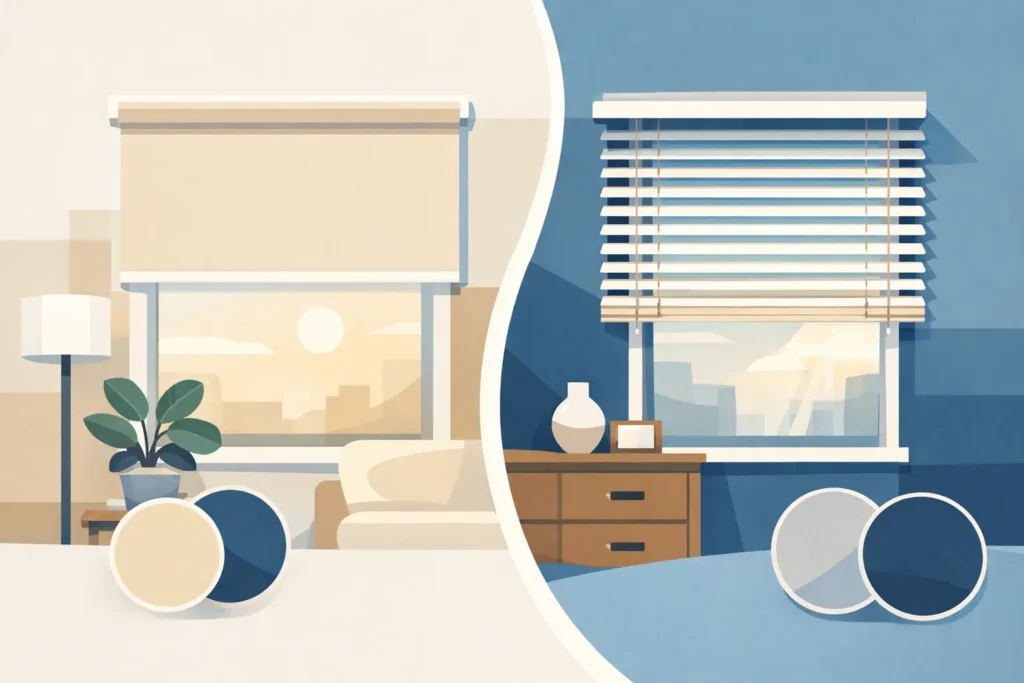
The most visible difference is construction. A roller shade is a fabric panel that rolls up into a tube at the top of the window. It can be raised or lowered with a chain, cordless mechanism, or motorized control. When open, it largely disappears from view, which makes it especially appealing for rooms with clean lines, large windows, or a modern design direction.
Blinds are made with horizontal or vertical slats, depending on the style. Horizontal blinds are common for standard windows, while vertical blinds are often used for patio doors and wide openings. The slats can be tilted to direct light, closed for privacy, or raised for a clearer view outside.
That basic distinction affects nearly every part of ownership: the level of light control, visual texture, cleaning routine, privacy, and cost. Custom sizing also matters. Even a high-quality product can look unfinished or perform poorly if it is not measured correctly for the window and installed with the right mounting approach.
Light Control: Soft Filtering or Precise Adjustment
If your priority is the ability to fine-tune sunlight throughout the day, blinds have a natural advantage. Tilting the slats lets you reduce glare without fully closing the window treatment. In a home office, for example, you may be able to angle the slats away from a computer screen while keeping some daylight in the room. This flexibility is also helpful in rooms where the sun moves across the space over several hours.
Roller shades operate more simply: they are generally up or down. The fabric you choose determines how much light comes through. A sheer or light-filtering roller shade softens strong daylight while maintaining a bright feel. A solar shade can help reduce glare and heat while preserving some outward visibility. Room-darkening and blackout fabrics provide greater coverage for bedrooms, media rooms, and spaces where sleep or screen viewing is the priority.
For many Southern California homes, solar roller shades are a practical choice for sun-exposed living rooms and offices. They can make intense afternoon light more comfortable without making the room feel closed off. However, they do not offer the same moment-by-moment light direction as adjustable blind slats.
Consider the Side Gaps
No standard window covering creates perfect darkness by itself. Roller shades can have small light gaps along the sides, particularly with an inside mount. This is usually not a concern in a living area, but it can matter in a bedroom for someone sensitive to early morning light. Blinds also allow small amounts of light through and between slats.
A professional consultation can help determine whether an outside mount, a wider shade, a blackout fabric, or layered treatments would better serve the room. The goal is to choose a solution based on the actual window and how you live with it, rather than relying on a showroom sample alone.
Privacy Depends on the Room and Fabric
Blinds give strong privacy when the slats are fully closed, yet they can still allow light to enter when tilted. They work well in bathrooms, street-facing rooms, and offices where privacy needs can change during the day. A slight tilt may preserve daylight while limiting direct views into the room.
Roller shades can offer excellent privacy, but the fabric selection is critical. Light-filtering fabrics provide daytime privacy, though they may show silhouettes at night when interior lights are on. Blackout and room-darkening fabrics provide more reliable privacy after dark. Solar shades are useful for daytime glare control, but their openness factor should be selected carefully if the room faces close neighbors or a busy street.
For bedrooms and bathrooms, privacy should be decided first, then style. For a living room with a view, it may make sense to prioritize a fabric that balances glare reduction with visibility. The right choice is rarely the same for every window in the house.
Style: Minimal Fabric or Architectural Detail
Roller shades suit spaces that benefit from a quiet, streamlined finish. Their flat fabric face can coordinate with wall color, upholstery, or a subtle pattern without adding visual bulk. They are a strong option for contemporary interiors, remodeled kitchens, open-concept living areas, and commercial spaces that need a polished look.
Blinds bring more structure to a window. Faux wood and wood blinds can add warmth and dimension, while aluminum blinds create a lighter, more practical appearance. They complement traditional, transitional, and casual interiors particularly well. In a room that feels plain or needs a little texture, blinds can become part of the design rather than fading into the background.
Material selection matters as much as the category. Faux wood blinds are often favored for kitchens, bathrooms, and humid areas because they resist moisture better than natural wood. Natural wood can offer a richer finish in living rooms, dining rooms, and bedrooms, though it may not be the right choice for every high-moisture location.
Cleaning and Everyday Maintenance
Roller shades are generally easier to maintain. Most fabrics only need occasional dusting with a soft cloth, a vacuum brush attachment on a low setting, or gentle spot cleaning according to the manufacturer’s instructions. With fewer individual parts, they have a simple, uncluttered surface.
Blinds require more hands-on cleaning because each slat collects dust. A microfiber cloth, blind duster, or vacuum attachment can keep them in good shape, but cleaning takes more time, especially on wider windows. The trade-off is worthwhile for clients who value adjustable light control and the visual character of slats.
For busy households and offices, motorization can make either option easier to use consistently. Motorized roller shades are especially popular for tall, wide, or hard-to-reach windows. Scheduled controls can also help manage harsh sunlight during the hottest parts of the day, even when no one is home.
Cost and Long-Term Value
Price varies widely based on window size, material, lift system, custom features, and installation requirements. Basic blinds can be a budget-friendly option, while premium wood blinds, custom roller shade fabrics, blackout linings, and motorization raise the investment.
It is tempting to compare only the product price, but fit and installation affect long-term value. Windows are not always square, walls can have trim complications, and large openings may require special support or multiple treatments. A custom-fit product installed properly is more likely to operate smoothly, hang evenly, and look intentional for years.
For rental properties or a quick refresh, a straightforward blind may be the practical answer. For a remodeled primary home, a sun-heavy room, or a space with a carefully planned interior, custom roller shades may deliver a cleaner result and more specialized performance. There is room for both in the same home.
How to Make the Right Choice for Your Space
Choose roller shades when you want a clean profile, easy maintenance, fabric-based light filtering, or a motorized solution for large and difficult windows. They are often the better fit for modern rooms, spaces with expansive views, and areas where glare reduction is more important than changing the angle of sunlight.
Choose blinds when you want adjustable slats, architectural texture, and the ability to direct light without fully raising the treatment. They are a dependable choice for rooms where privacy and sunlight needs shift throughout the day, as well as spaces that benefit from the warmth of wood or the durability of faux wood.
Many homes do not need one answer throughout. A bedroom may call for blackout roller shades, while a kitchen may benefit from moisture-resistant faux wood blinds. An office may need solar shades to reduce monitor glare, while a street-facing family room may be better served by blinds that can be adjusted as needed.
Seeing options in the actual room makes these differences much easier to judge. Blinds by Design brings product samples, design guidance, precise measuring, and professional installation together so you can evaluate color, material, privacy, and light control where they matter most. A free in-home consultation is a practical next step when you want window treatments that look right, work reliably, and suit the way your space is used.