
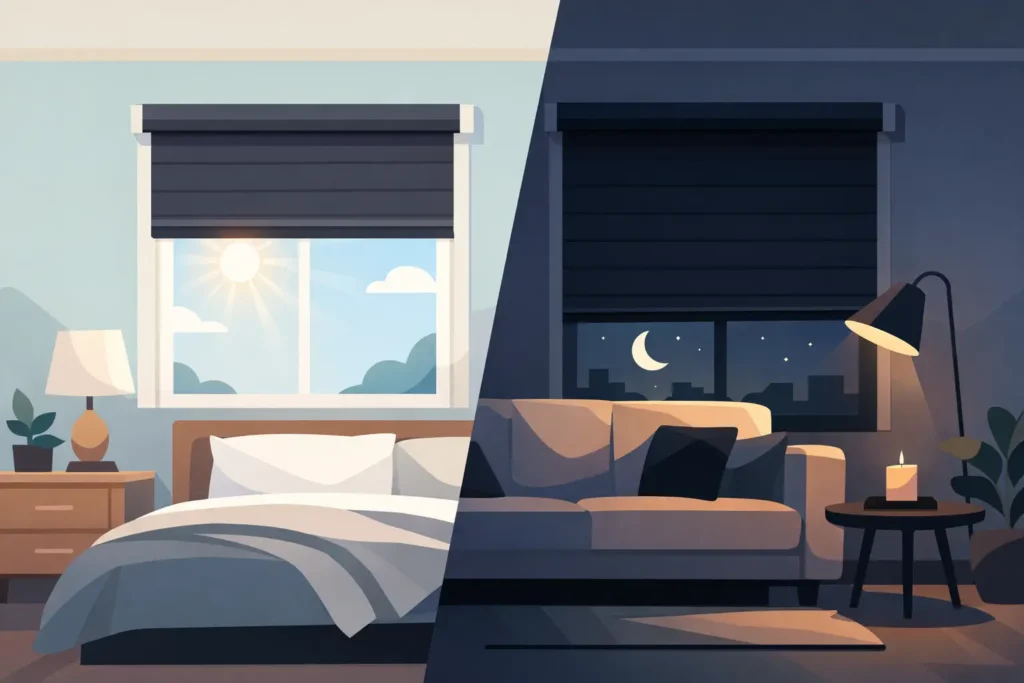
A bright Los Angeles morning can be welcome in the kitchen and frustrating in a bedroom at 6 a.m. Knowing how to select blackout shades starts with identifying what you want darkness to solve: early sunlight, streetlights, afternoon heat, daytime naps, privacy, or a better viewing experience in a media room. The right shade is not simply the darkest fabric. It is a custom window treatment that fits the room, the window, and the way you live.
Start With the Room’s Real Needs
Blackout shades are most often chosen for bedrooms, nurseries, media rooms, and home offices. Still, each room calls for a slightly different approach. A primary bedroom may need the strongest possible light control for deeper sleep, while a nursery may benefit from darkness plus cordless or motorized operation. In a media room, reducing glare can matter as much as creating a dark space.
Before selecting a color or style, consider when the room receives direct sun and what is happening outside the window. A west-facing bedroom in Orange County can get intense afternoon heat. A ground-floor home in a busy neighborhood may need privacy after dark. These details help determine whether you need a blackout solution, a room-darkening option, or layers that give you flexible control throughout the day.
Room-darkening shades noticeably reduce sunlight but may still allow a glow around the edges or through lighter materials. True blackout shades use an opaque construction or blackout liner designed to block light through the fabric itself. Even then, small gaps around the shade can let in light, which is why professional measuring and installation make such a meaningful difference.
Choose a Shade Style That Supports Blackout Performance
Several shade styles can be made with blackout fabrics or liners. The best choice depends on the look you want, the size and shape of your windows, and how completely you want to control light.
Roller shades offer a clean, modern look
Blackout roller shades are a popular choice for bedrooms and offices because they are simple, streamlined, and easy to operate. Their flat fabric panel works especially well with contemporary interiors and windows that do not need a lot of visual decoration. They can be manually operated or motorized, making them a practical option for large windows, high windows, or rooms where convenience matters.
The trade-off is that roller shades may leave narrow light gaps at the sides, especially with an inside mount. A custom fit minimizes those gaps, and side channels can be considered when near-total darkness is the goal.
Cellular shades add insulation
Blackout cellular shades combine light control with energy efficiency. Their honeycomb-shaped pockets trap air, helping reduce heat transfer through the window. That can be especially valuable in sun-exposed Los Angeles homes where keeping a bedroom cooler supports both comfort and energy savings.
Cellular shades have a softer, more textured appearance than roller shades. They are a strong choice when you want darkness without a heavy or formal look. For the best result, ask about blackout cellular fabric rather than assuming every cellular shade will block the same amount of light.
Roman shades bring softness and design detail
Roman shades are ideal for homeowners who want blackout performance with the warmth of fabric window treatments. They can be customized in a wide range of colors, textures, and patterns, then paired with a blackout liner. This makes them particularly appealing for bedrooms, formal living areas, and spaces where the shade needs to complement upholstery, bedding, or wall color.
Because Roman shades fold when raised, they create more visual presence than roller or cellular shades. That is a benefit in a design-focused room, but it may not suit someone who prefers a minimal profile. Fabric selection also matters. A thick liner helps block light, but the shade must be properly constructed and installed for consistent results.
Layered treatments can close the remaining gaps
For the darkest possible bedroom, a blackout shade can be paired with drapery panels or side panels. The shade handles most of the light control while the fabric panels soften the window and help cover side gaps. This layered approach is useful for large windows, French doors, or rooms affected by strong exterior lighting.
It also gives you more design flexibility. You can choose a clean blackout roller shade for daytime function, then add decorative drapery that brings color and texture into the room. The result feels considered rather than purely functional.
Understand Blackout Fabric, Color, and Opacity
Do not rely on color alone when choosing blackout shades. A dark shade is not automatically blackout, and a light-colored shade can still provide excellent light blocking when it is made with an opaque backing or blackout liner. The product’s construction is what matters most.
Ask to see the material in the actual room whenever possible. A sample held up at a showroom may look different once sunlight hits it through your window. This is one reason an in-home consultation is valuable: you can compare colors and fabrics beside your flooring, paint, furniture, and natural light.
Also consider what the shade looks like from outside. Some blackout materials have a neutral street-facing backing, which helps create a consistent exterior appearance. This can be helpful for homes with multiple visible windows or homeowner association requirements.
Decide Between Inside Mount and Outside Mount
Mounting is one of the most important details when you are learning how to select blackout shades. An inside mount installs within the window frame and creates a tidy, built-in appearance. It is often the preferred choice when your window has enough depth and you want to preserve trim.
However, inside-mounted shades require small clearance gaps so the shade can move properly. Those gaps can allow light to enter around the edges. In many bedrooms, the remaining glow is acceptable. For light-sensitive sleepers, shift workers, or nurseries, it may not be.
An outside mount installs above and beyond the window opening. Because the shade overlaps the frame, it can cover more of the light gaps that occur with an inside mount. It is often the better choice for shallow windows, uneven frames, or windows where maximum darkness is the priority. The appearance is different, so the right decision comes down to both performance and design.
Professional measuring is especially helpful here. A window can look square but have subtle variations in depth, width, or trim that affect how the shade fits and operates.
Consider Operation and Safety Before Ordering
A blackout shade should be easy enough to use every day. If it is difficult to raise, lower, or reach, it may stay in one position more often than you intended. Manual operation works well for many standard windows, but motorization is worth considering for tall windows, wide openings, or a group of shades used at the same time.
Motorized blackout shades can be programmed around a daily routine. You might lower them in the afternoon to reduce heat, close them before bedtime, or raise them gradually in the morning. They are also a clean option for homes with children or pets because they eliminate exposed lift cords.
For nurseries and children’s rooms, cordless operation should be a priority. For offices and living spaces, motorization can add convenience without changing the room’s design. The best operating system is the one that matches how often you will use the treatment and who will use it.
Do Not Overlook Heat, Privacy, and Budget
Blackout shades do more than darken a room. They can improve privacy, reduce glare, and help limit solar heat, although performance varies by fabric, shade style, and installation. A blackout roller shade may deliver excellent privacy and light control, while a blackout cellular shade may offer additional insulation. If a room faces strong afternoon sun, that difference can be worth discussing.
Budget should be considered as part of the entire solution, not just the shade itself. Custom sizing, specialty fabrics, motorization, side channels, liners, and professional installation all affect the final investment. A less expensive option that leaves large light gaps or does not fit properly can be disappointing in a room where darkness is the main goal.
A clear consultation helps you prioritize. You may decide to invest in maximum blackout performance for the primary bedroom and choose room-darkening shades for guest rooms or common areas. That approach gives each space the level of function it actually needs.
See the Options in Your Own Home
Window treatments are difficult to judge from a small sample or an online image. The window depth, trim, sun exposure, and surrounding finishes all influence which blackout shade will feel right. Blinds by Design brings product options to your home, measures your windows, and helps you compare materials and operating features where they will actually be used.
The most satisfying choice is one that makes the room more comfortable without asking you to compromise on style. Schedule a free in-home consultation when you are ready to see what true light control can look like in your space.