
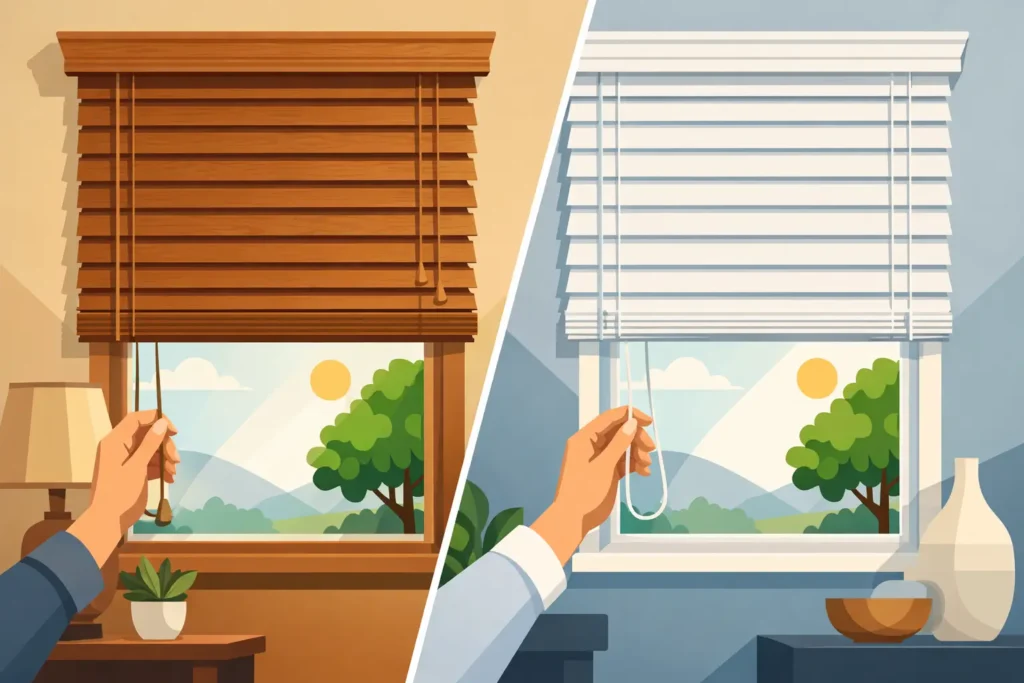
A blind can look right in a showroom and still feel wrong once it is covering a wide living-room window, a sunny office, or a humid bathroom. That is why the choice between wood blinds versus faux wood deserves more than a quick comparison of colors. Both offer classic horizontal lines, adjustable privacy, and dependable light control, but they perform differently in the spaces Los Angeles homeowners use every day.
The best choice depends on where the blind will hang, how much direct sun and moisture the room receives, the size of the window, and the look you want to carry through the home. Here is how to make that decision with confidence.
Wood Blinds Versus Faux Wood: The Core Difference
Wood blinds are made from natural wood, often basswood or another lightweight hardwood. Their grain, warmth, and slight variations in tone create a tailored appearance that works especially well in living rooms, dining rooms, bedrooms, and design-forward offices.
Faux wood blinds are made from engineered materials, typically PVC, composite wood, or a blend of polymer and wood fibers. They are designed to reproduce the look of painted or stained wood while offering greater resistance to moisture and easier everyday cleaning.
At a glance, the two can appear similar, especially in crisp white finishes. The difference becomes clearer when you consider weight, texture, durability, and how each material responds to the conditions in your home.
Style and Finish: Where Real Wood Stands Apart
If your priority is a natural, elevated finish, real wood blinds have a distinct advantage. Natural grain brings depth that painted synthetic materials cannot fully duplicate. Stained wood options can complement hardwood flooring, wood furniture, exposed beams, or warm neutral interiors without making the room feel overly matched.
Wood blinds are also available in a range of painted finishes, from bright white to soft gray and deeper contemporary tones. Because wood is lightweight, wider slats can maintain a refined profile on larger windows without creating an overly heavy appearance.
Faux wood blinds have come a long way in appearance. They are an excellent option when you want the clean, structured look of wood in white, off-white, gray, or other painted finishes. In many rooms, particularly casual kitchens, laundry rooms, and rental properties, the visual difference may not be a deciding factor.
The distinction matters most in rooms with close-up sightlines and intentional material details. A formal dining room, a front-facing living room, or a home office with custom millwork may benefit from the authentic character of wood. A bathroom or busy family kitchen may benefit more from faux wood’s practical strengths.
Consider the room as a whole
Blinds should support the room’s existing finishes, not compete with them. Warm wood blinds can soften contemporary interiors with stone, metal, and white walls. White faux wood can create a consistent, polished look across multiple windows, particularly when the goal is bright, simple, low-maintenance coverage.
Moisture and Heat: Faux Wood Has the Practical Edge
Moisture is one of the most important deciding factors. Faux wood blinds are generally the safer choice for bathrooms, kitchens, laundry rooms, and other areas where humidity, splashes, or condensation are common. Their materials resist warping and are simple to wipe down after everyday use.
Natural wood can be affected by repeated moisture exposure. A well-made wood blind is durable, but it is not the ideal product directly over a steamy shower, beside a frequently used sink, or in a room with poor ventilation. Over time, excess humidity can contribute to warping, cracking, or finish damage.
Los Angeles homes also contend with strong sunlight. Both materials can provide effective light control when properly fitted, but direct, prolonged sun deserves attention. Quality finishes help protect blinds, while the right slat tilt allows you to reduce glare and preserve privacy without shutting out daylight completely.
For a west-facing room that heats up in the afternoon, the material choice may be only part of the solution. You may also want to consider slat size, cord or wand controls, and whether the blind will be paired with drapery or another window treatment for additional light management.
Weight and Window Size Matter More Than Many Homeowners Expect
Real wood is naturally lighter than most faux wood products. This makes wood blinds a strong option for wide windows, large banks of windows, and doors where a lighter treatment can be easier to operate and place less strain on the mounting area.
Faux wood blinds are heavier, especially in wider widths. That does not make them a poor choice for large windows, but it does make proper measurement and professional installation more important. A custom-fit blind needs the right support, secure brackets, and appropriate lift system to operate reliably over time.
Weight is also worth considering if you plan to raise the blinds often. For a window that is mostly kept lowered and adjusted by tilting the slats, faux wood may be perfectly convenient. For a frequently used window where the blind is raised and lowered throughout the day, the lighter feel of real wood can be appealing.
Cost: Look Beyond the Initial Price
Faux wood blinds are often the more budget-friendly option, particularly when covering several windows in the same home. They provide a classic look, privacy, and durability at a price that can make a larger project more manageable.
Real wood blinds typically cost more because of the material and the finish quality. For homeowners investing in a remodel, custom interior details, or a long-term design plan, that added cost can be worthwhile. The visual warmth of genuine wood may elevate a room in a way that feels more intentional and personal.
The right value is not always the lowest price per window. A less expensive blind installed in the wrong environment may need replacement sooner. On the other hand, paying for real wood in a high-humidity bathroom may not offer the return you expect. Choosing each material based on the room can help you spend where it matters most.
Cleaning and Everyday Care
Both options are relatively easy to maintain, but faux wood is more forgiving. A light dusting or wipe with a damp cloth is usually enough for regular care. This makes faux wood especially practical near cooking areas, entryways, children’s rooms, and other places where fingerprints and dust tend to collect.
Wood blinds should be dusted regularly with a soft cloth, microfiber duster, or vacuum brush attachment on a gentle setting. Avoid soaking the slats or using harsh cleaners. A lightly damp cloth may be appropriate for small spots, followed by drying, but wood should not be treated like a waterproof surface.
For either material, opening the slats before cleaning helps you reach both sides. Consistent light maintenance is easier than allowing dust and residue to build up over time.
Which Material Is Right for Each Room?
A mixed-material approach often makes the most sense. There is no rule that every blind in the house must be identical if different rooms have different demands. Many homeowners choose wood blinds for living areas, bedrooms, formal spaces, and offices, then select faux wood for bathrooms, kitchens, laundry rooms, and windows exposed to heavier moisture.
If visual continuity is a concern, coordinating finishes can keep the home cohesive. For example, a warm white faux wood in a bathroom can pair beautifully with painted white wood blinds in adjacent bedrooms. A professional can help compare colors and materials in the actual lighting of your home, where undertones and textures are easier to judge.
Custom measuring protects the investment
Whether you select wood or faux wood, fit is essential. An improperly measured blind can leave unwanted gaps, interfere with window handles, sit unevenly, or operate poorly. Custom sizing also gives you more control over privacy, light gaps, mounting choices, and the final appearance of the window.
For homeowners and office decision-makers in Los Angeles and Orange County, an in-home consultation removes much of the guesswork. Seeing samples beside your walls, flooring, cabinetry, and natural light is far more useful than choosing from a small image online. Blinds by Design can bring the options to your space, take precise measurements, and help match the material to your design priorities and daily needs.
The most satisfying choice is the one that fits the way you live. Choose real wood when natural warmth, lighter weight, and a premium finish are central to the room. Choose faux wood when moisture resistance, easy cleaning, and practical durability lead the decision. A well-chosen custom blind should feel like it belonged in the room from the start.