
Window Treatment Glossary: Every Term, Explained in Plain English
Shopping for window treatments comes with a vocabulary problem. Louvers, cornices, cassettes, zebra shades — the industry has a word for everything, and half of them sound like they belong in a different catalog entirely. This glossary translates the jargon so you can browse, compare, and ask questions with confidence.
Bookmark this page, and if you ever want the plain-English explanation in person, our mobile showroom brings the actual products to your door. Contact us or call (562) 299-8743 anytime.
A
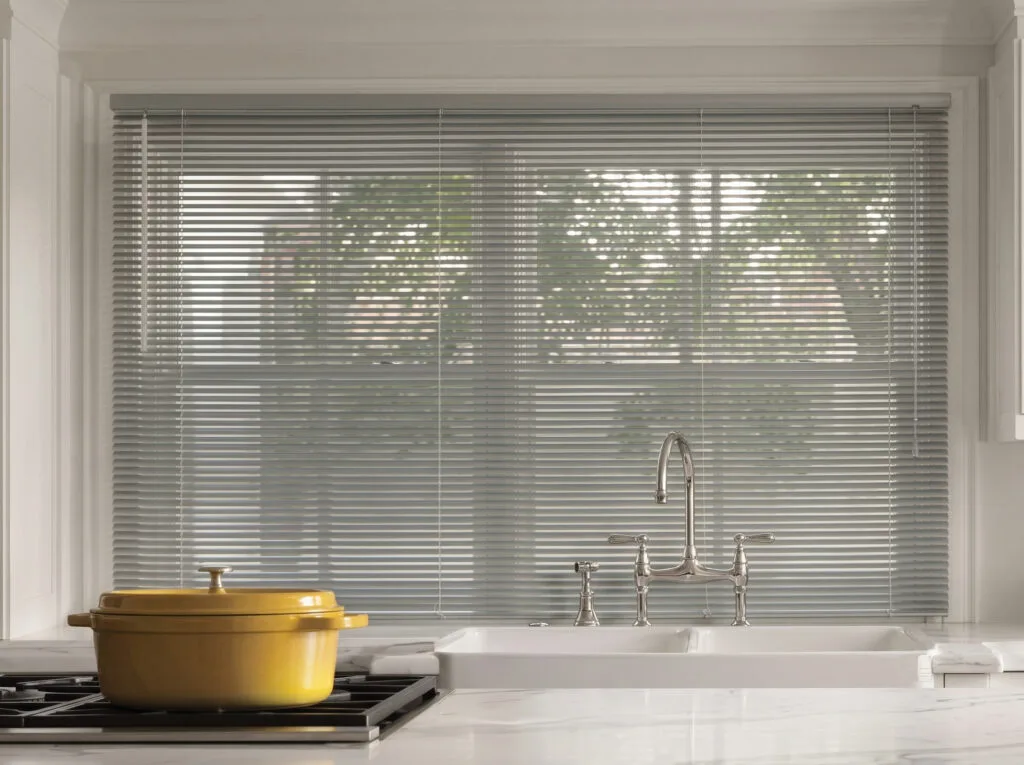
Aluminum Blinds — Horizontal blinds with slim metal slats, sometimes called mini blinds. Lightweight, affordable, and moisture-resistant, they’re a practical workhorse for utility spaces, though most homeowners now prefer the warmer look of wood or faux wood.
Arch Window — A window with a curved or semi-circular top. Arches usually require custom-built treatments — most often specialty shutters or shaped cellular shades — since standard rectangular products can’t follow the curve.
B
Basswood — The hardwood most prized for shutters and wood blinds. It’s lightweight, exceptionally stable, and has a fine, even grain that takes both paint and stain beautifully.
Bay Window — A set of three or more windows projecting outward from the wall, creating a nook. Each section is typically measured and treated individually so the panels align cleanly at the angles.
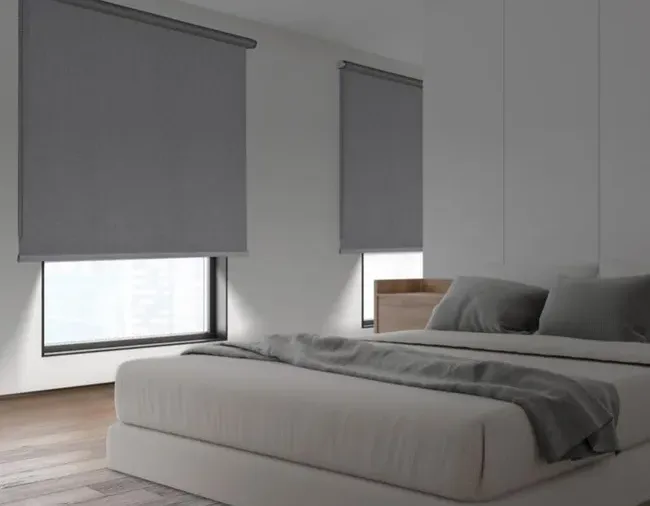
Blackout — A fabric or liner that blocks essentially all light from passing through the material. Ideal for bedrooms, nurseries, and media rooms — though for the darkest possible room, pair a blackout fabric with an outside mount so light can’t slip around the edges.
Blinds — Window treatments made of hard horizontal or vertical slats that tilt to adjust light and privacy, and lift or draw to clear the window. See our custom blinds page for the full range.
Bottom Rail — The weighted bar at the bottom edge of a blind or shade. It keeps the treatment hanging straight and, on cordless models, doubles as the handle you push and pull to operate it.
C
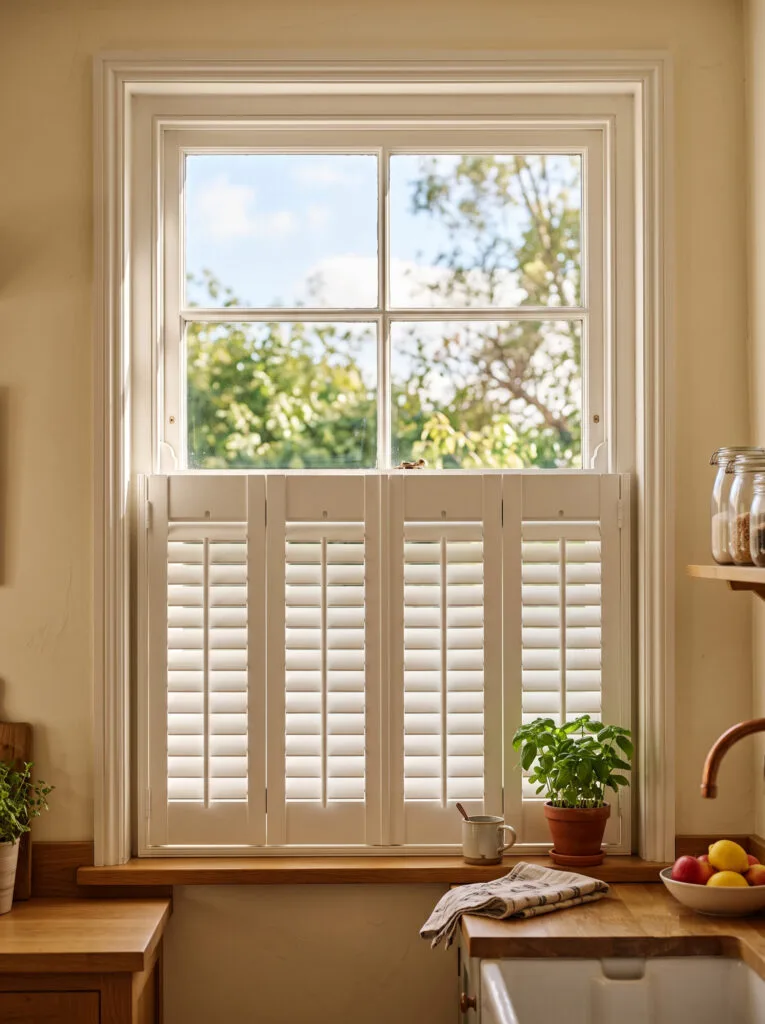
Café Shutters — Shutters that cover only the lower half of a window, leaving the top open. A classic look for kitchens and street-facing rooms — privacy at eye level, sunshine up top.
Cassette — A decorative headrail cover, usually on roller shades, that conceals the fabric roll for a clean, finished top edge. Some cassettes include side channels for a fuller blackout effect.
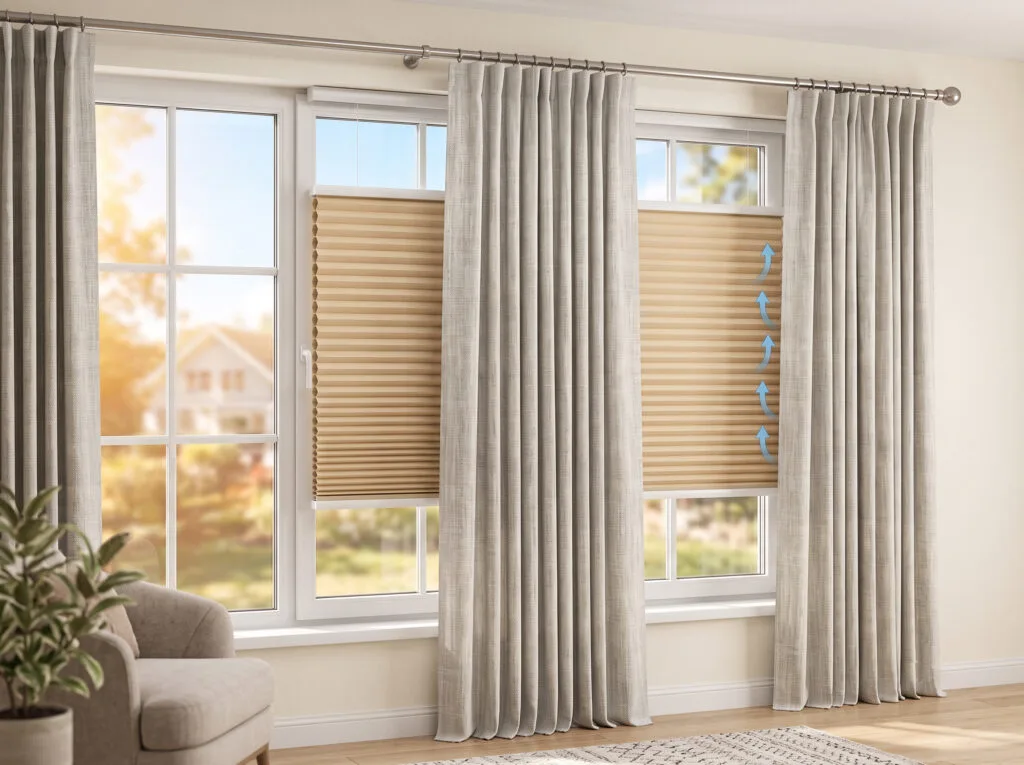
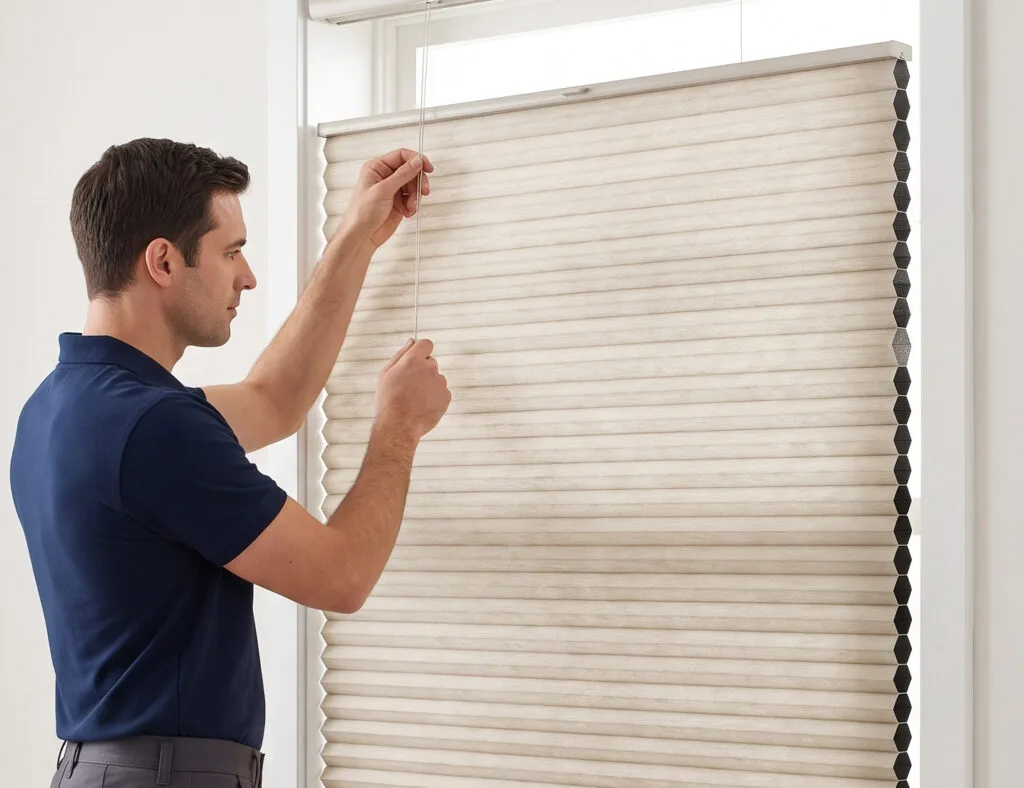
Cellular Shade — A soft fabric shade constructed from rows of hollow, honeycomb-shaped cells that trap air and insulate the window — the most energy-efficient shade style made. Also called a honeycomb shade. Available in single-, double-, and triple-cell versions; more cells mean more insulation. Browse our shades collection to see them in person.
Cordless — A lift system with no exposed pull cords — the treatment raises and lowers with a gentle push or pull on the bottom rail. Now the standard for homes with children and pets, and required on most stock products under current U.S. safety rules.
Cornice — A rigid decorative box, usually wood or upholstered, mounted across the top of a window to conceal the headrail and hardware. Think of it as permanent architectural trim for your window treatment.
D
Double-Cell — A cellular shade with two layers of honeycomb pockets instead of one. The extra air layer boosts insulation and sound absorption — worth it on sun-baked or drafty windows.
Drapery — Fabric panels that hang from a rod and draw horizontally across the window. Often layered over blinds or shades to add softness, color, and an extra measure of light control.
Dual Shade — See Zebra Shade.
F
Faux Wood — Engineered materials — PVC, vinyl composites, and poly blends — made to look like painted wood. Faux wood blinds and shutters resist moisture and warping, making them the go-to choice for bathrooms, kitchens, and coastal homes.
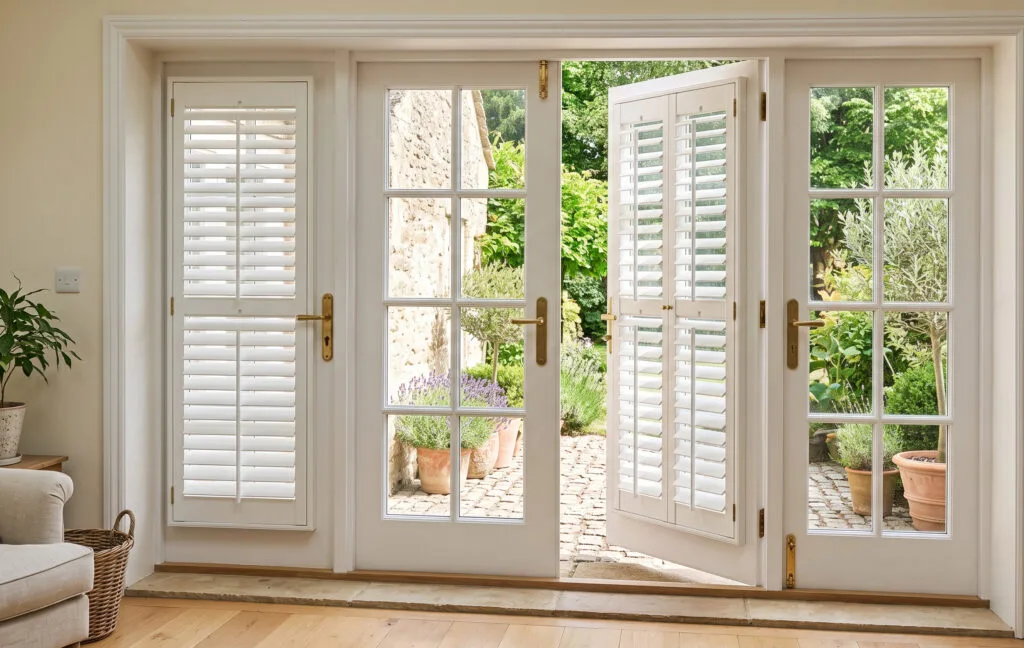
French Door Treatments — Blinds, shades, or shutters sized to mount directly on a door’s glass panel, with hold-down brackets or a frame to keep them from swinging. Cut-outs can be made around handles and levers.
H
Headrail — The horizontal housing at the top of a blind or shade that contains the lift and tilt mechanisms. On motorized treatments, the motor hides inside it.
Hold-Down Brackets — Small clips that anchor the bottom rail of a blind or shade in place — essential on doors and tilt-in windows so the treatment doesn’t swing or rattle.
Honeycomb Shade — Another name for a cellular shade, after the hexagonal shape of its air-trapping cells.
i
Inside Mount — An installation where the treatment fits inside the window opening, flush with the wall, for a clean built-in look. Requires enough depth in the opening — see our measuring guide for how to check.
L
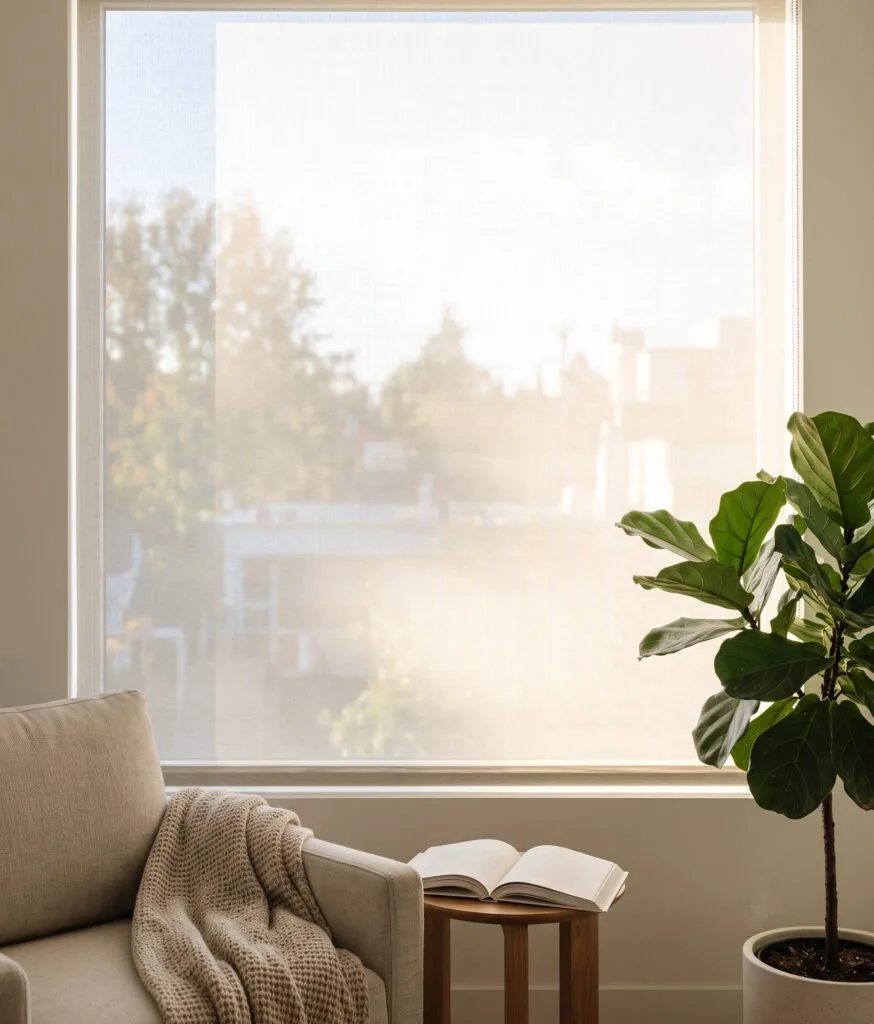
Light-Filtering — A fabric opacity that softens and diffuses incoming light while providing daytime privacy. The room stays bright and glowing; the view in and out goes hazy.
Light Gap — The thin strips of light that appear along the edges of an inside-mounted treatment, where operating clearance leaves a small space between fabric and frame. Minimized by outside mounts, side channels, or shutters.
Louver — An individual horizontal slat in a shutter panel — the part you tilt to control light. Common louver sizes range from 2.5 to 4.5 inches; larger louvers mean better views and a more contemporary look.
M
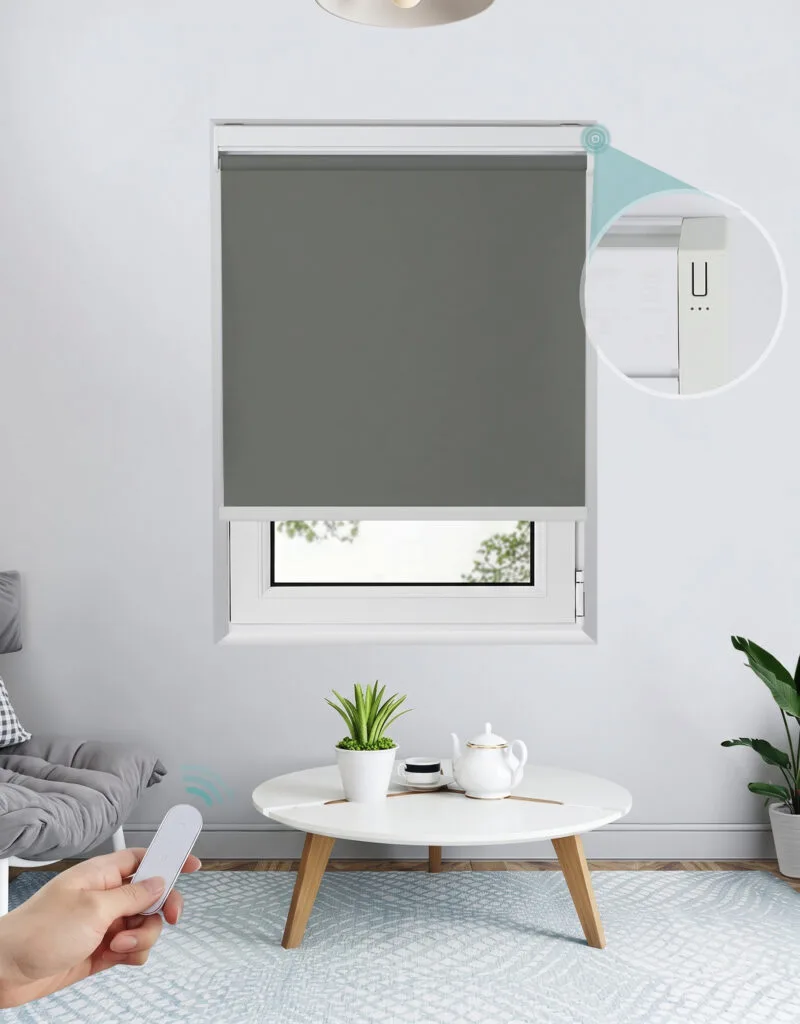
Motorization — Battery- or hardwire-powered operation that raises, lowers, or tilts a treatment via remote, smartphone app, or voice assistant such as Alexa or Google Home. Cord-free, schedule-friendly, and the answer for hard-to-reach windows.
Mounting Depth — The measurement from the front edge of the window opening back to the glass. Every product has a minimum depth it needs for an inside mount — shallow openings usually call for an outside mount instead.
O
Opacity — How much light a fabric allows through, on a spectrum from sheer to light-filtering to room-darkening to blackout. Choosing opacity is the single most important fabric decision for how a room will feel.
Outside Mount — An installation where the treatment mounts on the wall or trim above the window and overlaps the opening. Best for shallow windows, out-of-square openings, and anyone chasing maximum darkness.
P
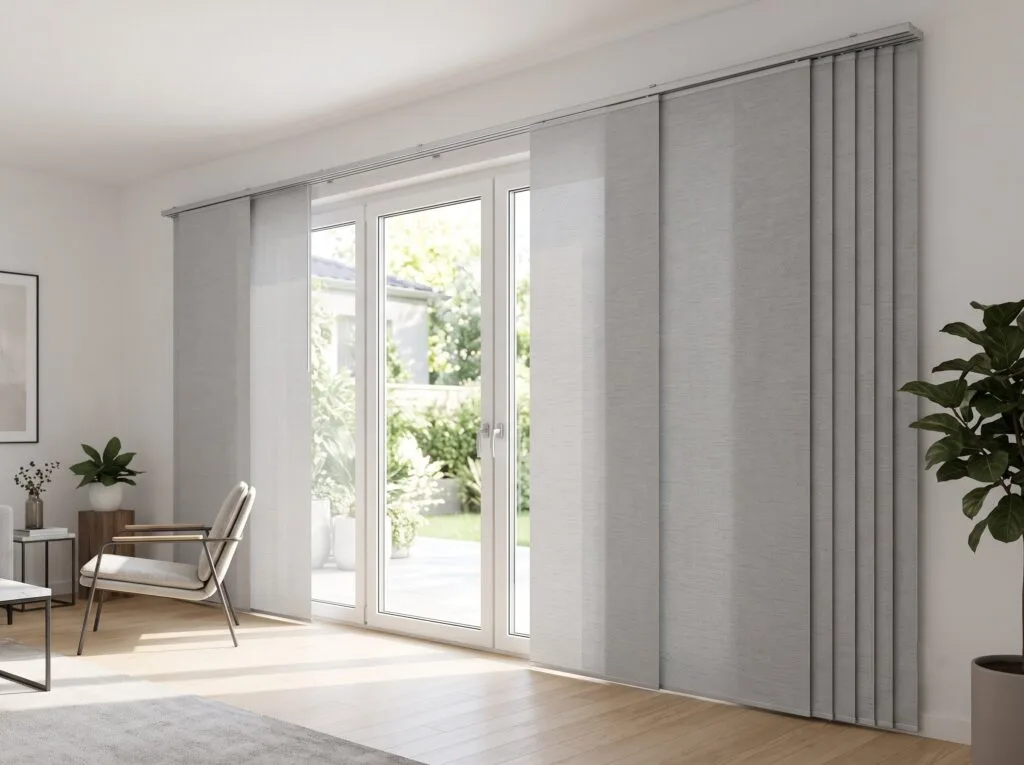
Panel Track — Wide fabric panels that slide along a multi-channel track — a sleek, modern alternative to vertical blinds for sliding doors and oversized windows.
Plantation Shutter — An interior shutter with wide horizontal louvers set in a solid frame that attaches to the window itself. Timeless, durable, cord-free by design, and one of the few window treatments that adds appraisable value to a home. See our custom shutters.
Privacy Liner — An added fabric layer sewn or attached behind a shade to increase opacity — turning a light-filtering fabric into a room-darkening one without changing its look from inside.
R
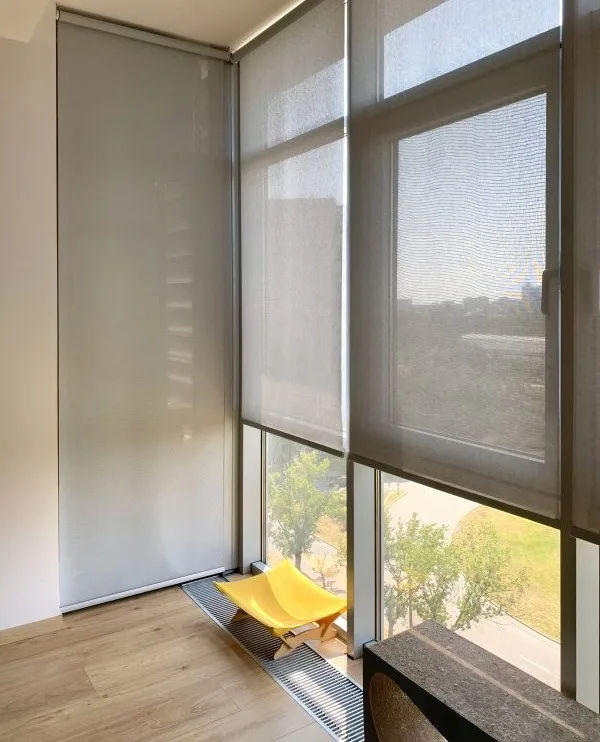
Roller Shade — A single flat panel of fabric that wraps around a tube at the top of the window. Minimalist, easy to clean, and available in everything from sheer solar screens to full blackout fabrics.
Roman Shade — A soft fabric shade that folds into elegant horizontal pleats as it raises. The dressiest of the shade family — it delivers the tailored look of drapery with the function of a shade.
Room-Darkening — An opacity level between light-filtering and blackout: most light is blocked, but the room isn’t cave-dark. A comfortable middle ground for living rooms and many bedrooms.
S
Sheer — The most open fabric opacity — light and views pass through softly, with minimal privacy. Often used in layered treatments or rooms where glare control matters more than seclusion.
Sill — The horizontal ledge at the bottom of a window. Inside-mounted treatments are measured to the sill; if there’s no sill, height is measured to wherever you want the treatment to end.
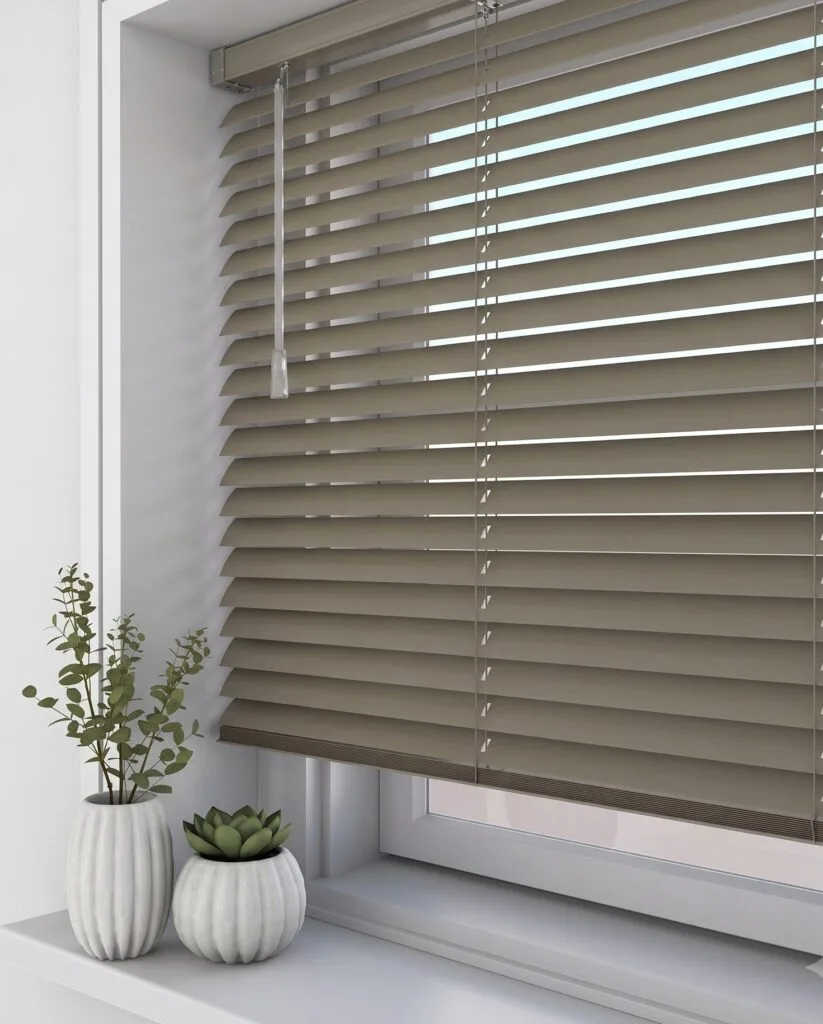
Slat — An individual horizontal vane in a blind, typically aluminum, wood, or faux wood. Common widths run from 1 inch (minis) to 2.5 inches (wood and faux wood).
Solar Shade — A roller shade made from woven screen fabric rated by openness factor (commonly 1% to 10%). It cuts glare, heat, and UV while preserving your view out — the sunglasses of the window world.
Stack — The space a treatment occupies when fully raised or drawn open. Shades stack at the top of the window; vertical blinds and drapery stack to the side. Deep stacks can block part of the glass on short windows.
T
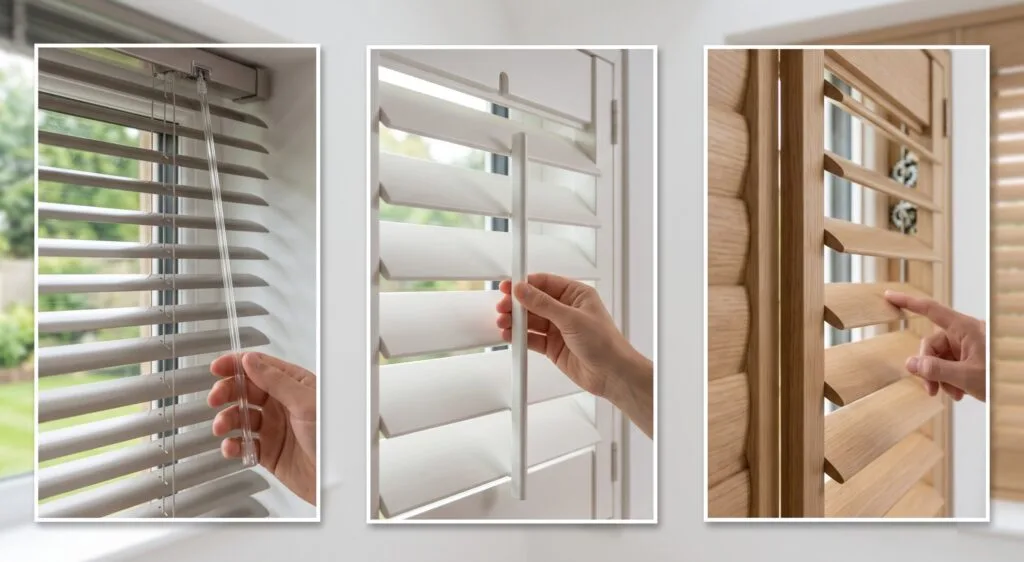
Tilt Bar / Tilt Wand — The control that rotates a blind’s slats or a shutter’s louvers. Shutters can use a traditional front tilt bar or a hidden rear tilt for a cleaner face; blinds typically use a clear wand.
Top-Down / Bottom-Up — A shade feature that lets you lower the top of the shade, raise the bottom, or both at once. Perfect for privacy with daylight — cover the sightline, keep the sky.
V
Valance — A decorative fabric or wood piece across the top of a window that conceals the headrail. Softer and shallower than a cornice; the finishing touch that makes a treatment look intentional.
Vane — An individual vertical slat or fabric strip — the term used for the hanging elements of vertical blinds and sheer shadings.
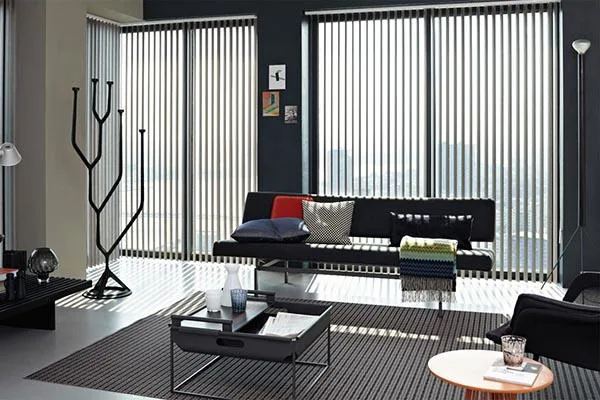
Vertical Blinds — Blinds with vanes that hang from a top track, tilt for light control, and draw fully to one side. Still the most practical treatment for sliding glass doors and very wide openings.
W
Woven Wood Shade — A shade handwoven from natural materials like bamboo, reeds, and grasses. Every panel has organic texture and variation — a favorite for coastal, boho, and nature-forward interiors. Usually paired with a privacy liner.
z
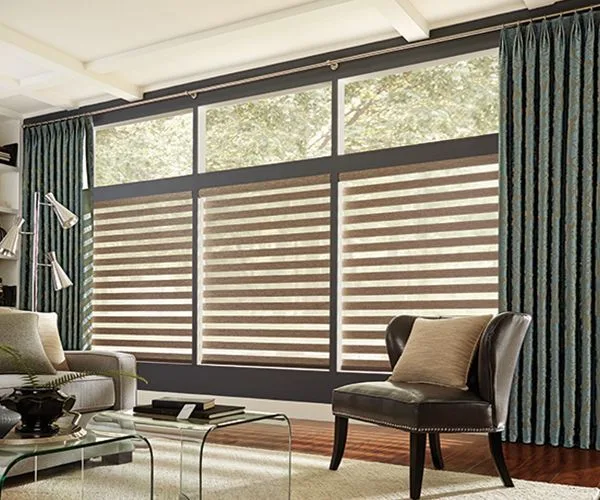
Zebra Shade — A layered roller shade made of alternating sheer and opaque horizontal bands (also called a dual, banded, or transitional shade). Align the opaque bands for privacy, offset them for filtered light and view — one shade, two personalities, adjusted in a single motion.
Still Have Questions?
Definitions only get you so far — some of these are treatments you really have to see and touch. Our mobile showroom brings samples of nearly everything on this page directly to homes across Los Angeles County and Orange County. Contact us online or call (562) 299-8743 for a free in-home consultation — we’ll translate the jargon into the right treatment for every window in your home.
Please note that repair services are available only for products provided by Blinds by Design; we do not offer general repair services for products from other manufacturers.