
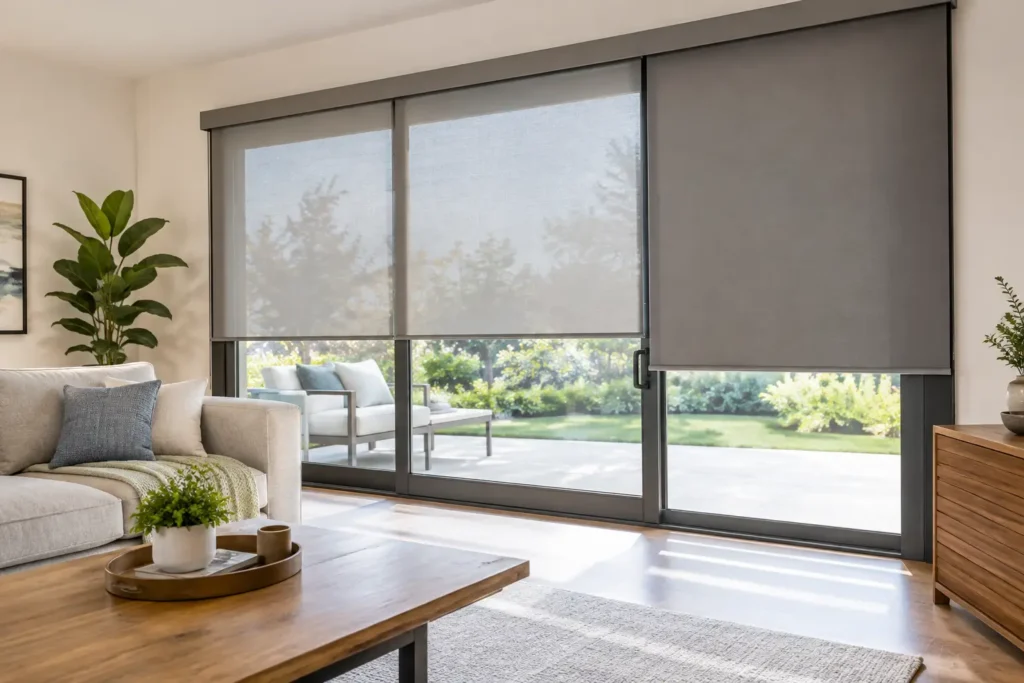
A sliding glass door can bring in the California light people love, but it can also create a wide-open view into the room, afternoon glare, and a source of unwanted heat. The best shades for sliding doors need to do more than look good. They must move easily with the door, cover a large opening without feeling bulky, and suit the way the room is used every day.
For homeowners and office owners in Los Angeles and Orange County, the right choice often comes down to a balance of privacy, light control, insulation, and style. A custom-fit shade is especially valuable on sliding doors because even a small measuring or mounting mistake can interfere with the door’s operation or leave distracting gaps at the edges.
What Makes a Shade Right for a Sliding Door?
Unlike a standard window, a sliding door opens horizontally and is used frequently. That means the treatment should generally move from side to side, stack neatly when open, and give you a clear path to the handle and doorway. A shade that looks attractive but makes it inconvenient to step outside will not feel like the right choice for long.
Start by considering which panel moves and where it stacks when the door is open. Also think about whether the door faces a busy street, a neighbor’s yard, a patio, or a bright west-facing exposure. Privacy and sun control needs can be very different from one home to the next.
The depth around the door frame matters, too. Some products work best when mounted above the opening or outside the frame, while others need enough clearance for a clean installation. This is why in-home measuring is more than a formality. It helps ensure the treatment looks intentional and functions properly.
Best Shades for Sliding Doors by Need
Vertical cellular shades for insulation and flexible light control
Vertical cellular shades are a strong option for homeowners who want a softer look with meaningful energy benefits. Their honeycomb-shaped cells trap air, helping reduce the heat that can build up around large glass doors. In sunny Southern California rooms, that added insulation can make the space more comfortable during the warmest part of the day.
These shades open horizontally and gather into a compact stack at one or both sides. They are available in light-filtering and room-darkening fabrics, so they can work in a family room, bedroom, or home office. The trade-off is that the fabric has a more structured, contemporary appearance than drapery, which may not suit every traditional interior.
Panel track shades for wide openings and modern rooms
Panel track shades are made with broad fabric panels that glide along a track. They are especially well suited to wide sliding doors, oversized patio doors, and openings where a cleaner, more architectural look is preferred. When opened, the panels stack behind one another rather than bunching up across the glass.
This style offers plenty of design flexibility. Light-filtering fabrics can soften harsh daylight while keeping the room bright, and blackout materials can provide stronger privacy when needed. Solar fabrics are another practical choice for doors that receive intense sun because they reduce glare while preserving some outward visibility during the day.
Panel tracks are often a natural fit for contemporary homes and offices. However, because the panels are larger and flatter, selecting the right fabric color and texture is important. A custom consultation lets you compare samples against the walls, flooring, and existing furnishings instead of guessing from a small online image.
Roller shades for a simple, tailored look
Roller shades offer a clean profile and a wide range of fabrics, from understated light-filtering materials to privacy-focused blackout options. For sliding doors, they are usually installed as multiple coordinated shades, with each shade serving a separate section of the glass. This approach can give the opening a streamlined, modern appearance.
They are a good choice when simplicity is the priority, particularly in minimalist interiors or offices. Motorized roller shades can make operation even easier for tall or hard-to-reach glass. With the touch of a button, the shades can raise or lower together without cords or chains.
The key consideration is access. If the moving door panel is used constantly, raising and lowering a roller shade every time someone goes outside may become inconvenient. Roller shades work best when traffic through the door is occasional or when the layout allows you to leave the operating panel clear.
Woven wood shades for warmth and texture
Woven wood shades bring a natural, layered look to rooms with warm wood finishes, organic textures, or coastal-inspired design. Materials such as bamboo, reeds, and grasses can add character that a smooth fabric shade may not provide. They can be paired with privacy or blackout liners for more control over light and visibility.
For sliding doors, woven wood shades require careful planning. They may be better suited to a fixed adjacent panel or a door that is not used as the main daily entrance. Their stacked design can take up more visual space when raised, and the natural weave may allow some filtered light through. They are beautiful when the style is right, but they are not always the most practical option for heavy-use patio doors.
Sheer shades for soft daylight and privacy
Sheer shades use layers of sheer fabric and adjustable vanes to diffuse sunlight while maintaining a light, elegant feel. They are appealing for living rooms and spaces where harsh glare is the main concern but complete room darkening is not necessary.
On sliding doors, a vertical version is typically the more functional choice. The vanes can be adjusted to direct light and create privacy without blocking every bit of daylight. At night, however, sheer fabrics may not provide the same level of privacy as a room-darkening cellular or blackout panel track shade. If the door faces close neighbors or a well-traveled area, that distinction matters.
Choosing Light Filtering, Solar, or Blackout Fabric
Fabric selection is often just as important as the shade style. Light-filtering shades soften daylight and reduce glare while keeping the room inviting. They are a popular choice for living rooms, dining areas, and offices where natural light is welcome.
Solar shades are designed to manage heat and glare while allowing a degree of daytime view-through. Openness level affects performance: a tighter weave generally offers more privacy and light control, while a more open weave preserves more of the view. Keep in mind that solar shades provide less privacy at night when interior lights are on.
Blackout or room-darkening fabrics are better for bedrooms, media rooms, and doors facing nearby homes. No window treatment can eliminate every edge gap in every installation, but a properly selected and professionally installed room-darkening product can make a major difference in privacy and comfort.
Cordless and Motorized Operation Matter More Than You Think
A sliding-door treatment is often operated more frequently than other shades in the home. The control method should feel easy, safe, and dependable. Wand controls and cordless options create a tidy appearance and avoid dangling cords near a busy walkway. They are also a smart consideration in homes with children and pets.
Motorization is worth considering for large, tall, or frequently used doors. It can be especially helpful when several shades cover one opening, since the treatments can move together rather than being adjusted one at a time. The best option depends on how you use the door, your budget, and whether you want scheduled control for afternoon sun and privacy.
Why Custom Measuring Changes the Result
Sliding doors are rarely as straightforward as they appear. Handle placement, trim depth, nearby walls, ceiling height, baseboards, and the direction of the door’s movement all affect the right product and mounting method. A treatment that is too narrow can leave exposed glass, while one that extends too far can block the walkway or prevent full access to the door.
Professional measuring also helps determine the proper stack location. Ideally, the opened shade should gather where it does not interrupt the view, crowd furniture, or interfere with the door panel. Details like these are what give custom window treatments their polished, built-in look.
Blinds by Design brings product samples and design guidance directly to your home or office, so you can see how fabrics, colors, and operating styles work in the actual light of the room. That personal review makes it easier to choose a treatment that fits your door, your decor, and your daily routine.
A sliding door should remain an easy connection to your patio, balcony, or outdoor space. Schedule a free in-home consultation to compare options in person and choose shades that make that connection more comfortable, private, and beautifully finished.