
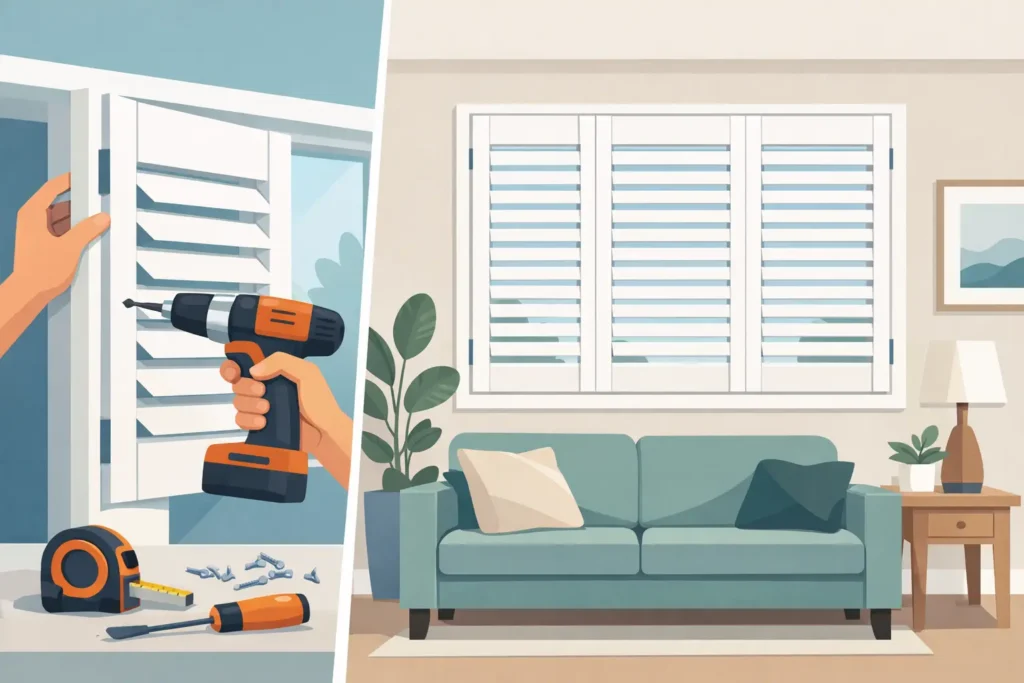
A shutter that looks perfect in the showroom can feel completely different once it meets a real window. In Los Angeles homes, that matters. Sun exposure, older frames, wide sliders, and room-by-room design goals all affect how custom plantation shutters installation should be handled if you want a clean fit and a polished result.
Plantation shutters are one of the few window treatments that can change both the look and function of a space at the same time. They add structure to a room, improve privacy, help manage light, and hold up well over the long term. But the finished look depends on more than the shutter itself. It depends on accurate measuring, smart product selection, and installation that respects the details of the window opening.
Why custom plantation shutters installation matters
Shutters are not a one-size-fits-all product. Even homes built from the same floor plan can have small differences in window depth, trim, squareness, and frame condition. Those details decide whether shutters mount neatly inside the opening or need an outside-mount solution for proper coverage and operation.
That is why custom plantation shutters installation starts well before the installer arrives with tools. The process begins with evaluating the room, the window, and the way you want the shutters to work every day. A bedroom may need stronger privacy and room-darkening control. A living room may prioritize natural light and curb appeal. An office may need glare reduction without making the room feel closed off.
When those choices are made early, the final result looks intentional instead of improvised. The panels open correctly, the louvers tilt smoothly, and the frame aligns with the window rather than fighting against it.
What happens before installation day
The most overlooked part of the job is the in-home measure. This step is where a professional checks the width and height in multiple places, confirms whether the window is level, and looks at the depth available for an inside mount. If the opening is slightly out of square, that has to be accounted for in the fabrication.
This is also the time to talk through material options. Real wood offers warmth and a premium painted or stained finish, but composite shutters can be a better fit in areas with more moisture or heavy daily use. Neither is automatically better in every room. It depends on the environment, your design goals, and your budget.
Panel configuration matters just as much. A wide window may need multiple panels to avoid oversized sections that feel heavy or awkward to operate. French doors need clearance for handles. Specialty shapes require even more planning. These are small decisions on paper, but they affect how natural the shutters feel once installed.
Choosing the right fit for your windows
Inside-mount shutters are popular because they look crisp and built-in. They work best when the window has enough depth and the opening is reasonably square. This style keeps the shutter contained within the frame and often creates the clean, tailored look homeowners want.
Outside-mount shutters are often the smarter answer when the window frame is shallow, uneven, or trimmed in a way that makes an inside mount impractical. They can also make a window appear larger and provide better coverage in some situations. There is no one correct choice for every home. The right fit is the one that looks balanced and functions well in the actual space.
In many Southern California homes, especially older properties, window openings are not perfectly uniform. That is exactly where custom work earns its value. Instead of forcing a standard product into an imperfect opening, the shutters are made for the window you have.
Common installation challenges in real homes
Not every window presents a straightforward installation. Older drywall may be uneven. Wood trim can be slightly bowed. Sliding doors and large picture windows may require wider spans and more precise panel alignment. Even new construction can come with minor inconsistencies that become obvious once a rigid shutter frame is introduced.
A professional installer plans for those conditions instead of reacting to them at the last minute. That may mean adjusting for slight irregularities, using the right mounting approach, or recommending a different frame style to improve the final look. Good installation is not just about attaching hardware. It is about making the shutters feel like part of the home.
What professional installation includes
On installation day, the goal is simple: a secure fit, smooth operation, and a clean finish. The installer verifies the measurements against the manufactured shutters, prepares the opening, mounts the frame, and checks that each panel is level and aligned. Then the louvers and hinges are tested to make sure everything moves the way it should.
This part of the process sounds simple, but it is highly detail-driven. A slight alignment issue can affect the reveal around the frame. Uneven panel spacing can make a premium product look off. If shutters rub, sag, or fail to close properly, the problem usually traces back to fit or installation technique.
Professional installation also saves homeowners from a common frustration: discovering too late that a wall condition, trim detail, or hardware conflict changes the original plan. When one team handles measuring, ordering, and installing, there is less room for disconnects and finger-pointing.
Design benefits that go beyond privacy
Plantation shutters are often chosen for privacy and light control, but their design value is just as important. They give windows a finished architectural look that works with traditional, transitional, coastal, and many modern interiors. Because the lines are clean and structured, shutters can make a room feel more put together even when the rest of the decor is simple.
They are also easy to live with. Unlike fabric treatments, shutters do not require regular laundering or steaming. Dusting and occasional wipe-downs are usually enough. For busy households, that low-maintenance appeal is a real benefit.
In sun-heavy areas like Los Angeles and Orange County, shutters also help manage brightness throughout the day. You can tilt the louvers to soften direct light without giving up privacy entirely. That flexibility is useful in living rooms, front-facing bedrooms, and workspaces where glare can become an issue.
Are plantation shutters worth the investment?
For many homeowners, yes, but the answer depends on priorities. Plantation shutters usually cost more upfront than basic blinds or off-the-shelf window coverings. The trade-off is durability, custom fit, and a more permanent finished look. If you are planning to stay in the home, want a cleaner design, and prefer a treatment that does not feel temporary, shutters tend to justify the investment.
They are especially appealing when homeowners want one solution that covers aesthetics, privacy, and day-to-day usability. If the lowest initial price is the only priority, there are less expensive options. If long-term value and a tailored appearance matter more, shutters are often the better choice.
Why a full-service approach makes the process easier
Window treatments can become complicated when consultation, measuring, ordering, and installation are split among different providers. One company may sell the product, another may measure, and someone else may install. That kind of handoff creates room for delays, miscommunication, and costly mistakes.
A full-service approach simplifies the process. You get guidance in your own space, can compare materials and colors against your flooring and walls, and have one team responsible for fit and finish. For homeowners who want the project handled correctly the first time, that matters.
Blinds by Design serves clients across the Los Angeles area with that kind of start-to-finish support. It is a practical way to make custom window treatments less stressful and more predictable.
Getting the best result from custom plantation shutters installation
The best shutter installation starts with honest planning. Think about how each room is used, how much privacy you want, and whether you prefer a bright filtered feel or stronger light control. Bring up details such as pets, children, high-traffic use, or windows that are hard to reach. Those practical concerns often shape the best product and configuration.
It also helps to think beyond the window itself. Shutters should work with the architecture of the home, the trim style, and the overall design direction of the room. A good installer will help balance those visual details with the functional side of the decision.
If you want window treatments that look custom because they truly are custom, installation is not the final step. It is the result of getting every earlier step right. A well-made shutter deserves precise measuring, informed product selection, and careful fitting. When all three come together, the room feels more finished the moment the panels go up.
If you are considering shutters for your home or office, the smartest next step is to see options in the actual space and get measurements from a professional who can guide the fit from the beginning. That is usually where a good idea turns into a result you will still be happy with years from now.