
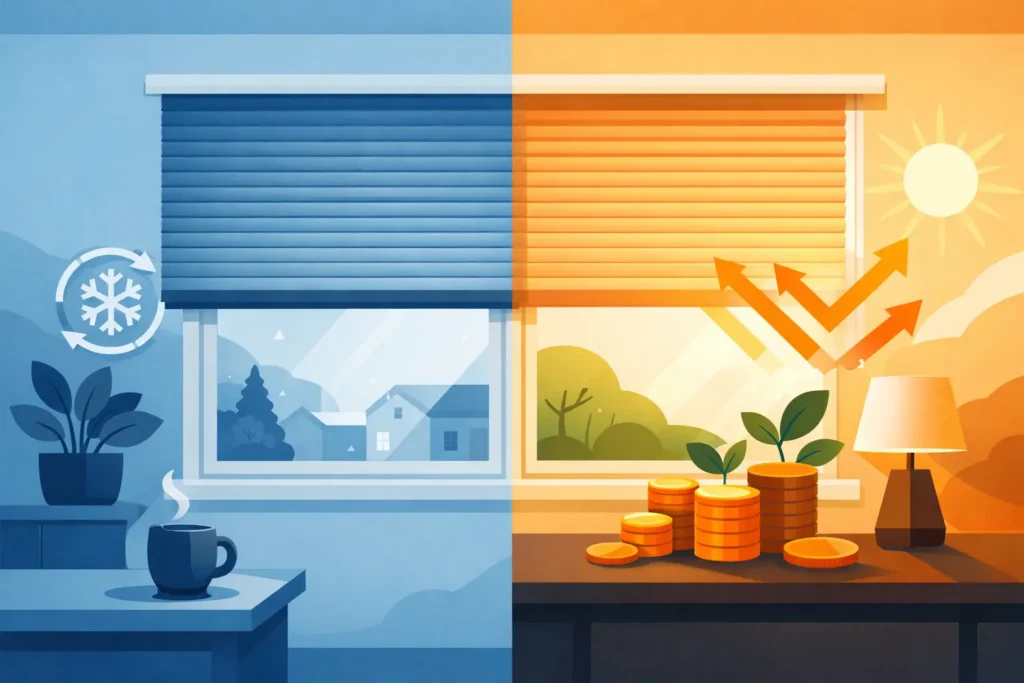
A west-facing living room in Los Angeles can feel comfortable at 10 a.m. and unlivable by late afternoon. That swing is exactly why so many homeowners start looking at energy efficient window shades. The right shade does more than soften light – it helps control heat gain, reduce glare, protect interiors, and make rooms feel more consistent throughout the day.
For homes and offices across LA and Orange County, that matters. Large windows, bright sun, and long warm seasons can turn beautiful natural light into a daily comfort problem. Window treatments are often chosen for appearance first, but when they are selected carefully, they can also become part of a smarter approach to indoor comfort and energy use.
What makes window shades energy efficient?
Not every shade helps in the same way. Energy performance usually comes down to how well the material limits heat transfer, how closely the shade fits the window, and how effectively it manages incoming sunlight.
Some shades work by reflecting solar heat. Others trap air and create insulation between the glass and the room. Some fabrics filter light while still reducing harsh glare, which is useful in spaces where you want brightness without the full heat load. The best option depends on the room, the window size, the sun exposure, and how you use the space.
Custom sizing matters here more than many people expect. A beautiful shade that leaves large gaps at the sides may still look polished, but it will not perform as well as a properly fitted product. That is one reason professionally measured and installed shades tend to deliver better long-term results.
Best types of energy efficient window shades
Cellular shades are often the first product discussed when energy savings are a priority, and for good reason. Their honeycomb-shaped pockets trap air and help insulate the window. In rooms that get intense sun or feel hotter or colder than the rest of the house, cellular shades are often one of the strongest choices.
Single-cell and double-cell options offer different levels of insulation. Double-cell shades can provide stronger thermal performance, but they also have a slightly fuller look. In some rooms that added dimension is a plus. In others, a slimmer profile may suit the design better.
Solar shades are another strong option, especially in modern homes and offices with expansive glass. These shades are designed to reduce glare and filter UV rays while preserving an outside view. They are especially useful in media rooms, workspaces, and living areas where screen glare becomes a daily frustration. The trade-off is that solar shades usually focus more on light and heat control than insulation, so they are not always the best answer if your main concern is temperature retention.
Roman shades can also contribute to energy efficiency, particularly when made with heavier fabrics or paired with liners. They bring softness and a more decorative finish to a room, which makes them appealing in bedrooms, dining areas, and formal living spaces. Their energy performance depends heavily on fabric choice and fit, so this is where design guidance makes a real difference.
Roller shades with performance fabrics are worth considering as well. They offer a clean, simple look and can help manage solar heat gain when the right material is selected. While they may not insulate as much as cellular shades, they can still be a smart choice for rooms where style, easy operation, and filtered light are the main priorities.
Where energy efficient window shades make the biggest difference
South- and west-facing windows usually see the most dramatic benefit. These exposures often bring the strongest afternoon sun, which can heat up floors, furniture, and the air inside the room. If a space becomes noticeably warmer at certain hours, window shades can help moderate that pattern.
Bedrooms are another high-value area. Rooms that get early morning or late afternoon sun often feel less restful when heat and brightness build up too quickly. A shade that improves temperature control and blocks excess light can make the room more comfortable day and night.
Open-concept living areas, home offices, and conference rooms also benefit. In these spaces, glare control matters almost as much as temperature. People notice when they are constantly adjusting blinds, moving seats, or avoiding certain parts of the room during peak sunlight hours.
Older homes with less efficient windows can see meaningful improvement from well-chosen shades. Newer homes can benefit too, especially where there are large decorative windows or sliding glass doors that allow heavy solar exposure.
Design still matters
Homeowners rarely want a product that performs well but looks out of place. The good news is that energy-conscious shades do not require you to settle for a purely utilitarian look.
Today’s options come in a wide range of colors, textures, opacity levels, and operating styles. You can choose a crisp, minimal appearance for a contemporary home or a softer fabric-forward finish for a more traditional space. Motorization is also a practical upgrade, especially for hard-to-reach windows or homes where managing sunlight throughout the day is part of the goal.
This is where many people benefit from seeing samples in the room itself. Light changes how fabric reads. A color that looks warm and balanced in a showroom can appear completely different in your home at 4 p.m. A mobile consultation makes it easier to compare options against your wall color, flooring, furnishings, and natural light.
Why custom fit matters more than people think
A close fit helps shades perform better and look better. It reduces side gaps, improves privacy, and creates a more finished appearance. For energy efficiency, that precision can make a noticeable difference because it limits how much heat slips around the treatment.
This becomes especially important with wide windows, bay windows, older homes where frames may not be perfectly square, and sliding doors that need coordinated coverage. Off-the-shelf treatments can work in some situations, but they often force compromises in fit, function, or appearance.
Professional measuring also helps avoid common issues like improper mounting depth, uneven hems, and operation problems. When a treatment is meant to support comfort and efficiency every day, correct installation is part of the product, not an afterthought.
Choosing the right shade for each room
There is no single best answer for every home. A family room with heavy afternoon sun may call for cellular shades. A front office that needs glare reduction and outside visibility may be better suited to solar shades. A bedroom may need a layered approach that balances insulation, privacy, and room-darkening.
That is why a room-by-room recommendation tends to produce better results than a one-style-for-every-window plan. Window orientation, ceiling height, privacy needs, and design goals all affect what will work best.
For many homeowners, the most efficient choice is not just about the product category. It is about the combination of fabric, lift system, opacity, fit, and installation quality. Those details can change how the shade performs over time.
A practical investment for comfort
Energy efficient window shades are not only about utility bills. They are about making the home feel better to live in. Less glare on the TV. Fewer hot spots near the windows. Better sleep in a bright bedroom. More protection for flooring, artwork, and furniture that sit in direct sun.
That broader value is what makes the investment worthwhile for many property owners. You are not just covering a window. You are improving how the room functions every day.
For homeowners who want a polished result without guessing through measurements, materials, and installation details, working with an experienced local specialist can simplify the process. Blinds by Design helps clients compare styles in their own space, choose custom-fit solutions, and get professional installation that supports both appearance and performance.
If your rooms run too hot, too bright, or just never feel quite balanced, the right shade can change that more than you might expect.