
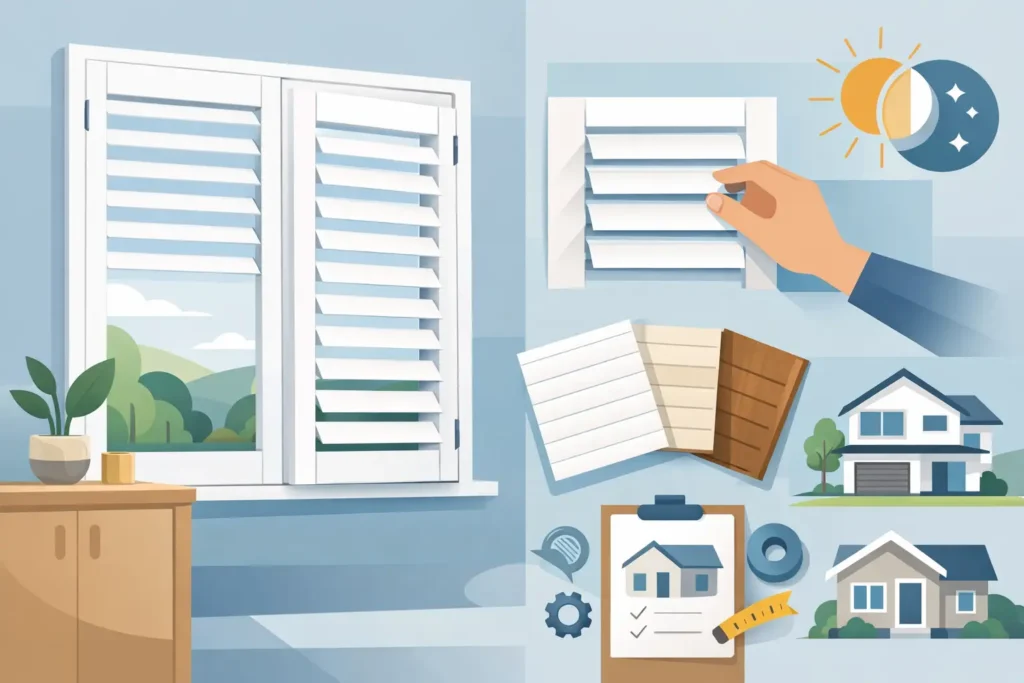
A beautiful shutter can look perfect in a showroom and still feel wrong once it is installed in your home. That usually comes down to details – room conditions, window shape, panel configuration, and how you actually use the space every day. This plantation shutters buying guide is designed to help you make a confident choice before you invest.
Plantation shutters are one of the most requested window treatments for good reason. They offer a clean, architectural look, excellent light control, and the kind of lasting value homeowners appreciate when they are updating a primary residence, rental property, or office. But not all shutters are built the same, and the right option depends on more than appearance alone.
What to know before buying plantation shutters
The first decision is not color or frame style. It is function. Think about what you need the shutters to do in each room. In a bedroom, privacy and blackout support may matter most. In a living room, you may want filtered natural light without losing the view. In a kitchen or bathroom, durability in heat and moisture becomes a bigger factor.
This is where many buyers save time by looking at the windows in person instead of guessing from online photos. The same shutter style can feel very different depending on ceiling height, trim depth, wall color, and the direction the window faces. A product that looks warm and balanced in one room can feel heavy or too bright in another.
Custom sizing also matters more than many people expect. Plantation shutters are not a one-size-fits-all purchase. Precise measuring affects how the panels open, how tightly the louvers close, and whether the finished result looks integrated with the window or added on afterward.
Material matters more than most buyers think
When people compare plantation shutters, material is often the biggest factor behind price, maintenance, and long-term performance.
Wood shutters
Real wood shutters are often chosen for their natural beauty and lighter weight. They work especially well in living rooms, dining rooms, and other areas where design impact is a priority. Wood can also be a strong option for larger windows because it tends to be lighter than some composite alternatives.
The trade-off is that wood is usually a more premium purchase, and it may not be the best fit for high-moisture rooms unless the product is specifically made and finished for those conditions. If your goal is a refined painted finish or stained look that complements cabinetry or trim, wood is often worth considering.
Composite or faux wood shutters
Composite shutters are popular because they offer durability and a consistent painted appearance. They are often a practical choice for bathrooms, kitchens, laundry rooms, and other spaces where humidity or temperature swings are part of daily life.
They can be slightly heavier than wood, which matters on wider panels or oversized windows. That does not make them a poor choice. It simply means panel design and hardware quality need to be selected carefully so the shutters perform well over time.
Vinyl and other moisture-resistant options
Some shutters are built specifically for moisture resistance and easy care. These can make sense in high-use areas or for clients who want a lower-maintenance solution. The key is to balance durability with appearance. Some economy products can look more plastic than custom, which may not suit every interior.
Louver size changes the look and the light
Louver size has a bigger visual impact than many homeowners expect. Larger louvers often create a more open, modern look and allow a broader view when tilted open. Smaller louvers can feel more traditional and may suit older homes or rooms with more classic trim details.
In many Los Angeles area homes, larger louvers are a common choice because they complement open layouts and bring in light without making the window feel busy. Still, there is no universal best size. A compact bathroom window may benefit from a different proportion than a wide front-facing living room window.
If you are deciding between sizes, look at the scale of the room, not just the window. High ceilings, wide openings, and contemporary interiors can usually support a larger louver well. Smaller spaces or more traditional designs may feel more balanced with a slightly narrower profile.
Frame style, divider rails, and panel layout
A good plantation shutters buying guide should spend as much time on construction details as on materials, because these choices affect both daily use and finished appearance.
Frame style matters if your windows have trim, shallow depth, or unusual shapes. Some frames create a more substantial look, while others are designed to stay visually light. The right frame should fit the architecture of the room rather than compete with it.
Divider rails are the horizontal sections that allow top and bottom louvers to move independently. These are useful when you want privacy on the lower part of the window while still letting in light above. They are especially helpful for street-facing rooms, bedrooms, and ground-floor spaces.
Panel layout affects how the shutters open and stack. A wide window may be better with multiple panels rather than one oversized section. French doors, sliding doors, and specialty-shaped windows require even more planning. This is one reason professional measuring and design guidance can prevent expensive mistakes. What looks simpler on paper is not always the best choice once clearance, hardware, and access are considered.
Color and finish should work with the whole room
White plantation shutters remain the most requested option because they are clean, versatile, and easy to coordinate with many interiors. They also reflect light well and tend to keep the room feeling bright.
That said, white is not just one color. Bright white, soft white, and warmer off-white finishes can each change the look of a space. If your trim, cabinetry, or wall paint has warm undertones, a cooler white shutter can feel disconnected. Matching the finish to the room is often what makes custom shutters look polished instead of simply expensive.
For some homes, stained wood or specialty finishes make more sense. These can add warmth and tie the shutters into flooring, beams, or furniture. The best choice depends on whether you want the shutters to blend into the architecture or stand out as a design feature.
Price is important, but value is the real comparison
Plantation shutters are not the lowest-cost window covering, and that is part of why buying carefully matters. The better question is not just what they cost, but what you are getting for that investment.
A lower quote may reflect thinner materials, fewer customization options, limited finish choices, or basic installation. On the other hand, a higher quote may include in-home measuring, custom fabrication, better hardware, cleaner fit, and professional installation that protects the product warranty and the final look.
For many homeowners, shutters are a long-term purchase. They are built into the visual character of the room and used every day. That makes durability, fit, and reliable installation just as important as the initial number on the proposal.
Why installation should never be an afterthought
Even a high-quality shutter can disappoint if it is measured or installed incorrectly. Gaps, rubbing panels, uneven lines, and louvers that do not close properly usually come back to installation quality.
This is one reason many homeowners prefer a full-service process. When one team handles consultation, measuring, product selection, and installation, there is less room for miscommunication. It also gives you better support if adjustments are needed after installation.
For custom work, especially in older homes where windows are not always perfectly square, professional installation can make the difference between a shutter that looks custom and one that looks close enough.
Choosing the right partner for the job
If you are shopping for shutters, ask how the company handles measurements, what material options they recommend for your specific rooms, and who performs the installation. Look for guidance that feels specific to your windows, not a generic sales pitch.
A strong provider should help you compare options honestly. Sometimes that means recommending wood for one room and a more moisture-resistant material for another. Sometimes it means explaining why a certain panel layout will function better even if it is not the option you first had in mind. That kind of advice usually leads to better long-term results.
For homeowners who want a straightforward process, working with an experienced local company such as Blinds by Design can simplify everything from design decisions to final installation. Seeing samples in your own space and getting expert measurements upfront often leads to a better fit, both visually and practically.
The right plantation shutters should feel like they belong in the room from day one. If you take the time to compare materials, layout, finish, and installation support, you will end up with a result that looks better, works better, and continues to earn its place every time you open the blinds would have been the easier choice.