
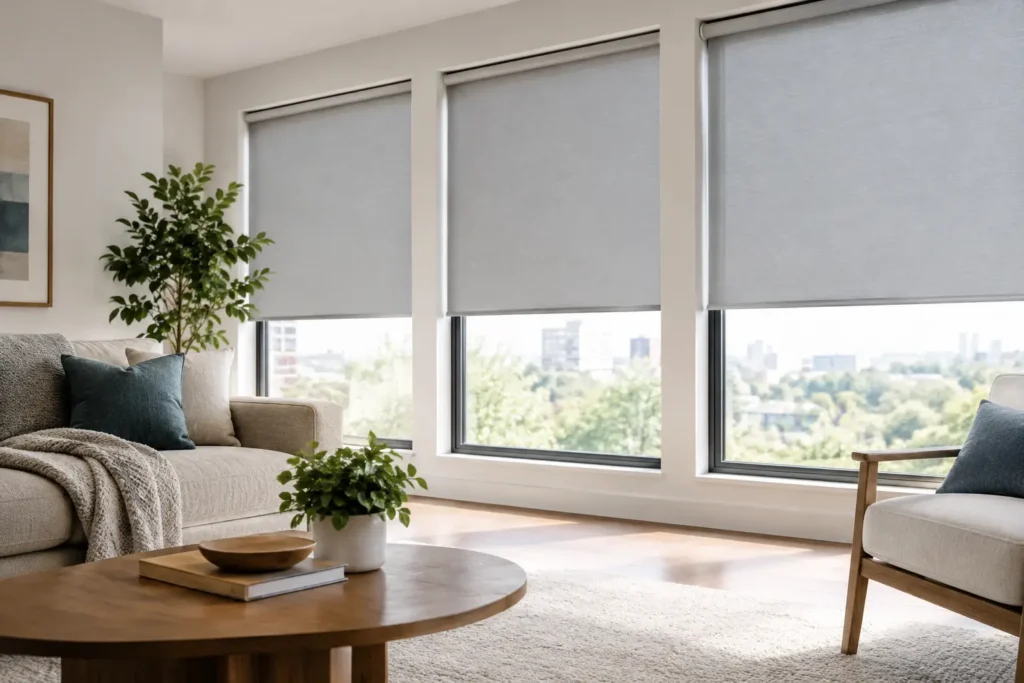
A bright Los Angeles afternoon can turn a beautiful room into a space that feels too exposed, too warm, or difficult to use. Roller shades offer a clean answer: a tailored window treatment that manages sunlight and privacy without adding visual bulk. Their simple profile works especially well for homeowners and offices that want a polished look with everyday practicality.
The best choice is not simply a matter of picking a color from a sample book. Fabric openness, window orientation, room use, mounting style, and control options all affect how a shade performs once it is installed. With custom roller shades, those details can be selected around the way your space actually works.
Why Roller Shades Work in So Many Rooms
Roller shades are built around a single piece of fabric that rolls neatly into a tube at the top of the window. When raised, they take up very little visual space. When lowered, they create an uncluttered, tailored surface that suits contemporary interiors, traditional homes with updated furnishings, and professional office settings.
That simplicity is a major advantage in rooms with large windows, sliding doors, or a strong architectural view. Heavy layers can compete with the room. A well-chosen roller shade lets the windows remain part of the design while giving you control when the sun becomes uncomfortable.
They also fit a range of budgets and design goals. The result can be understated and functional, such as a light-filtering fabric in a family room, or more dramatic, such as room-darkening shades in a media space. Custom sizing matters here. Properly measured shades sit where they should, operate smoothly, and provide more consistent coverage than a ready-made option that is almost the right size.
Choosing the Right Roller Shade Fabric
The fabric is where appearance and performance meet. Before choosing a color or pattern, consider what you want the shade to do at different times of day.
Light-filtering fabrics
Light-filtering roller shades soften direct sunlight while keeping the room bright. They are a natural fit for living rooms, kitchens, and home offices where harsh glare is the problem, but complete darkness is not the goal. Depending on the fabric, they can also provide daytime privacy, although silhouettes may still be visible at night when indoor lights are on.
For many homes in Los Angeles and Orange County, light filtering is a comfortable middle ground. It helps reduce glare on screens and protects furnishings from intense sun without making the room feel closed off.
Solar screen fabrics
Solar shades are designed to reduce heat and glare while maintaining a degree of outward visibility. Their openness factor affects the view and the level of privacy. A more open weave preserves more of the view, while a tighter weave offers stronger light control and privacy.
These shades are popular for rooms with expansive glass, views, or west-facing exposure. The trade-off is that a fabric selected mainly to preserve a view may not provide the level of nighttime privacy needed in a bedroom or street-facing room. In some spaces, pairing a solar shade with drapery panels is the better solution.
Room-darkening and blackout fabrics
For bedrooms, nurseries, media rooms, and spaces where sleep or screen visibility matters, room-darkening or blackout fabrics are worth considering. They block substantially more incoming light than light-filtering materials, but the amount of light leakage around the sides depends on the mounting method and window shape.
An inside-mounted shade often looks crisp and minimal, but it can allow thin lines of light at the edges. An outside mount with added overlap can improve coverage. If a room needs near-total darkness, this should be discussed before measuring rather than assumed after installation.
Details That Change the Finished Look
A roller shade may look simple, but its design details shape the final result. Inside mounting places the shade within the window frame for a built-in appearance. It requires enough depth and a reasonably square opening. Outside mounting positions the shade above or beyond the frame, which can make a smaller window appear larger and offer more light coverage.
The roll direction is another small decision with a visible effect. A standard roll places the fabric close to the window, while a reverse roll brings it forward. Reverse rolls can work well when a window has handles or other projections, and they create a slightly more decorative profile. Hardware, brackets, and fascia options can be selected to match the desired level of finish.
Color deserves consideration beyond matching the walls. A white or soft neutral fabric usually keeps a room airy and reflects heat well. Charcoal, bronze, and darker tones can sharpen a modern palette and reduce glare, but they may make the shade more visually prominent. Looking at samples in the actual room is valuable because afternoon light can change a color significantly from the way it appeared in a showroom or online.
Cordless and Motorized Control Options
Control style affects safety, convenience, and how often you will use the shades as intended. Cordless roller shades are a clean choice for many residential windows because they eliminate dangling cords and keep the treatment visually simple. They are particularly useful in homes with children and pets.
Motorized shades bring added comfort to tall windows, hard-to-reach openings, large groups of windows, and rooms with changing light throughout the day. With a remote, wall control, app, or compatible smart-home system, you can adjust multiple shades without walking from window to window. Scheduled operation can also help manage strong morning or afternoon sun.
Motorization is an investment, so it makes the most sense where it solves a real daily issue. A single easily reached kitchen window may not need it. A wall of living room glass, a two-story foyer, or an office conference room may benefit from it immediately. A professional consultation can help determine where manual control is practical and where automation will genuinely improve the space.
Roller Shades for Homes and Offices
At home, roller shades can make a room more comfortable without changing its character. In a living room, they can soften sun while preserving a view. In a bedroom, they can support better sleep and privacy. In a kitchen, moisture-resistant and easy-to-clean materials offer a practical option near busy areas.
For offices, the priorities often include screen glare, employee comfort, privacy, and a consistent finished appearance. Solar roller shades are especially useful in workspaces with broad windows because they help reduce glare on monitors while keeping the room connected to daylight. Neutral fabrics can also create a unified look across offices, meeting rooms, and reception areas.
Commercial and residential projects both benefit from planning around the window’s purpose. A shade that works beautifully in a sunny conference room may not be the right answer for a primary bedroom. Good design begins with the room, not the product name.
Why Professional Measuring and Installation Matter
Window openings are rarely as uniform as they appear. Frames can be slightly out of square, drywall returns may reduce mounting space, and obstructions such as handles, trim, or alarm sensors can affect placement. Accurate measurements account for those conditions before an order is placed.
Professional installation also protects the investment. Brackets must be secured correctly, shades need to hang level, and motorized components require careful setup. The goal is a treatment that looks intentional and functions reliably from the first day.
Blinds by Design brings samples and product guidance directly to your home or office, making it easier to compare fabrics, colors, and operating options in the light of the actual room. From measuring through installation, a custom approach helps remove the uncertainty from an otherwise detail-heavy decision.
If you are considering roller shades, start by noticing when the light creates problems, where privacy feels limited, and which windows are difficult to reach. Those everyday observations make it much easier to choose a shade that will look right and work hard for years.