
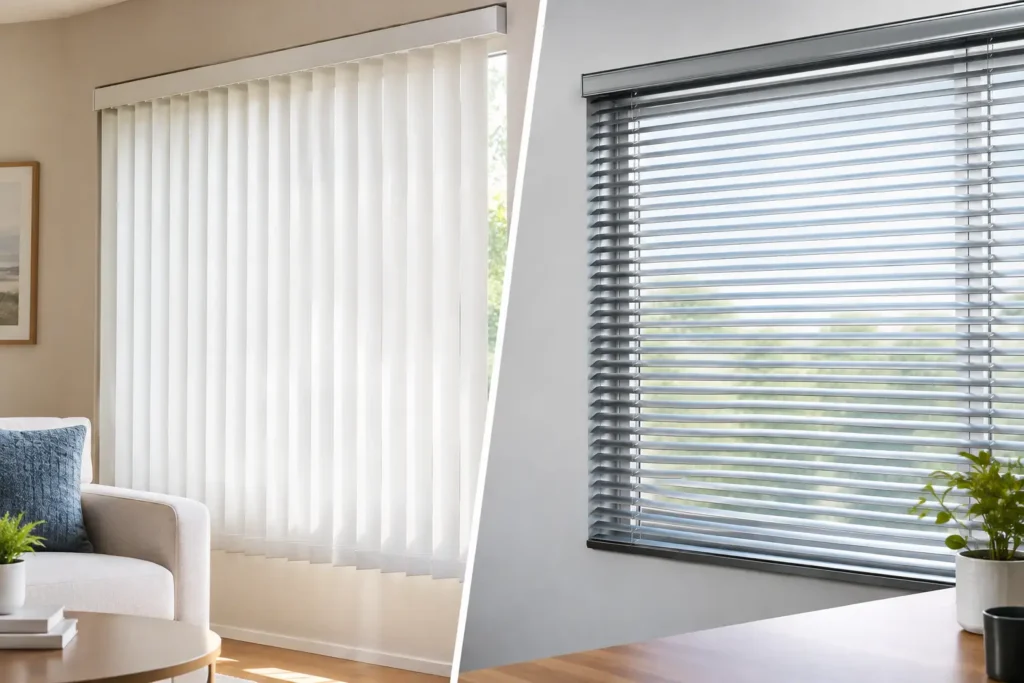
A west-facing window in Los Angeles can expose blinds to hours of direct sun, while a kitchen or bathroom asks the same window covering to handle moisture and frequent cleaning. That is why the choice between vinyl blinds versus aluminum should go beyond color or a quick price comparison. Both are practical horizontal blind options, but they perform differently once they are part of your daily routine.
The right material depends on the room, the size and exposure of the window, your design goals, and how long you expect the blinds to serve the space. A custom consultation makes it easier to see those differences in the actual light and surroundings of your home or office.
Vinyl Blinds Versus Aluminum: The Main Difference
Vinyl blinds are made from PVC or a similar composite material. Their slats tend to have a softer, more substantial appearance, and they are often selected for spaces where moisture resistance, privacy, and an easy-care finish matter most. White and neutral vinyl blinds can also work well with a wide range of interiors, from traditional homes to clean, contemporary remodels.
Aluminum blinds use lightweight metal slats. They have a slimmer profile and a more tailored, architectural look than many vinyl options. Aluminum is especially appealing when a client wants precise light control, a compact blind stack, or a durable solution for a busy office, utility area, or modern room.
Neither material wins in every setting. Vinyl often feels more at home in casual, moisture-prone spaces. Aluminum can be the stronger choice for a crisp, streamlined finish and long-term shape retention. The details of the window matter as much as the material itself.
Light Control and Privacy
Both vinyl and aluminum blinds use adjustable horizontal slats, so each can provide privacy while still allowing daylight into the room. When closed, quality custom blinds reduce outside visibility significantly. When tilted upward or downward, they let you direct light toward the ceiling, floor, or away from screens and seating areas.
Aluminum slats are commonly thinner and more rigid, which can create a very controlled, uniform look when the blinds are tilted. This is useful in home offices where glare on a monitor is a concern, as well as commercial spaces that need a polished appearance throughout the day.
Vinyl slats can also offer effective light control, particularly when custom-sized to limit gaps at the sides of the window. However, vinyl may be more likely to flex on wide windows or in intense heat, depending on the product quality and slat gauge. For a sun-heavy room, choosing a well-made product and proper fit is more meaningful than selecting material based on price alone.
For bedrooms, privacy is often the priority. For living rooms, clients may care more about preserving natural light without exposing the interior to neighbors. In either case, the lift style, slat size, and mounting method affect the final result.
Durability in Southern California Homes
Southern California weather creates a particular set of demands. Strong sunlight can fade finishes over time, and heat near glass can put pressure on less stable materials. Vinyl blinds resist moisture well and will not rust, making them a sensible option for bathrooms, laundry rooms, and kitchens. They are also easy to wipe down after cooking residue or everyday dust buildup.
The trade-off is heat. Lower-quality vinyl can warp, discolor, or become brittle when repeatedly exposed to intense direct sunlight. This does not mean vinyl is unsuitable for sunny windows, but it does mean product quality and window orientation deserve attention. A room with broad south- or west-facing glass may benefit from a more heat-tolerant option or a treatment designed to filter solar exposure.
Aluminum does not warp in the same way and holds its shape well over time. It is resistant to moisture and does not absorb odors, which makes it practical in kitchens and workspaces. Metal can dent if handled roughly, though. A bent aluminum slat is more noticeable than a small imperfection in a thicker vinyl slat, especially in a highly visible living area.
Homes with young children, pets, or frequently opened windows may need a solution that balances durability with safe operation. Cordless lift systems and careful installation are worth discussing for either blind material.
Style, Color, and Overall Appearance
The visual difference is often what settles the decision. Vinyl blinds generally create a softer, more familiar residential look. They are available in popular neutrals that coordinate easily with white trim, warm wall colors, and everyday furnishings. Their slightly thicker slats can give windows more presence, which may be welcome in a kitchen, guest room, or rental property refresh.
Aluminum blinds tend to look cleaner and more minimal. They work naturally with contemporary interiors, glass-and-metal finishes, and professional offices. Available finishes can range from classic white to black, silver, and warmer metallic tones. Because aluminum slats are slimmer, they can look less visually heavy on a window when raised.
If the goal is to make a window treatment disappear, a color close to the window frame or wall can help. If the goal is to add definition, a contrasting metal or deeper neutral may be the better direction. A mobile showroom appointment is valuable here because colors that look simple under store lighting can read very differently against your floors, cabinets, and natural light.
Cost and Long-Term Value
Vinyl blinds are often the more budget-friendly choice, especially for multiple windows or practical areas of the home. That can make them an attractive option for homeowners who want a clean, coordinated update without moving into a higher-priced treatment category.
Aluminum blinds may cost more depending on the finish, slat size, controls, and custom specifications. Their value comes from their slim profile, rigidity, and ability to maintain a neat appearance in demanding spaces. A well-selected aluminum blind can be a dependable long-term investment for offices, modern living spaces, and windows that receive regular use.
The lowest upfront price is not always the best value. Blinds that fit poorly can leave uneven side gaps, operate awkwardly, and wear out sooner. Professional measurement also matters on windows that are slightly out of square, unusually wide, or framed by deep trim. Custom sizing helps the blind function as it should and gives the room a more finished appearance.
Which Rooms Suit Each Material?
Vinyl is commonly a strong fit for bathrooms, laundry rooms, kitchens, children’s rooms, and budget-conscious updates. Its moisture resistance and straightforward cleaning make it easy to live with. It can also be a comfortable choice for homeowners who prefer a softer, traditional blind appearance.
Aluminum is often well suited to home offices, offices, utility rooms, contemporary interiors, and windows where a narrow, precise slat look is preferred. It is also worth considering for larger windows where stability and a lighter overall profile are priorities.
That said, room labels are only a starting point. A bright kitchen with unfiltered afternoon heat may call for a different choice than a shaded kitchen. A bathroom with excellent ventilation has different needs than one that stays humid for long periods. The best treatment is the one that fits the way you use the space.
Make the Choice With the Window in Front of You
Before choosing vinyl or aluminum, look at the window’s direction, how often it is opened, the amount of privacy needed, and whether the room receives moisture, grease, or strong sun. Then consider the details that affect everyday satisfaction: cordless operation, tilt control, slat width, mounting depth, and the color that best supports the room.
Blinds by Design helps homeowners and office clients compare materials during an in-home consultation, with custom measuring and professional installation handled as one coordinated service. Seeing vinyl and aluminum samples beside your own windows can turn an uncertain material decision into a confident one that fits your space for years to come.