
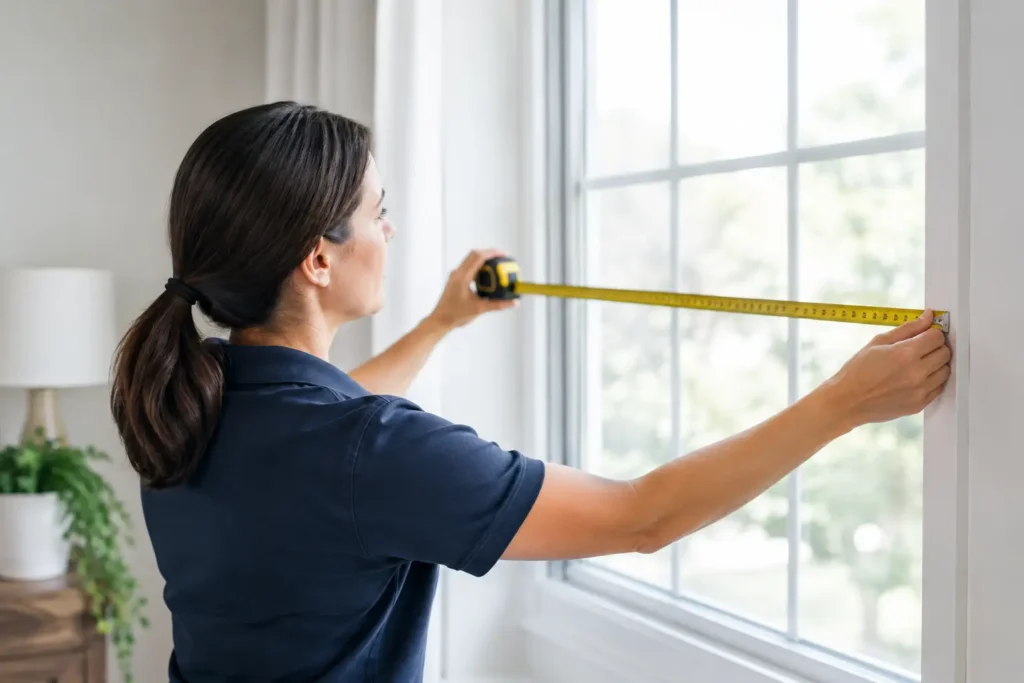
A window treatment measuring service is where a beautiful custom window covering becomes a solution that actually works in your room. A shade can have the right color and fabric, but if it is measured incorrectly, it may leave privacy gaps, scrape a window handle, sit unevenly, or block part of the view. For Los Angeles and Orange County homeowners, professional measuring takes the guesswork out of an investment that should look polished for years.
At Blinds by Design, measurement is part of a guided in-home process. Rather than asking you to choose from small samples and supply dimensions from memory, a window treatment specialist evaluates the windows, the room, and the way you want the space to function. That approach helps prevent costly surprises later in the project.
Why Accurate Window Measurements Matter
Windows are rarely as simple as they appear. Even in newer homes, openings can be slightly out of square, trim can vary from one side to the other, and a sill may not be level. Older homes and remodels often have their own quirks, including uneven drywall, shallow recesses, or molding that limits where a treatment can be mounted.
Custom blinds, shades, and shutters are made to the dimensions provided. A fraction of an inch can affect how a product operates and how it looks. For an inside mount, the treatment must have enough depth to fit within the window opening without rubbing against handles, locks, or cranks. For an outside mount, placement needs to account for light gaps, trim, ceiling height, and the amount of wall space available.
Professional measurement also considers how the covering will move. A roller shade needs clear space above the opening. Plantation shutters need room for panels to open. Vertical blinds and drapery need a stack-back area so the fabric or vanes do not cover more glass than necessary when open. These details are difficult to capture with a quick tape-measure reading.
What Happens During a Window Treatment Measuring Service
An in-home measuring appointment starts with a conversation. Before taking dimensions, the specialist should understand what you want from each room. A bedroom may need room-darkening and privacy. A living room may call for filtered light without losing the view. An office may need glare control for screens, while a bathroom needs materials that stand up to moisture.
Measurements are then taken at multiple points, not just once across the center. The specialist checks width, height, depth, sill conditions, and the surrounding area where brackets or frames may be installed. They also look for obstacles such as window handles, security sensors, plantation shutters already in place, crown molding, or nearby doors.
This is also the right time to review mounting options. Inside mounting creates a clean, built-in appearance when the window has enough depth. Outside mounting can make a window appear larger, cover uneven openings, and improve light control. Neither is automatically better. The right choice depends on the product, the architecture, and your priorities for privacy, light, and style.
The room is measured, not just the window
A quality appointment looks beyond the opening itself. Sun exposure can influence which materials and opacities make sense. The direction a room faces, the size of the glass, and nearby reflective surfaces all affect glare and heat. In Southern California, these practical details can make a noticeable difference in comfort.
The specialist may also assess whether motorization is useful. High windows, wide sliding doors, and hard-to-reach areas are common reasons to consider motorized shades or blinds. Measuring for motorization includes planning for brackets, clearance, control access, and power options where applicable.
Products Need Different Measuring Approaches
There is no single measuring formula for every window covering. The dimensions that work for a cellular shade may not be appropriate for wood blinds, shutters, or drapery. The product’s operating system, headrail, material thickness, and mounting hardware all matter.
Shutters require especially careful evaluation because they are framed, permanent-looking architectural elements. The specialist needs to account for the window shape, trim, hinges, panel configuration, and any obstructions that could prevent louvers or panels from working correctly. A properly fitted shutter should look intentional, open smoothly, and sit securely against the window.
Blinds need attention to headrail clearance, tilt control placement, and the amount of light that may enter along the sides. Shades require accurate dimensions for the roll, brackets, and bottom rail, especially when pairing multiple shades across a large opening. Drapery measurements involve more than the glass size, since rod placement, fullness, floor clearance, and stack-back all affect the final look.
Sliding glass doors and French doors deserve their own assessment. A treatment must provide coverage and privacy without getting in the way of the door’s normal use. Depending on the layout, vertical blinds, panel-track shades, woven wood drapery panels, or other options may be a better fit than a standard horizontal blind.
How to Prepare for Your Appointment
You do not need to measure your windows before a professional visit, but a little preparation helps make the consultation more productive. Think about what bothers you most about each space. It may be afternoon glare, lack of privacy, difficult-to-clean old blinds, heat near a large window, or a room that simply feels unfinished.
If possible, clear furniture or decor that blocks direct access to the windows. Keep notes about colors, finishes, and design elements you want to coordinate, such as flooring, cabinet hardware, wall paint, or upholstery. You do not need to have every decision made. Seeing material samples in the actual light of your home often makes those choices much easier.
Be ready to discuss your budget as well. Custom window treatments come in a range of materials and operating options. Being clear about your priorities allows the consultant to recommend solutions that deliver the features you value most without steering you toward options that do not fit the project.
Common Measurement Mistakes a Professional Helps Avoid
Do-it-yourself measurements can work for simple projects, but they carry more risk when you are ordering custom products. The most common error is measuring only one width and one height. Window openings often vary from top to bottom and side to side, and the narrowest or widest point may determine the correct order size.
Another mistake is overlooking mounting depth. A window can appear suitable for an inside mount until the headrail, trim, or handle is considered. Homeowners may also forget to account for doors that swing inward, windows that tilt in for cleaning, or alarm sensors that need to remain accessible.
Style decisions can create measurement problems, too. Choosing a blackout shade without planning enough overlap can leave unwanted light at the edges. Selecting drapery based only on the window width can result in panels that are too narrow or a rod that does not extend far enough for the curtains to clear the glass. These are not small finishing details. They shape how useful the treatment will be every day.
Measurement and Installation Work Best Together
The strongest reason to use a full-service provider is continuity. The person or team planning the project understands the selected products and can prepare the order specifications correctly. The installation team then works from a clear plan rather than trying to solve fit problems on installation day.
This matters for homes with several different treatment types. You may want shutters in a front room, woven shades in a dining area, cordless cellular shades in bedrooms, and motorized solar shades in a home office. A coordinated service helps each choice work with the others while respecting the needs of each room.
Professional installation is also the final quality check. Treatments should be level, secure, easy to operate, and positioned for the coverage you expected. If a window presents an unexpected condition, an experienced local team is better equipped to address it before it becomes a frustration.
When a Measuring Visit Is Most Valuable
A professional visit is particularly worthwhile for large windows, bay windows, arches, sliding doors, French doors, high ceilings, and windows with unusual trim. It is also helpful when you are replacing outdated coverings throughout a home, completing a remodel, or trying to match treatments across connected spaces.
Office projects benefit from the same attention. Light control can affect screen visibility, employee comfort, and the professional appearance of a client-facing space. Accurate measurements help ensure the selected solution covers the glass properly and operates reliably throughout the workday.
The best window treatments do more than fill an opening. They should support the way you live in the room, whether that means a quieter bedroom, a cooler family room, greater privacy, or a more finished design. Scheduling an in-home consultation gives you a clear starting point: expert measurements, real material samples, and recommendations shaped around your windows rather than a one-size-fits-all chart.