
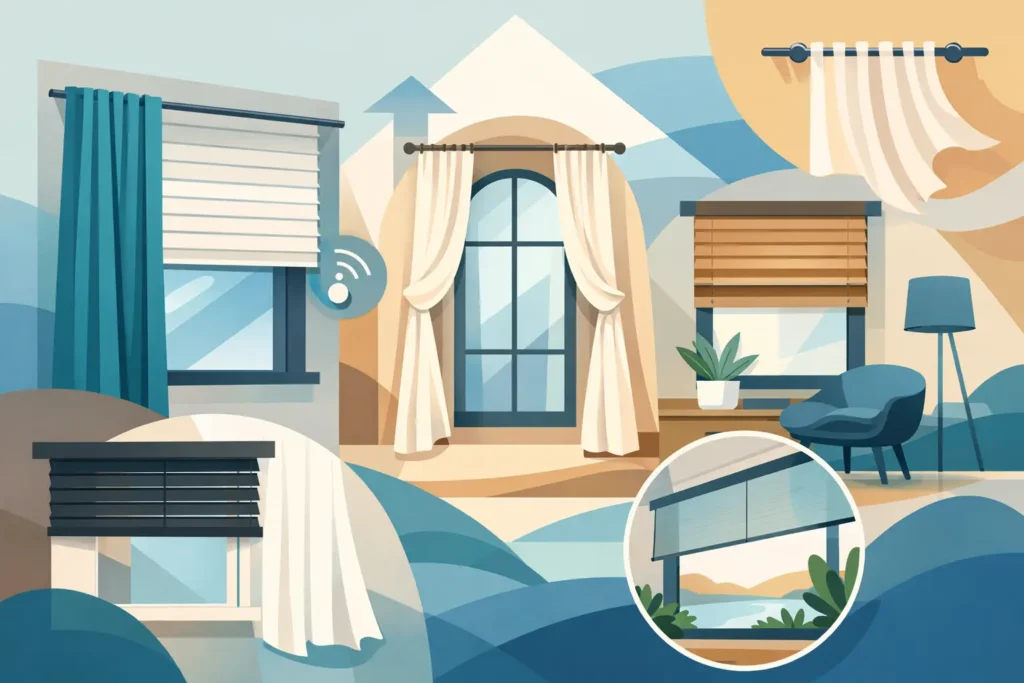
A bare window can make even a well-furnished room feel unfinished. The right treatment changes that fast – softening light, adding privacy, improving comfort, and giving the space a more considered look. That is why window treatment design trends matter so much right now, especially for Los Angeles homeowners balancing style with sun exposure, heat, and everyday function.
Trends are useful when they reflect how people actually live. In window coverings, that means cleaner lines, smarter operation, better light control, and materials that feel elevated without becoming hard to maintain. The strongest choices are not just current. They also fit the room, the architecture, and the way the space is used.
What window treatment design trends are really pointing toward
The biggest shift is not one specific fabric or color. It is a move toward customization with purpose. Homeowners want treatments that look tailored, perform well in bright California light, and support a more polished interior without creating extra work.
That is why custom shades, blinds, and shutters continue to outperform one-size-fits-all options. A trend may inspire the look, but proper measuring, product selection, and installation determine whether the result feels high-end or frustrating. Small details such as stack height, liner opacity, vane size, and mounting style have a noticeable effect once the treatment is in the room.
Layering is back, but it looks cleaner now
One of the most noticeable window treatment design trends is layered coverage. This does not mean heavy, formal window dressing. It usually means pairing a practical treatment such as roller shades or woven shades with side panels or drapery for softness and dimension.
This approach works especially well in living rooms, primary bedrooms, and larger windows that need both daylight control and a finished look. During the day, a shade can filter glare while preserving privacy. At night, drapery adds another layer of coverage and a more complete design statement.
The trade-off is complexity. Layering requires careful proportion, the right hardware placement, and enough wall space. When done well, it looks intentional. When done without planning, it can crowd the window and make the room feel smaller.
Natural textures are staying strong
Woven wood shades, textured romans, and materials with visible grain or weave continue to be popular because they bring warmth into spaces that might otherwise feel flat. In homes with neutral palettes, stone countertops, white walls, or light wood flooring, texture keeps the room from feeling too sharp or sterile.
This trend fits Southern California interiors particularly well. It complements coastal, modern organic, transitional, and even Spanish-inspired homes without looking forced. The appeal is subtle – less about bold pattern and more about depth.
Still, natural-looking materials need the right setting. In rooms with high moisture or intense direct sun, some products perform better than others. A woven shade may look beautiful, but depending on the room, a solar shade or composite shutter might be the more practical long-term choice.
Motorization is moving from luxury to standard expectation
If there is one trend driven as much by lifestyle as design, it is motorization. More homeowners now expect shades and blinds to adjust with the touch of a button, a remote, or a smart home system. Large windows, high windows, and multi-window rooms benefit the most, but convenience is the real selling point.
Motorized treatments create a cleaner appearance because cords are eliminated and operation is more consistent. They also make daily light management easier. In a sunny Los Angeles room, that can mean lowering shades during peak afternoon glare and raising them later without walking from window to window.
Motorization does come with cost considerations, and not every room needs it. For some homes, it makes the most sense in the primary bedroom, family room, or hard-to-reach areas first. The best plan is usually selective, based on how the room is used and which windows create the biggest comfort challenges.
Clean-lined shades are leading modern interiors
Minimalist treatments continue to gain ground, especially roller shades, solar shades, and flat roman shades. Their appeal is simple: they feel neat, current, and easy to integrate into a wide range of interiors. In homes where the architecture, furnishings, or view should take the lead, a streamlined shade supports the room without competing with it.
This is particularly relevant in offices, remodeled kitchens, and open-concept living spaces. A clean-lined shade can reduce visual clutter while still handling privacy and light control. Solar shades are especially useful where homeowners want to cut glare but maintain an outdoor view.
The key is selecting the right openness, fabric color, and mounting style. A modern look still needs to perform. A shade that is too sheer may disappoint in a bedroom. One that is too opaque may make a bright room feel closed off during the day.
Shutters remain a top choice for long-term value
Not every trend is new. Plantation shutters continue to stay relevant because they offer a mix of durability, architectural appeal, and reliable light control that many homeowners still prefer. In the right home, shutters look less like a passing style and more like a built-in upgrade.
They are especially appealing for homeowners who want a crisp, finished look that works across multiple rooms. Shutters also hold up well over time and can be a strong option for families who want something sturdy and easy to maintain.
That said, shutters are not the right answer for every window. If softness is the goal, or if the room needs strong acoustical absorption, fabric treatments may do more. The best decision usually comes down to the room design, the window shape, and whether the homeowner wants a structured or softer visual effect.
Neutral colors are evolving beyond plain white
Color trends in window coverings are still grounded in neutrals, but the palette has widened. Homeowners are choosing warmer whites, soft taupes, sand tones, muted grays, and earthy natural hues that feel more inviting than bright stark white.
This matters because window treatments occupy a large visual area. The wrong white can feel cold against warm flooring or creamy wall paint. A better-matched neutral helps the entire room feel more cohesive.
In many homes, the smartest move is to coordinate with fixed elements first – flooring, cabinetry, trim, and wall color – then decide whether the treatment should blend in or add contrast. Trend-driven color choices work best when they still support the room as a whole.
Privacy and light control are becoming more personalized
A major reason people replace old coverings is that their needs have changed. Street-facing rooms may need more daytime privacy. Media rooms need darker conditions. Bedrooms often need better sleep support. Because of that, one of the most practical trends is specifying different solutions for different rooms instead of using one product throughout the house.
That might mean blackout shades in bedrooms, light-filtering shades in common areas, shutters in front rooms, and solar shades in offices. The design stays consistent, but the function is tailored.
This is where professional guidance makes a real difference. Samples may look similar in a catalog, but once they are held up in the actual room, under actual sunlight, the differences become clear. That is often the moment homeowners realize that style alone is not enough.
Choosing trends that will still work in a few years
The safest way to approach trends is to treat them as direction, not rules. A home does not need every current look to feel updated. Usually, one or two well-chosen ideas – such as motorized shades, layered treatments, or a textured natural fabric – are enough to make the space feel current.
The most successful projects balance design with day-to-day use. That means considering how much sun the room gets, how often the treatments will be adjusted, how much privacy is needed, and how the window covering will relate to the furniture and finishes already in place. In a market like Los Angeles, where bright light and heat are part of everyday life, those practical details matter just as much as appearance.
For homeowners who want help narrowing the options, an in-home consultation is often the easiest starting point. Seeing materials, colors, and operating styles in the space itself makes trend decisions much more useful and much less guesswork. Blinds by Design works with homeowners and businesses throughout the area to make that process simpler, from measuring through installation.
Good window treatments should feel current, but they should also feel right every day you live with them. The trend worth following is the one that makes your room more comfortable, more functional, and more complete.