
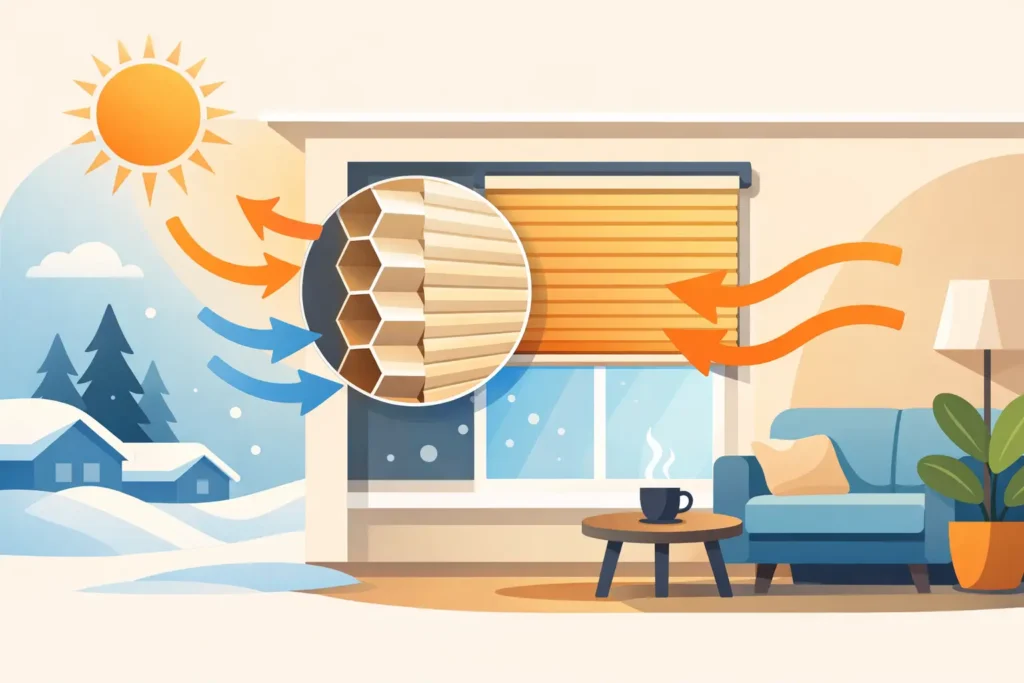
A west-facing living room can look beautiful at 4 p.m. and feel almost unusable by 4:30. The sun heats the glass, glare washes out the television, and the air conditioner works harder to keep up. Cellular shades insulation addresses that everyday problem at the window, where a large amount of unwanted heat gain and heat loss can occur.
For homeowners and offices in Los Angeles and Orange County, cellular shades are a practical choice when comfort matters as much as appearance. Their distinctive honeycomb construction helps create an insulating layer at the glass while delivering a clean, tailored look. The right shade can make a room feel more comfortable, protect furnishings from harsh sunlight, and provide the privacy and light control your space needs.
What Makes Cellular Shades Insulating?
Cellular shades are named for the small, connected pockets that form their honeycomb shape. When the shade is lowered, those pockets trap air between the room and the window. Since still air slows heat transfer, the shade helps reduce the effect of hot glass in summer and cold glass in winter.
The performance is not identical in every home. Window direction, glass type, window size, exterior shade, and how closely the treatment fits the opening all affect results. Still, compared with a flat fabric shade, the air-cell design gives cellular shades a meaningful advantage for windows that contribute to uncomfortable temperatures.
Single-cell shades use one layer of air pockets. They tend to have a slimmer profile and can be an excellent fit for standard windows, smaller openings, or rooms where a lighter look is preferred. Double-cell shades add another layer of pockets, increasing insulation while creating a fuller appearance. For sun-exposed rooms, tall windows, or spaces with older glass, that added layer may be worth considering.
Where Cellular Shades Insulation Helps Most
Cellular shades can support better comfort throughout the home, but their value is often most noticeable in rooms with direct exposure. A bedroom facing the morning sun may warm up quickly before the day begins. A family room with broad afternoon exposure can retain heat long after the sun moves. Large sliding doors and picture windows can also create areas that feel noticeably warmer or cooler than the rest of the room.
In these situations, the shade should be selected for more than color alone. A close, custom fit reduces the open gaps around the sides where air and light can pass. The shade must also be installed correctly so it raises, lowers, and rests evenly across the window. Those details matter because an insulating design cannot perform at its best if the fit is loose or uneven.
Cellular shades are also useful in offices. Employees sitting near a bright window may deal with screen glare, uncomfortable temperatures, and inconsistent light throughout the day. A properly chosen shade can improve visual comfort without making the workspace feel closed in.
Insulation Is Only One Part of the Decision
A cellular shade can help with temperature control, but it is not a substitute for replacing severely inefficient windows, repairing damaged weatherstripping, or addressing major air leaks. It works best as one part of a broader comfort plan. If a room is extremely hot due to uninsulated walls, a failing HVAC system, or direct roof exposure, window treatments alone will not solve every issue.
Fabric opacity also changes what you experience in the room. Light-filtering cellular shades soften daylight and reduce glare while maintaining a bright, welcoming atmosphere. They are often a strong choice for living rooms, kitchens, and home offices where natural light is desirable.
Room-darkening and blackout options provide greater light control and privacy, which makes them especially appealing for bedrooms, media rooms, and nurseries. Keep in mind that blackout refers primarily to the shade fabric. Some light may still appear around the edges of an inside-mounted shade, particularly when the window opening is not perfectly square. A professional measurement helps identify the right mounting approach and sets realistic expectations before ordering.
Color matters, too. Lighter shades generally reflect more visible light and can make a room feel open and airy. Darker colors create a stronger visual statement and may suit a more dramatic interior. Because the honeycomb structure provides the insulating benefit, you do not have to choose a color solely based on performance. You can prioritize the look that works with your furniture, wall color, and overall design.
Choosing the Right Cell Size and Configuration
Cell size affects both appearance and function. Smaller cells create a more refined, compact look and are well suited to smaller windows. Larger cells can make a stronger design statement and are often chosen for wider or taller openings. The best option depends on the scale of the window and how much of the shade will be visible when raised.
For a room that needs greater insulation, double-cell construction deserves a close look. It can be particularly helpful for older homes with single-pane glass, rooms with extensive western or southern exposure, and areas where people regularly notice temperature swings. However, it is not automatically the right choice for every window. A single-cell shade may provide the clean profile, budget, and comfort level a space needs.
Top-down/bottom-up operation is another option worth discussing. It allows the shade to lower from the top while remaining closed at the bottom. This can bring daylight into the room while preserving privacy from nearby homes or street traffic. In a Los Angeles neighborhood where homes are close together, that flexibility can be as valuable as insulation.
Why Custom Measurement Makes a Difference
Windows are rarely as uniform as they appear. Even within one room, openings can vary slightly in width, depth, and squareness. A custom window treatment begins with precise measurement because those details influence the final fit, operation, and appearance.
For inside mounts, adequate depth is necessary for the shade and its hardware. For outside mounts, the treatment must extend far enough beyond the opening to improve light coverage and create a balanced visual frame. Specialty windows, French doors, sliding doors, and unusually wide openings require additional planning.
This is where an in-home consultation is useful. Seeing the actual room makes it easier to evaluate sun direction, surrounding colors, privacy needs, window trim, and furniture placement. It also helps you compare samples in the light conditions you live with, rather than under showroom lighting that may not reflect the space.
Blinds by Design brings this process together with product guidance, professional measurement, customization, and installation. Rather than guessing at dimensions or selecting a fabric from a small screen image, homeowners can make decisions with experienced support in the room where the shades will be used.
Installation and Everyday Use
Cellular shades are designed to be easy to live with, but the operating system should suit the household. Cordless shades provide a clean look and are a popular choice for homes with children or pets. Continuous-loop systems can be useful for larger shades. Motorization offers convenient control for high windows, hard-to-reach areas, and rooms with several shades that need to move together.
Motorized cellular shades can also make comfort management more consistent. A shade that is difficult to reach is less likely to be adjusted when afternoon sun arrives. With motorized operation, it is easier to lower shades during peak heat, open them when softer light is welcome, or create routines that match your daily schedule.
Professional installation protects the investment. Properly mounted brackets, level alignment, and smooth operation all contribute to a finished result that looks intentional and performs reliably. It also helps prevent common issues such as uneven lifting, fabric rubbing, or hardware placed where it interferes with window handles and trim.
A Better Starting Point Than Guesswork
If one room always feels hotter, brighter, or less private than it should, start with the windows that cause the greatest discomfort. Consider when the problem occurs, whether you want daylight or darkness, and how the shade should coordinate with the rest of the room. Those answers make it much easier to determine whether a single-cell or double-cell design, light-filtering or room-darkening fabric, and manual or motorized operation are the better fit.
A well-chosen cellular shade does more than cover glass. It helps make the room feel like a place you want to spend time in, morning through evening, season after season.