
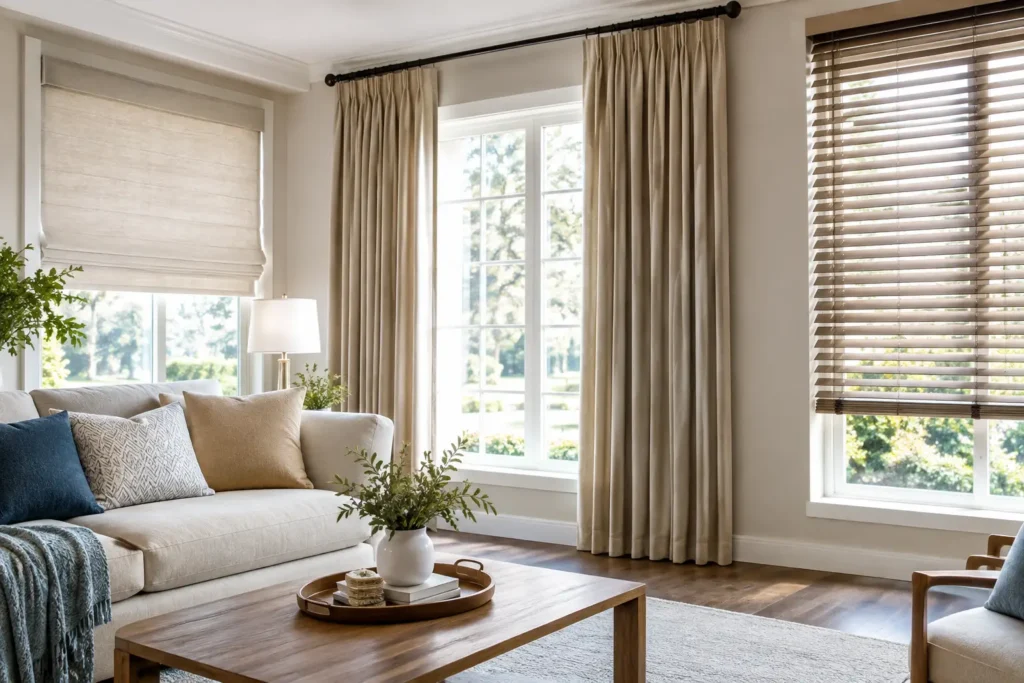
A west-facing living room in Los Angeles can look completely different at 3 p.m. than it does in the morning. Sun glare, heat, privacy from nearby homes, and the way a fabric reads against your wall color all become real decisions once you are standing in the room. So, what are custom window treatments? They are window coverings selected, sized, and finished specifically for your windows, your needs, and the way you use the space.
Unlike ready-made coverings from a store shelf, custom treatments are not chosen by width alone. They are built around precise measurements and practical details, such as whether a window has a deep sill, an outside mount, a sliding door nearby, or trim you want to highlight. The result is a more polished fit and a solution that works as well as it looks.
What Are Custom Window Treatments?
Custom window treatments include shutters, blinds, shades, and other window coverings made to fit a particular opening. Customization can involve the product type, dimensions, material, color, operating system, light-filtering level, and installation method.
A custom shade, for example, may be designed to sit inside the window frame for a clean, recessed appearance. A wider window may need an outside-mounted shade that extends beyond the glass to reduce light gaps. Plantation shutters can be measured and built around specialty-shaped windows, while blinds can be specified with a control location that is more convenient for the room layout.
The difference is not only visual. A properly fitted treatment gives you more reliable privacy, better light management, smoother operation, and fewer awkward gaps at the sides or bottom. It also helps the covering feel like part of the home rather than a temporary addition.
Why Fit Matters More Than Most People Expect
Windows are rarely as uniform as they appear. Older homes may have frames that are slightly out of square. Newer homes can have deep molding, narrow recesses, handles, security sensors, or doors that affect how a treatment must be mounted. Even two windows in the same room can measure differently.
This is where professional measuring changes the outcome. The installer considers the visible glass area, the depth of the frame, clearance for opening and closing, and any obstructions that could interfere with the product. For shutters, that can include the way panels will swing. For roller shades, it may include the fabric roll, brackets, and how much light can enter along the edges.
A custom-fit product does cost more than an off-the-shelf option, and it is not always necessary for a temporary space. But for a primary residence, remodeled room, office, or window with an unusual size, the improved fit often makes it the more practical long-term choice.
Choosing the Right Type of Custom Treatment
The best treatment depends on how the room needs to function. A bedroom and a sunny family room may both need coverage, but their priorities can be very different.
Custom shutters
Shutters offer a structured, architectural look that works well in many Southern California homes. Their adjustable louvers give you control over light and privacy without raising the entire treatment. They are especially popular for living rooms, kitchens, bathrooms, and street-facing windows where privacy matters throughout the day.
Shutters are durable and easy to maintain, but they are a more permanent visual choice than fabric shades. They also need enough mounting space and should be planned carefully around window cranks, handles, and doors.
Custom blinds
Blinds offer flexible light control through adjustable slats and come in materials ranging from aluminum and vinyl to wood and faux wood. Faux wood blinds are often a practical choice where moisture or heat is a concern, while wood blinds can add warmth and natural texture to a den, office, or dining room.
Blinds can be a budget-conscious custom option, particularly when you want a tailored fit across several windows. The trade-off is that slats collect dust and may not provide the softer appearance some homeowners want.
Custom shades
Shades are a strong choice when you want a clean, uncluttered look. Roller shades, cellular shades, woven wood shades, Roman shades, and sheer shades each create a different effect. The right fabric can gently filter daylight, reduce glare at a computer screen, or provide room-darkening coverage for sleep.
Cellular shades can be particularly useful on windows that receive strong afternoon sun because their construction can help improve insulation. Woven shades add texture and warmth, though they may not deliver the same level of privacy without a liner. A professional consultation helps clarify these details before an order is placed.
Light Control, Privacy, and Comfort Are Separate Decisions
Many homeowners ask for blackout treatments when what they really need is better glare control. Others choose a light-filtering fabric expecting complete nighttime privacy. Custom window treatments work best when the product is matched to the specific concern.
For bedrooms, room-darkening or blackout shades can help reduce outdoor light. For a home office, solar shades can soften bright daylight and preserve a partial view outside. In a bathroom or a window that faces a neighbor, shutters or privacy-focused shades may be a better fit. Layering can also be useful, such as pairing a light-filtering shade with drapery for additional coverage and style.
Motorization is another consideration. Motorized shades are convenient for tall windows, hard-to-reach areas, and rooms with many windows. They can also make it easier to manage sun exposure during the hottest part of the day. They require a larger upfront investment, but many clients find the everyday convenience worthwhile.
The Value of an In-Home Consultation
A treatment that looks good in a showroom can feel too dark, too cool, or too formal once it is placed beside your flooring and furniture. Seeing samples in your own home makes color, texture, and opacity easier to judge under your actual lighting conditions.
An in-home consultation also keeps the process organized. Rather than measuring on your own, then trying to interpret product specifications, you can discuss your goals with a specialist, compare materials, confirm the right mount, and receive guidance based on the window itself. This is particularly valuable for homes with large openings, bay windows, French doors, or a mix of window styles.
Blinds by Design brings this approach directly to homes and offices throughout the Los Angeles area, helping clients compare options where they will actually be installed. It is a simpler way to make decisions that affect the look and comfort of a room for years.
What Professional Installation Adds
Even a well-made custom treatment can underperform if it is installed incorrectly. Uneven brackets, misaligned shutters, improperly secured hardware, and minor measuring errors can affect appearance and operation. Professional installation is designed to avoid those problems and ensure the finished product is level, secure, and functioning as intended.
Installation is also when small details matter most. The treatment should clear handles and trim, operate without rubbing, and sit consistently across multiple windows. In an office, proper alignment creates a more polished appearance for employees and visitors. At home, it means you can enjoy the upgrade instead of spending a weekend troubleshooting it.
A Better Way to Start
Before choosing a color or style, think about what frustrates you most about the window now. It may be harsh sun on the television, a lack of privacy, fading furniture, difficult-to-reach coverings, or simply a room that feels unfinished. Those answers will point you toward the right product faster than choosing from photos alone.
A free in-home consultation gives you the chance to see materials in context, ask practical questions, and get accurate measurements before making a decision. When window treatments are designed around your home rather than pulled from a standard size chart, the finished space feels more comfortable, intentional, and ready for everyday life.