
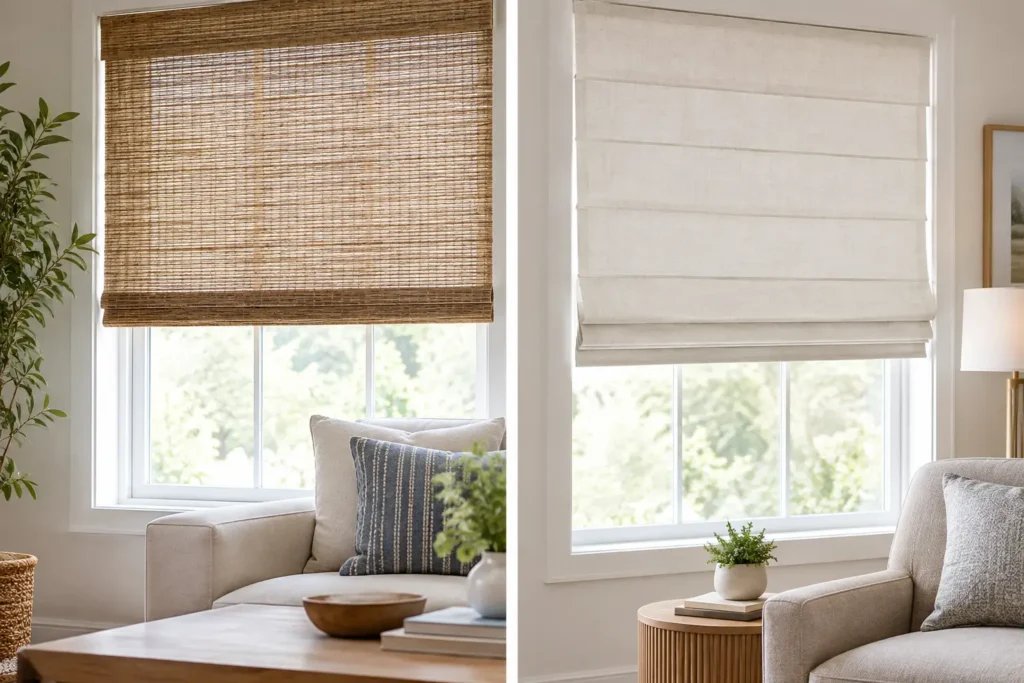
A window treatment can change how a room feels before you replace a single piece of furniture. That is why the choice between woven shades versus roman shades deserves more than a quick look at fabric samples. Both bring softness to windows and can be custom made for a polished fit, but they create very different effects with light, privacy, texture, and daily use.
For homeowners and office decision-makers in Los Angeles and Orange County, the right choice often comes down to the room itself. A bright living room with a view may benefit from natural woven texture, while a bedroom or street-facing space may need the tailored coverage of a lined Roman shade. Seeing materials in your actual space makes that difference much easier to judge.
Woven Shades Versus Roman Shades: The Main Difference
Woven shades are made from natural or natural-look materials such as bamboo, reeds, grasses, jute, and woven woods. Their character comes from the material itself: small variations in color, weave, and texture are part of the appeal. They introduce an organic, relaxed layer that works especially well with coastal, transitional, contemporary, and California-inspired interiors.
Roman shades are fabric window treatments that raise into soft horizontal folds. They can be made in a wide range of fabrics, from crisp linen blends and subtle textures to patterned fabrics and richer materials. Their appearance is more tailored than a woven shade, making them a strong fit for rooms that need a refined, upholstered look.
Neither option is automatically better. Woven shades favor natural texture and visual warmth. Roman shades offer greater control over color, pattern, lining, and the degree of privacy or room darkening. The best selection should support how you use the room, not simply match a trend.
How They Look in a Finished Room
A woven shade has dimension even when it is fully lowered. Light catches the fibers and weave, giving the window a layered, handmade appearance. This can soften a room with clean-lined furniture, smooth walls, or a lot of painted cabinetry. In a Los Angeles home, woven woods can also complement warm oak, stone, indoor-outdoor spaces, and neutral palettes without making the room feel overly formal.
Roman shades offer a more controlled design statement. A pale linen Roman can look quiet and airy, while a patterned Roman shade can become the focal point of a breakfast nook, bedroom, or office. Because the fabric is selected separately from the operating style, Romans are often the easier choice when you are coordinating with existing upholstery, wallpaper, bedding, or accent colors.
Consider scale as well. A delicate weave can feel light on a small kitchen window, while a larger woven wood pattern may hold its own across a wide sliding-door opening or picture window. Roman shades can be tailored to feel simple or substantial depending on the fabric weight, fold style, and valance details.
Light Control and Privacy Are Not the Same Thing
This is where many homeowners benefit from professional guidance. A shade may soften sunlight beautifully without providing the nighttime privacy you expect.
Standard woven shades filter light through small gaps in the weave. During the day, they can create a warm, dappled glow and reduce glare without closing off the room. At night, however, interior light can make silhouettes more visible from outdoors, particularly on street-facing windows. The exact level of privacy varies by material and weave density.
Adding a privacy liner behind a woven shade increases coverage while preserving the face fabric and natural texture. A blackout liner offers stronger room darkening, although small amounts of light may still appear around the edges of the shade. Liners can also protect some natural materials from direct sun exposure and help the treatment look more consistent from outside.
Roman shades typically provide more predictable coverage because the fabric is backed by a liner or blackout lining when needed. An unlined Roman lets in soft filtered light. A privacy-lined Roman blocks clearer views into the room. A blackout-lined Roman is a practical choice for bedrooms, media rooms, nurseries, and any space where sleep or screen glare matters.
For windows that receive intense afternoon sun, it may be helpful to pair either shade with drapery panels or another layer. This approach adds visual depth while giving you more flexibility with insulation, privacy, and light management.
Everyday Operation and Maintenance
Both woven and Roman shades can be custom sized and offered with cordless or motorized operation. Motorization is especially useful for high windows, large openings, or rooms with several shades that should move together. It can also make daily light control simpler in busy households and offices.
Woven shades are generally straightforward to maintain with light dusting or careful vacuuming using a brush attachment. Because they are made from textured materials, they are not usually the best choice for areas with heavy grease, moisture, or frequent splashes. A kitchen can still be a good location if the shade is away from the cooking surface, but a fabric or easy-clean option may be more practical near a sink or range.
Roman shades require care based on their fabric and construction. Light vacuuming can remove dust, while spot cleaning may be appropriate for some materials. Heavily textured fabrics, delicate linens, and decorative trims may call for more caution. In homes with young children, pets, or frequent entertaining, choosing a durable performance fabric can make a meaningful difference.
The key is to select a treatment that fits real life. A beautiful shade that requires constant worry is rarely the right long-term choice.
When Woven Shades Make the Most Sense
Woven shades are a natural fit when a room needs warmth, texture, and a less formal finish. They work well in living rooms, dining areas, sunrooms, home offices, and spaces where you want filtered daylight without a flat, uniform appearance.
They are also a smart option when the design goal is to make a room feel connected to natural materials. In homes with white walls, warm flooring, rattan accents, woven rugs, or wood furniture, woven shades can pull the look together without adding another strong color or pattern.
Choose a liner if privacy is a priority, especially in bedrooms, bathrooms, or homes with close neighbors. Without one, assume the shade will offer light filtering rather than complete visual privacy.
When Roman Shades Are the Better Fit
Roman shades are often the better choice when you need precise control over the finished look. They are especially useful in bedrooms, nurseries, formal living spaces, dining rooms, and offices where a coordinated fabric treatment can elevate the design.
They also make sense for windows where privacy and room darkening are essential. With the right lining, a Roman shade can provide a more consistent barrier than an open weave. This makes it easier to tailor each room to its function instead of settling for one level of light control throughout the home.
If you love a woven look but need better coverage, there is no need to view the decision as all or nothing. A woven shade with a privacy or blackout liner may give you the texture you want and the function you need. Likewise, a linen-textured Roman shade can create a relaxed feel while offering the benefits of a fabric treatment.
Custom Fit Matters More Than the Category
The difference between a shade that looks considered and one that looks temporary often comes down to measurement, mounting, material selection, and installation. Window depth, trim, handles, tilt-in windows, and nearby doors all affect whether an inside mount or outside mount will work best.
Custom sizing is particularly valuable for wide windows, older homes with imperfect openings, and rooms where several windows should align visually. It also helps ensure cords, motorization, liners, and mounting hardware function as intended. A well-chosen treatment should look good from across the room and operate easily every day.
At Blinds by Design, an in-home consultation lets you compare woven materials, Roman fabrics, liner options, and operating systems where they will actually be used. Natural daylight, nighttime privacy concerns, wall color, and surrounding finishes are far easier to evaluate in person than from a small sample viewed elsewhere.
If you are choosing between these two styles, start with the feeling you want in the room, then work backward to light control and privacy. Bring a few material options to the window, raise and lower them, and look at them in morning and afternoon light. The right shade should feel like it belongs there from the first time you see it in place.