
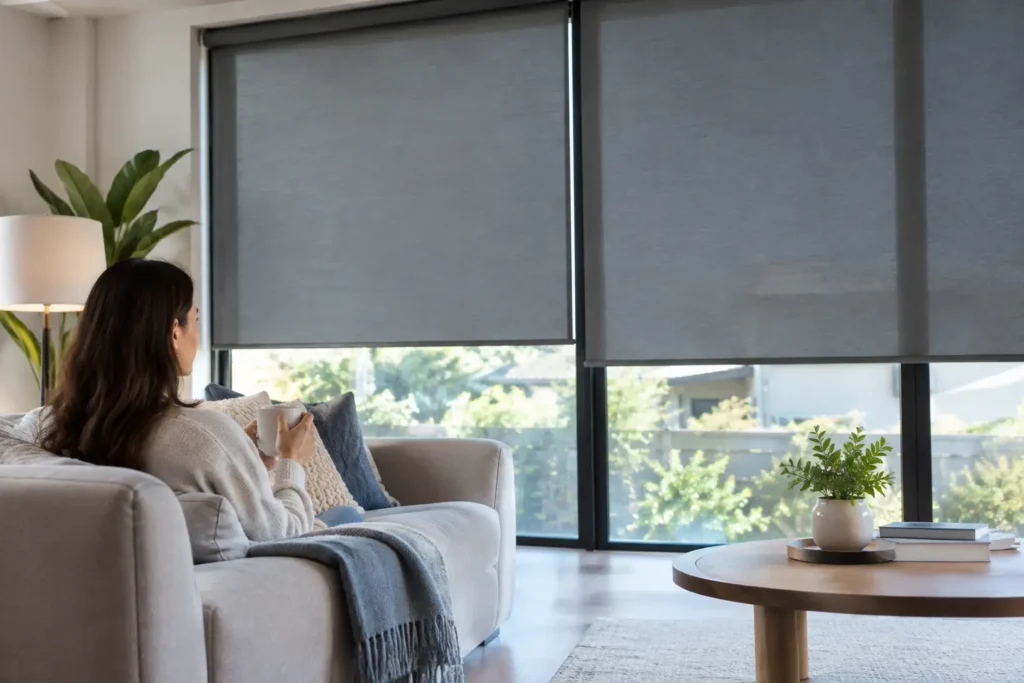
A street-facing living room can look beautiful all day and feel uncomfortably exposed as soon as the lights come on. So, can shades improve home privacy? Yes – often dramatically – but the right result depends on the shade style, fabric, window placement, and how you use the room.
For homeowners across Los Angeles and Orange County, privacy is rarely a simple choice between open and closed. You may want daylight in the kitchen, a clear view from the family room, and complete coverage in a bedroom or bathroom. Custom shades give you the ability to make those choices room by room without treating every window the same way.
How shades improve privacy at home
Shades create a visual barrier between your interior and the outside world. When lowered, they limit what neighbors, pedestrians, or nearby buildings can see through the glass. The degree of privacy ranges from soft screening to near-total room darkening, depending on the material and construction.
This matters especially in neighborhoods with closely spaced homes, busy streets, ground-floor windows, or second-story windows that face one another. It also matters after sunset. During the day, sunlight outside can make it harder for someone to see in. At night, that relationship reverses: a brightly lit room can become visible from outdoors unless the window covering provides real opacity.
A well-chosen shade does more than block a view. It lets you preserve comfortable natural light, protect personal spaces, and make your home feel more settled when the curtains are not part of the design plan.
Privacy levels vary by shade fabric and style
Not every shade marketed for light control delivers the same privacy. This is where a professional consultation and in-home material review can prevent disappointment.
Solar shades protect daytime views, not nighttime privacy
Solar shades are popular in Los Angeles because they reduce glare and help manage intense sunlight while maintaining an outward view. Their open weave is measured by openness factor. A lower openness factor generally means a tighter weave and more privacy, while a higher openness factor provides a clearer view outside.
They are excellent for daytime privacy and glare reduction, particularly in living rooms, offices, and rooms with expansive views. However, solar shades are not usually the best standalone option for privacy after dark. When interior lights are on, silhouettes or room details may still be visible from outside. Many homeowners pair them with drapery panels or choose a different shade for street-facing windows.
Light-filtering shades soften views into the room
Light-filtering roller shades, Roman shades, cellular shades, and sheer shades diffuse sunlight and obscure the view through a window. They provide a softer level of privacy than solar fabrics while keeping a room bright and welcoming.
These shades are often a smart fit for dining rooms, hallways, and living spaces where you want coverage without the closed-in look of a heavy opaque treatment. From outside, details are less visible, but light-filtering fabrics may still reveal shadowy movement at night. The effect varies with the fabric color, weave, interior lighting, and distance from the window.
Room-darkening and blackout shades offer the most coverage
For bedrooms, bathrooms, nurseries, and other private spaces, room-darkening or blackout shades are usually the strongest choice. These fabrics block the view into the room and significantly reduce incoming light. They can also help with morning sun, streetlights, and shift-work schedules.
There is a useful distinction here. Blackout refers to the fabric itself, while total darkness depends on the entire installation. Small light gaps can remain along the sides, top, or bottom of a shade. For maximum privacy and light control, an inside-mounted blackout shade may need side channels, a carefully sized outside mount, or a layered treatment that covers the edges of the window.
Can shades improve home privacy without blocking daylight?
They can, especially when the shade is selected for the window’s specific exposure and purpose. Top-down/bottom-up cellular shades are one of the most practical examples. They allow the lower portion of a window to remain covered while the top opens to bring in sky light. You can enjoy daylight without giving a direct view into your room from the sidewalk or a neighboring home.
Dual shades, sometimes called zebra shades, offer another flexible approach. Their alternating sheer and opaque bands can be adjusted to filter light, preserve some outward visibility, or create more privacy. They are a strong option for contemporary interiors, though they may not provide the same nighttime coverage as a dedicated blackout shade.
Layering can solve difficult privacy challenges. A light-filtering or solar shade can handle daytime glare and preserve the room’s open feel. Drapery, blackout panels, or a second shade can then provide complete evening coverage. This approach adds depth to the design while giving you more control than a single treatment can offer.
The installation details that affect privacy
Even premium shade fabric cannot perform as intended if it is measured or installed poorly. Gaps around an undersized shade can create uncomfortable sightlines, especially on windows near walkways, patios, and neighboring properties.
Inside-mounted shades sit within the window frame for a clean, tailored appearance. They work well when the frame is deep and square, but they will naturally leave small gaps at the sides. Outside-mounted shades extend beyond the frame and can cover more of the glass and trim, making them a practical solution when privacy is the priority or the window has shallow mounting depth.
Mounting height also changes the result. A shade installed higher and wider than the window can make the window feel larger while improving edge coverage. For sliding doors, wide windows, and angled views from adjacent homes, accurate in-home measurement is especially valuable. A few fractions of an inch can affect both appearance and privacy.
Choose shades based on the room, not just the style
A single shade type throughout the house can create visual consistency, but it is not always the most functional decision. Bedrooms typically benefit from room-darkening or blackout options. Bathrooms need opaque materials that maintain privacy at every hour. Kitchens often do well with moisture-resistant roller shades or cellular shades that filter light without interfering with daily use.
Living rooms may call for a more layered decision. If the room faces a quiet backyard, a solar shade may be enough. If it faces the street, nearby apartments, or a heavily used sidewalk, light-filtering or opaque fabrics can offer more peace of mind. Home offices deserve special consideration, since privacy, glare control, and screen visibility all matter during the workday.
Color plays a role, too. Darker solar fabrics can improve outward visibility during the day, while lighter fabrics may create a softer, brighter interior. With opaque shades, color is more of a design decision, but material texture can still affect how polished or casual the space feels.
Convenience makes privacy easier to use
The most effective privacy solution is one you will actually adjust. Cordless shades offer a clean look and are a safer option for homes with children and pets. Motorized shades add another level of everyday convenience, especially for tall windows, hard-to-reach areas, and large groups of windows.
With motorization, shades can be scheduled to lower before evening, raise in the morning, or adjust with a remote or compatible smart-home controls. That can be particularly helpful for front-facing rooms, where privacy needs change quickly as daylight fades. Motorization is not necessary for every home, but it can make a custom privacy plan easier to maintain.
Get a custom recommendation for your windows
The best privacy shade is not always the darkest one. It is the one that fits your view, lighting, room use, décor, and budget. Looking at fabric samples in your own home is far more reliable than trying to judge privacy from a showroom display or an online image.
Blinds by Design brings the selection process to your space, with guidance on fabric opacity, mounting options, colors, and operating systems, followed by professional measurement and installation. A free in-home consultation can help identify where you need full coverage, where filtered light is enough, and how to create a coordinated look throughout the home.
A private home should still feel like your home – bright when you want it, sheltered when you need it, and thoughtfully finished at every window.