
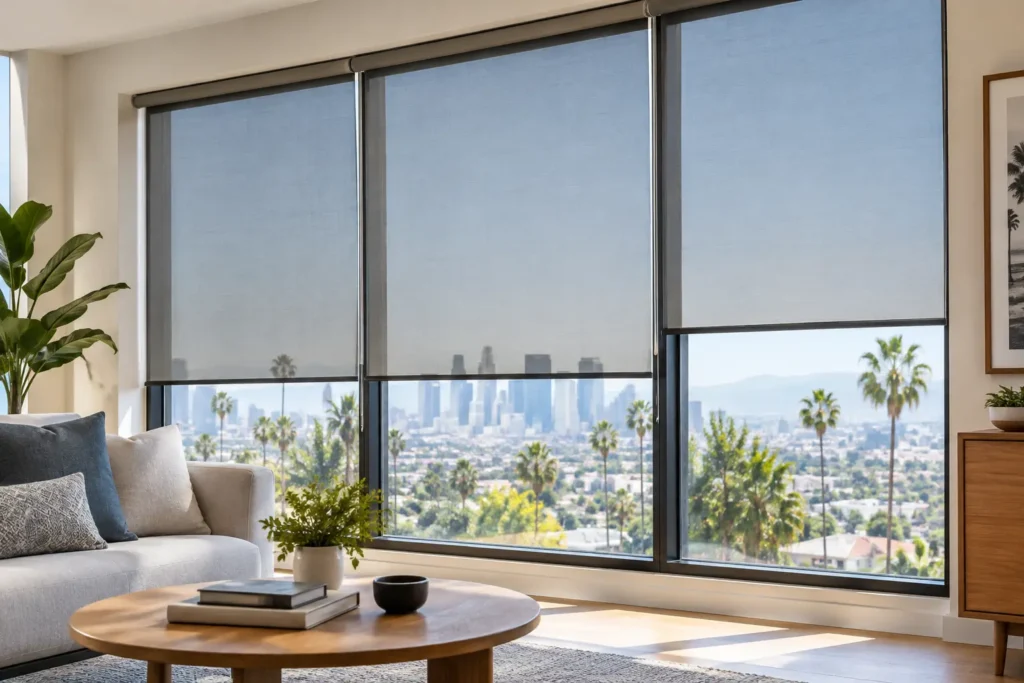
A west-facing living room in Los Angeles can look beautiful at 10 a.m. and become nearly unusable by midafternoon. The right window treatment should soften that glare without closing off the view that made the room appealing in the first place. This solar shades review guide explains what to look for before choosing a fabric, openness level, color, and operating style for your home or office.
Solar shades are a practical choice for Southern California spaces because they filter direct sunlight, reduce glare, and help limit solar heat gain while preserving an outward view. They are not the same as blackout shades, and they are not right for every window. Their value comes from matching the shade to the orientation of the room, the level of privacy needed, and the way you use the space each day.
What Solar Shades Do Best
Solar shades are made with specially woven screen fabrics. The weave blocks a portion of the sun’s rays while allowing some natural light and visibility through the material. When lowered, they can make a bright room more comfortable for relaxing, working, watching television, or using a computer.
Their biggest advantage is glare control without the heavy look of a fully opaque treatment. In a home with large sliding doors, picture windows, or a view of the yard, solar shades can reduce harsh light while keeping the room connected to the outdoors. They also offer a clean, minimal profile that works well with contemporary interiors, transitional designs, and commercial settings.
That said, solar shades do not create total darkness. At night, when indoor lights are brighter than the exterior, people outside may see silhouettes or activity through many solar fabrics. Bedrooms, bathrooms, and first-floor rooms facing close neighbors often need an added layer of privacy, such as drapery panels, side panels, or a separate blackout shade.
Solar Shades Review Guide: 5 Details That Matter
A solar shade can look similar to another one in a showroom, but its performance can be very different once it is installed on your windows. These five details deserve more attention than a sample’s color alone.
1. Openness factor determines view and coverage
Openness factor describes how open or tightly woven the fabric is. A lower percentage means a tighter weave, more sun control, and less visibility outward. A higher percentage provides a clearer view and admits more natural light.
A 1% or 3% openness fabric is often a strong option for rooms with intense afternoon exposure, media rooms, or offices with screen glare. It offers more daytime privacy and stronger filtering, though the view is softer. A 5% shade is a popular middle ground for many living rooms and kitchens. A 10% fabric preserves a more open view but provides less glare and heat control.
There is no universally best percentage. A customer with a beautiful backyard view may prefer 5% or 10%, while a homeowner with a west-facing family room in Downey or Whittier may be happier with 1% or 3%. The correct choice depends on the window’s direction, nearby buildings, and how much direct sun reaches the room.
2. Fabric color changes performance and appearance
Color affects both the look of the shade and what you see through it. Darker fabrics often offer a sharper outward view during the day because they reduce reflected light on the interior side of the shade. Lighter fabrics can make a room feel brighter and softer, and they may better suit light, coastal, or neutral interiors.
A light shade is not automatically cooler, and a dark shade is not automatically better at heat control. Performance also depends on the fabric construction and its solar properties. Reviewing full-sized samples in the actual room is more useful than judging a small swatch under showroom lighting.
Consider the view, wall color, flooring, and window frame. The shade should look intentional when it is down and quiet when it is raised. A custom consultation makes it easier to compare colors against the real conditions in your home.
3. Daytime privacy is different from nighttime privacy
Solar shades perform very well for daytime privacy when the outside is brighter than the room. During daylight, the fabric limits visibility into your space while allowing you to look out. At night, that relationship reverses. With lights on inside, the shade alone may not provide the privacy you expect.
This is one of the most common disappointments for buyers who assume a solar shade works like a room-darkening blind. If privacy after dark is essential, plan for it from the beginning. Dual shades, layered drapery, shutters, or an opaque roller shade can give you the flexibility to enjoy filtered daylight and close off the room when needed.
4. Heat control depends on more than the fabric
Solar shades can help reduce the discomfort caused by direct sun, especially on large expanses of glass. They can also help protect furnishings, flooring, and artwork from excessive light exposure. Still, the result varies based on the window’s size, glass type, direction, and how tightly the shade fits the opening.
A custom-fit shade matters here. Gaps at the sides can allow bright light to spill into the room, particularly early or late in the day when the sun sits at a low angle. For maximum coverage, consider the mounting style, the header or cassette option, and whether an outside mount can better cover the glass and frame.
Solar shades improve comfort, but they are not a replacement for efficient windows, insulation, or air conditioning. Think of them as one effective part of a broader strategy for managing Southern California sun.
5. Operation should fit the window and your routine
Cordless operation provides a clean, child-safer option for many residential rooms. Motorized solar shades are especially helpful for tall windows, wide sliding doors, hard-to-reach openings, and rooms where several shades need to move together. With motorization, you can raise shades for morning light, lower them before afternoon glare, and protect interiors when you are away.
Manual shades remain a sensible choice for accessible windows and budget-conscious projects. The right system is the one you will actually use. If the shade is difficult to reach or inconvenient to operate, even a high-quality fabric will not deliver its full benefit.
Where Solar Shades Work Especially Well
Living rooms and family rooms are natural candidates, particularly where television glare or late-day heat makes the space less comfortable. Solar shades also work well in kitchens with bright breakfast areas, home offices with computer screens, and dining rooms where you want filtered light without covering the view.
For offices, they offer a polished, uniform appearance while helping employees work more comfortably near windows. They are often well suited for conference rooms, reception areas, storefront-facing spaces, and workstations with strong sun exposure.
Bedrooms can benefit from solar shades during the day, but most people who need darkness for sleep will want a second treatment. Bathrooms and street-facing rooms may also require more complete privacy. This is where a tailored recommendation is more valuable than choosing a fabric based on appearance alone.
Custom Solar Shades vs. Ready-Made Options
Ready-made shades can be tempting for a simple, standard-size window. They may work for a short-term solution or a low-priority room. The trade-off is usually limited sizing, fewer fabric choices, less precise coverage, and a more difficult installation process.
Custom solar shades are measured for the specific opening and selected around your priorities. You can choose fabric opacity, color, mounting style, hardware, valance options, and manual or motorized operation. Professional measurement is particularly useful for large windows, uneven openings, multiple shades in one room, and windows near doors or trim where small errors are obvious.
Professional installation also helps ensure the shade is level, secure, and programmed correctly when motorization is involved. A well-installed treatment should look clean from across the room and operate reliably day after day.
Make the Decision in Your Own Light
Before selecting solar shades, spend a few days noticing when the sunlight is most disruptive. Look for glare on screens, hot seating areas, fading risks near windows, and rooms where privacy changes from day to night. Bring those observations to your consultation, along with photos or samples of the finishes you want to coordinate.
Blinds by Design can bring solar shade options to your home or office, measure the windows, and help you compare fabrics where they will actually be used. The best choice is rarely the darkest or most expensive fabric. It is the one that makes your room more comfortable, supports your design, and gives you the right balance of view, light, and privacy every day.