
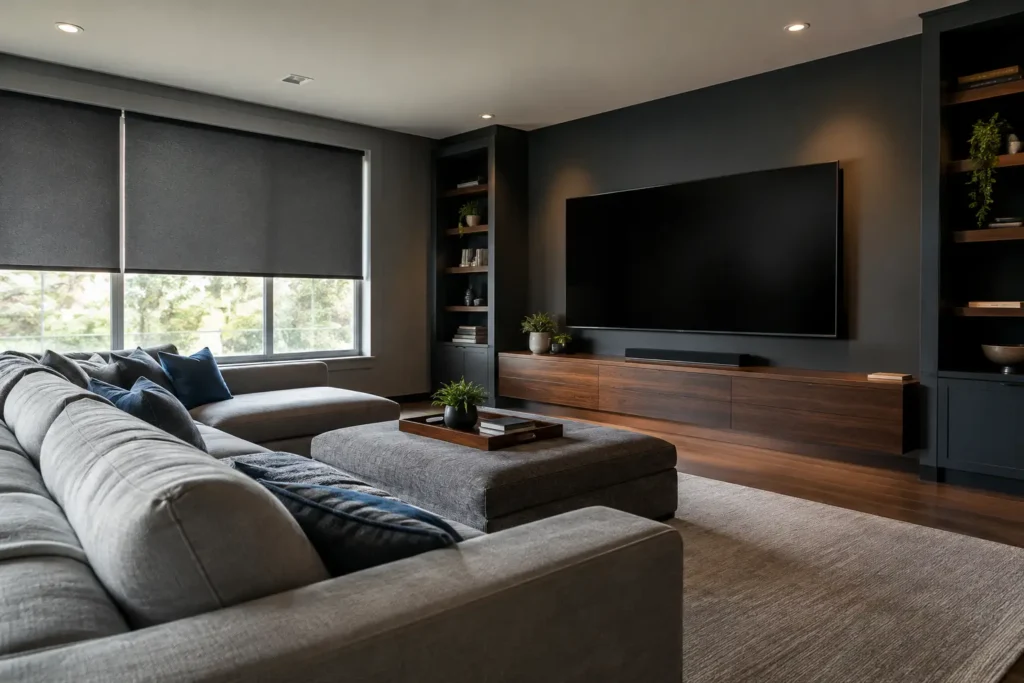
A media room can have the best television, projector, and surround sound system in the house, yet still feel disappointing when sunlight washes across the screen. The top shades for media rooms do more than darken a space. They manage glare, protect furnishings from harsh UV exposure, add privacy, and support the comfortable atmosphere that makes movie nights feel special.
For homeowners in Los Angeles and Orange County, the right choice depends on more than a fabric color. Window direction, room layout, screen placement, outside lighting, and how the room is used during the day all affect which shade will perform best. A custom solution makes a noticeable difference because even small gaps around a window can let in enough light to distract from the picture.
What a Media Room Shade Needs to Do
A media room has different demands than a bedroom or living room. The primary goal is controlling light where it matters most: at the screen and in the viewer’s line of sight. A shade that looks dark in a sample book may still allow enough filtered sunlight through to reduce contrast on a TV or projector image.
Start by considering whether the room is used mainly at night, throughout the day, or both. If you watch daytime sports, stream movies on weekend afternoons, or use a projector, room-darkening performance should be high on the list. If the room doubles as a family room, you may want daylight available when the screen is off. That is where layered or dual-function window treatments can be especially useful.
The best media room shades also need to fit the room’s design. Darker fabrics can reduce reflected light, but they are not the only option. Neutral colors, textured weaves, and clean architectural styles can work beautifully when the shade’s opacity and fit are selected correctly.
Top Shades for Media Rooms: Best Options by Need
Blackout Roller Shades for Direct Light Control
Blackout roller shades are often the first choice for dedicated media rooms. Their opaque material blocks light through the fabric, helping create the dark environment needed for projector viewing and sharper on-screen contrast. They also have a clean, minimal profile that suits contemporary interiors without competing with a large television or projection screen.
For the strongest result, consider a blackout shade with side channels or a system designed to reduce edge gaps. Standard roller shades can allow light around the sides, especially on larger windows or windows receiving strong afternoon sun. In a room where every bit of light control matters, proper measuring and professional installation are just as important as the fabric itself.
Roller shades are a practical choice for wide windows, sliding doors, and rooms with multiple openings. Motorized operation is particularly helpful when several shades need to be lowered before a movie begins.
Cellular Shades for Comfort and Light Management
Cellular shades offer a valuable combination of insulation and privacy. Their honeycomb-shaped construction traps air, which can help reduce heat gain at windows exposed to intense Southern California sunshine. That can make a media room more comfortable while reducing the workload on your cooling system.
Blackout cellular shades are available for rooms that need stronger light control, while room-darkening options may be enough for a TV-focused family room. They are especially worth considering when the media room has windows that get hot in the afternoon or when the room sits above a garage, faces west, or has large glass areas.
The trade-off is that cellular shades have a softer, more textured appearance than roller shades. For some homeowners, that added warmth is a benefit. For others seeking a very streamlined theater look, a roller shade may better match the room.
Dual Shades for Daytime Flexibility
Dual shades, sometimes called zebra or banded shades, use alternating sheer and opaque fabric bands. By adjusting their alignment, you can filter daylight, preserve some outside visibility, or create more privacy. They work well in multipurpose media rooms where complete darkness is not required every day.
Their main advantage is flexibility. During the day, you can soften glare without making the room feel closed off. At night, the opaque bands can provide privacy and a more controlled viewing environment. However, dual shades are not typically the best choice for a projector room that needs near-total darkness. Light can still enter through the sheer sections and around the edges.
They are an excellent fit for a family room with a wall-mounted television, especially when the television is not directly opposite a sun-facing window. A consultation in the actual room can reveal whether the light pattern supports this option.
Roman Shades for a Softer, Designed Look
Roman shades bring fabric, color, and visual softness to a media room. They can be made with blackout or room-darkening liners, allowing homeowners to prioritize both style and function. This makes them a strong option for media rooms that are open to a formal living area or designed as part of a larger interior renovation.
A lined Roman shade can control a significant amount of light, but it may not provide the same edge-to-edge blackout performance as a roller shade with side channels. The folds also create a more decorative look, which is ideal for traditional, transitional, or layered interiors.
For a room that needs a tailored finish without sacrificing viewing comfort, Roman shades can be paired with drapery panels. The shade handles everyday privacy and light management, while the panels add another layer of coverage and help soften sound in the room.
Solar Shades for TV Rooms With a View
Solar shades reduce glare while maintaining a connection to the outdoors. They are made with an open weave that filters sunlight and cuts down on heat and UV exposure. This can be a useful choice for rooms with a television and a view that homeowners do not want to hide.
The openness factor matters. A lower openness percentage generally provides greater glare reduction and privacy, while a higher percentage preserves more visibility. Even with a tight weave, solar shades do not produce blackout conditions. They are better for television viewing than projector viewing and are most effective when direct sunlight is not hitting the screen.
In many homes, solar shades are paired with blackout roller shades or drapery. This layered approach allows daytime view preservation and stronger darkness when it is time to watch a movie.
Details That Affect Performance More Than Expected
Choosing the right shade style is only part of the decision. These four details often determine whether a media room feels comfortably dark or merely somewhat dim:
- Window gaps: Light leaking at the sides, top, or bottom of a shade can be distracting in a projector room. Recessed mounting, outside mounting, and side-channel options should be selected based on the window frame and desired darkness.
- Fabric direction and color: Darker fabrics typically absorb more reflected light, but opacity is more important than color alone. A light-colored blackout fabric can still perform well when it has the right backing and installation.
- Control type: Cordless and motorized shades make large or hard-to-reach windows easier to manage. Motorization is convenient when a room has multiple windows, high clerestory windows, or a screen setup that is used often.
- Screen placement: A shade should be chosen in relation to the screen, not separately from it. A window directly behind or opposite a screen presents a different glare challenge than a window positioned to the side.
Why Custom Measurement Matters in a Media Room
Off-the-shelf shades can be tempting, but media rooms are unforgiving when measurements are slightly off. A narrow gap may not bother anyone in a hallway. In a dark room with a projector, that same gap can create a bright line of light that pulls attention away from the image.
Custom shades are sized for the actual opening, accounting for trim, handles, depth, and mounting conditions. Professional measurement also helps identify practical issues before installation, such as windows that are out of square, doors requiring clearance, or trim that limits an inside mount.
At Blinds by Design, an in-home consultation makes it easier to compare fabric samples and light-control options in the room where they will be used. Seeing materials against your wall color, flooring, and natural light is more reliable than choosing from a small online image.
Build the Right Experience Around How You Watch
A dedicated projector theater usually benefits most from blackout roller shades, blackout cellular shades, or a layered system that limits light from every angle. A television-focused family room may be better served by solar shades, dual shades, or room-darkening cellular shades that preserve some daytime comfort and visibility.
The right answer is rarely just the darkest shade available. It is the treatment that suits your windows, your viewing habits, and the way you want the room to feel when the screen is off. Schedule an in-home consultation to see the options in your own light, then choose a custom fit that lets your media room perform the way it should.