
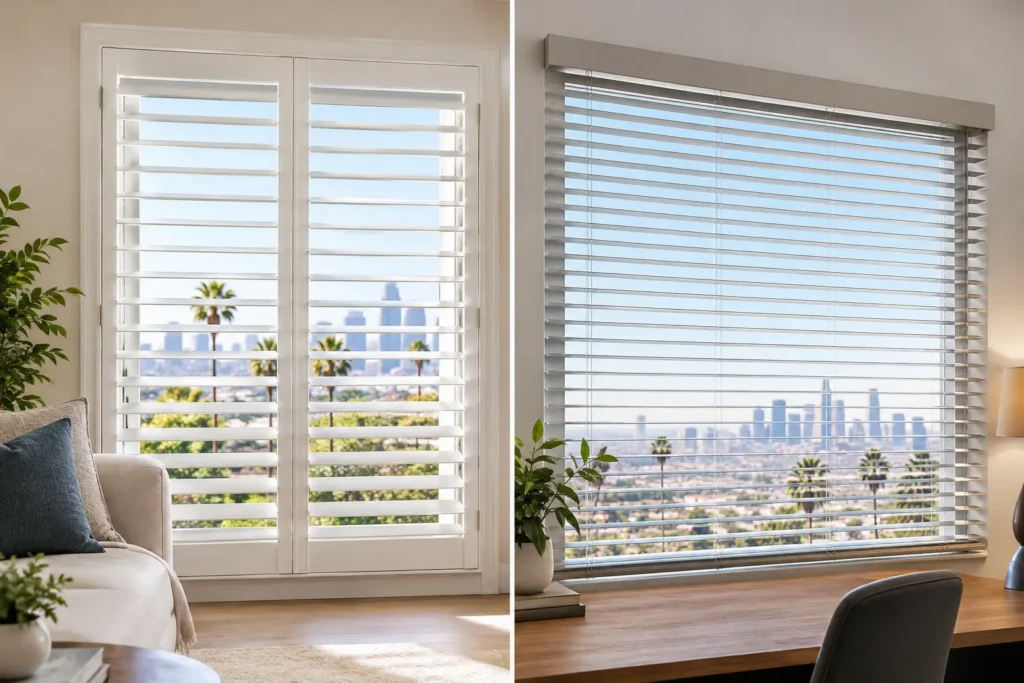
A window treatment can look like a small finishing detail until you price a room with eight windows, a wide patio door, or unusual window shapes. When homeowners compare shutters vs blinds cost, the real question is rarely just which product has the lower starting price. It is which choice gives the room the right balance of privacy, light control, style, durability, and long-term value.
For many Los Angeles and Orange County homeowners, blinds are the practical starting point, while shutters are the more substantial design investment. Both can be custom-made, professionally installed, and tailored to the way you use the room. The right choice depends on your windows, your priorities, and whether you are solving a short-term need or planning an upgrade meant to last for years.
Shutters vs. blinds cost: the typical difference
Blinds generally cost less than shutters because they use less material and have a simpler construction. A custom blind may be an accessible choice for a bedroom, rental property, office, or a larger group of windows where managing the budget matters most. The exact price changes significantly based on material, window size, control type, and installation conditions.
Custom interior shutters typically cost more upfront. They are built as fitted panels that sit within or around the window opening, with louvers that tilt for adjustable light and privacy. The product itself is more substantial, and accurate measuring and installation are especially important to a clean final result.
As a broad planning range, professionally installed custom blinds may run from a few hundred dollars per window and upward, depending on the style and features selected. Custom shutters often begin higher and can reach well beyond that range per window, particularly for large openings, specialty shapes, premium materials, or motorized options. These figures are only a starting point, not a quote. A narrow standard window and an oversized bay window should never be expected to cost the same.
The most useful way to compare pricing is to look at the completed project. That means product, custom sizing, hardware, delivery, professional installation, and any details needed to make the treatment operate properly and look intentional in the room.
What makes blinds more or less expensive?
“Blinds” covers a wide range of products, from straightforward horizontal blinds to more refined wood and faux wood options. This variety is why blind pricing can change so much from one room to another.
Material is one of the largest variables. Aluminum and vinyl blinds are often among the more budget-conscious choices. Faux wood blinds tend to cost more, but they offer a warmer look and are a sensible option for rooms that deal with humidity, such as kitchens and bathrooms. Real wood blinds bring natural grain and a more elevated appearance, though they may not be the best fit for every moisture-prone space.
Window size also matters. A larger blind requires more material, wider headrails, and potentially additional support. Extra-wide windows, French doors, sliding doors, and windows with deep or shallow trim can require special planning. If you want blinds to sit inside the frame, accurate measurements are essential because even a small sizing issue can affect the way they raise, lower, and stack.
Features add to the cost as well. Cordless lift systems are a popular choice for a cleaner appearance and improved safety. Motorization can be worthwhile for hard-to-reach windows, high ceilings, or rooms with many windows, but it increases the overall investment. Decorative tapes, upgraded valances, and specialty finishes can also move a blind from a basic functional purchase to a more design-focused treatment.
Why shutters have a higher upfront price
Shutters are often priced as a built-in-style architectural treatment rather than a simple window covering. Their panels are custom-sized to the opening, and their frames, louvers, hinges, and tilt mechanisms must work together precisely. That construction is a major reason shutters usually cost more than blinds.
Material plays a central role here, too. Wood shutters can offer a classic, furniture-quality look, particularly in living rooms, dining rooms, and traditional interiors. Composite or engineered shutter materials are often selected for their durability and suitability in areas with heat or humidity. The best material is not always the most expensive one. It should fit the room’s conditions, the desired look, and the homeowner’s maintenance preferences.
The design of the window affects shutter pricing more than many people expect. Tall windows may require multiple panels or a divider rail. Arched, angled, circular, or bay windows need specialized fabrication. Wide openings may call for multiple shutter panels so the treatment remains easy to operate. Each choice has a purpose, but it can affect the final price.
Professional installation is particularly valuable with shutters. Panels need to sit level, open freely, align with the frame, and close correctly. On older homes, window openings may not be perfectly square, which makes in-home measurement and skilled installation even more important. A lower product price does not offer much value if the finished shutters bind, leave uneven gaps, or look out of place against the trim.
Cost is only one part of the value equation
Blinds can be an excellent value when you want flexible light control without making a major investment in every window. They are available in a broad range of colors and finishes, work well with many decorating styles, and can be an efficient choice for bedrooms, offices, and multipurpose spaces. If your priority is covering several windows while keeping the project budget controlled, blinds often make sense.
Shutters can be the better value when permanence, durability, and architectural presence matter more. They provide a tailored look from both inside and outside the home, and their adjustable louvers make it easy to direct sunlight while maintaining privacy. For a front-facing living room, a primary bedroom, or a room where you want the window treatment to become part of the design, shutters may justify their higher initial cost.
There is also a practical difference in how each option ages. Quality shutters are designed to remain in place for many years. Blinds can also last well when properly selected and cared for, but cords, slats, and operating mechanisms may eventually need repair or replacement depending on use. A homeowner planning to sell soon may make a different decision than someone renovating their long-term home.
Consider Los Angeles light, heat, and privacy
In Southern California, window treatments do more than complete a room. Strong afternoon sun can create glare, warm up interiors, and fade flooring or furnishings over time. Street-facing windows often need privacy without making the home feel closed off. The treatment you choose should handle these daily conditions, not simply match a photo you liked online.
Blinds offer highly adjustable light control, especially when the slats can be tilted to soften direct sunlight. Shutters do the same while creating a more defined, structured appearance. The louver size you choose can influence both the view and the amount of light entering the space. Larger louvers can create a more open look when tilted, while smaller louvers may suit more traditional interiors.
For windows that receive intense heat, the right material matters. Faux wood blinds and composite shutters are frequently considered for areas where moisture or temperature changes are a concern. A design consultation can help match the product to the window’s exposure rather than relying on a one-size-fits-all recommendation.
How to compare quotes fairly
A quote for custom window treatments should tell you what is included, not just present a single number. When comparing shutters and blinds, ask whether the price includes in-home measuring, the exact product material and finish, lift or tilt controls, delivery, installation, and warranty information. If a window has unusual trim, a deep sill, or an obstruction such as a handle or security sensor, confirm how that detail will be addressed.
It also helps to compare the same level of product. A basic off-the-shelf blind is not an equal comparison to a custom blind with cordless operation and professional installation. Likewise, a shutter quote should identify the shutter material, louver size, frame style, and panel configuration. Clear details prevent surprises and make it easier to decide where it makes sense to invest.
For a whole-home project, you do not have to use the same treatment everywhere. Many homeowners choose shutters for prominent living areas and front windows, then select custom blinds for secondary bedrooms, offices, or utility spaces. This approach can create a coordinated look while putting more of the budget where it will have the greatest visual and functional impact.
Get guidance based on your actual windows
Online price ranges can help you begin planning, but they cannot account for the dimensions, light conditions, trim, and design goals in your home. An in-home consultation gives you the chance to see materials and colors in your own lighting, compare operating options, and receive recommendations that fit the way each room is used.
Blinds by Design brings that personalized process directly to homeowners and offices throughout the local area, from measuring and product selection through professional installation. Whether you are drawn to the accessible flexibility of blinds or the lasting presence of shutters, the best next step is to view both options at your windows and choose the one that will still feel right every day you live with it.