
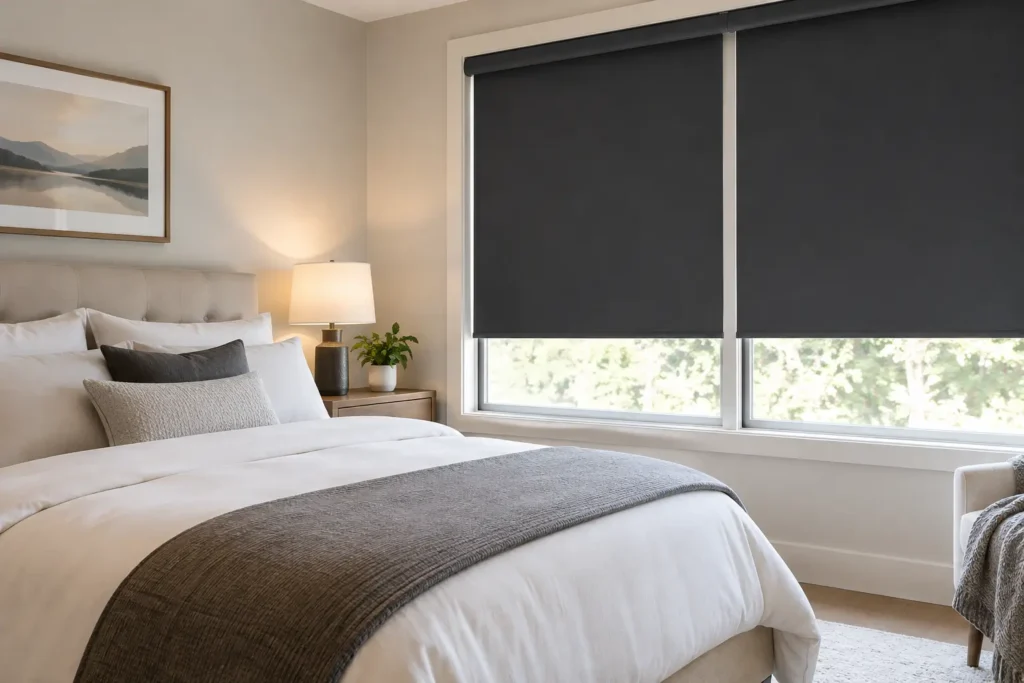
A bedroom can have beautiful furniture, a calming color palette, and a comfortable mattress, yet still feel difficult to rest in when morning light spills across the room at 6 a.m. Blackout shades for bedrooms address that daily frustration by giving you meaningful control over sunlight, privacy, and the atmosphere of the space. For homeowners in Los Angeles and Orange County, where bright sun is part of life year-round, the right custom shade can make a noticeable difference in how a bedroom looks and functions.
The key is choosing a product that does more than look dark. Fabric opacity, mounting style, window shape, and installation details all affect the result. A well-chosen blackout shade should support better sleep while still fitting the design of your room and the way you use it.
What Blackout Actually Means in a Bedroom
Blackout refers to a shade material designed to block light from passing through the fabric itself. This is different from light-filtering or room-darkening materials, which soften daylight but still allow a glow into the room. Blackout fabric is especially useful for bedrooms used by shift workers, young children, light-sensitive sleepers, or anyone who wants to sleep later on a bright weekend morning.
Still, blackout does not always mean a completely dark room. Light can enter around the sides of a shade, along the top, or beneath the bottom rail. This is most common with inside-mounted shades, where the treatment sits within the window frame and needs a small amount of clearance to operate properly.
That distinction matters when setting expectations. If you want a comfortably dark bedroom, a quality blackout roller or cellular shade may be an excellent choice. If you want to reduce nearly every visible edge of light, the design may need an outside mount, wider coverage beyond the window opening, or side channels where appropriate. A professional measurement helps determine which approach will work best before an order is placed.
Choosing Blackout Shades for Bedrooms
The best blackout shade is not always the darkest or most expensive option. It is the one that suits your window, sleep needs, interior style, and daily routine.
Roller shades offer a clean, modern look
Blackout roller shades are a popular choice for bedrooms because they have a simple profile and operate easily. They sit close to the window, work well with contemporary and transitional interiors, and are available in a wide range of colors and textures. A charcoal, linen-look, or warm neutral fabric can complement the room without creating the heavy appearance some people associate with traditional blackout curtains.
Roller shades can also be a smart option when a bedroom has a view worth preserving during the day. Raise the shade fully for an open view and bring it down at night for privacy and darkness. With a custom fit, the fabric coverage and mounting position can be planned to minimize light gaps as much as the window allows.
Cellular shades add insulation to the equation
Cellular blackout shades, sometimes called honeycomb shades, have a structured design that creates air pockets between the room and the window. Along with light control, that construction can help reduce heat gain and heat loss through the glass. In sun-exposed Los Angeles bedrooms, this can be a welcome benefit, particularly on large windows that warm up quickly in the afternoon.
Cellular shades tend to have a softer, more tailored appearance than a roller shade. They are often a good fit for homeowners who want a quieter visual effect and an added layer of temperature control. The trade-off is that their textured construction may not be the preferred look for a very minimal or highly decorative room.
Roman shades bring softness and design detail
For a primary bedroom, guest room, or nursery where fabric and texture are central to the design, a lined Roman shade can offer blackout performance with a more decorative finish. Roman shades fold into soft horizontal sections when raised, creating a custom upholstered look that works beautifully with traditional, coastal, and transitional styles.
Because Roman shades have more visual presence, fabric selection deserves careful consideration. A bold pattern may become a focal point, while a textured neutral can bring warmth without overwhelming the room. The blackout lining does the practical work behind the scenes, but the front fabric sets the mood.
Mounting Details Can Change the Result
A shade can be made from true blackout fabric and still disappoint if its mounting style is not right for the room. This is why measurements should include more than width and height. The depth of the window frame, molding, handles, cranks, and nearby furniture all influence the best installation method.
Inside mounting places the shade within the window frame. It has a neat, built-in appearance and keeps trim visible, which many homeowners prefer. However, a small perimeter gap is necessary for movement. This can allow a thin line of light around the fabric, particularly on bright mornings.
Outside mounting places the treatment over and beyond the window opening. By extending the shade past the sides and top of the frame, it can provide stronger light coverage. It is often the better choice when sleep conditions are the priority, when a window frame is shallow, or when the window itself is slightly out of square.
For bedrooms with several windows, consistency matters too. One window may need an outside mount while another can be installed inside the frame. An experienced designer can help balance performance with a uniform appearance across the room.
Privacy, Safety, and Everyday Convenience
Bedrooms need privacy after dark, especially in neighborhoods where homes are close together. Blackout shades give you privacy when lowered, but consider what you need during the day as well. If you want natural light without exposing the room, a dual-shade setup may be worth considering. This option combines a light-filtering layer for daytime use with a blackout layer for nighttime coverage.
Motorization can make bedroom shades easier to live with. Instead of reaching behind a bed or adjusting several windows one at a time, you can raise or lower shades with a remote, wall control, or programmed schedule. A timed morning setting can gradually bring light into the room, while an evening setting can close the shades for privacy before bed.
Cordless operation is another practical consideration, particularly in children’s rooms. It offers a cleaner look and removes dangling cords from the space. The right operating system depends on window access, budget, and how often you expect to adjust the shades.
Style Should Not Be an Afterthought
Blackout shades are functional, but they are still a prominent part of the bedroom. The best choices relate to the room’s finishes rather than competing with them. In a neutral bedroom, a textured shade can add depth. In a room with patterned bedding or wallpaper, a simple solid fabric often keeps the design balanced.
Color also affects how the window treatment feels when the shade is raised. A darker shade can create definition around the window, while a lighter color may blend into the walls for a softer effect. The backing and the street-facing side may also be limited by community rules or homeowner association requirements, so it helps to review both sides of the material before making a final choice.
Samples are especially valuable because fabrics can look different in a showroom than they do beside your flooring, wall color, and natural light. Seeing options in the actual bedroom makes it easier to judge undertones, texture, and the level of privacy you want.
Why Custom Measurement Makes a Difference
Ready-made blackout shades can be tempting, but standard sizes rarely account for the details that determine performance. Windows can vary slightly even within the same room. Frames may not be perfectly level, trim may reduce usable space, and a fraction of an inch can affect how much light enters at the edge.
Custom sizing gives you a treatment designed for the specific opening, not an approximation. Professional installation also ensures brackets are secure, the shade operates smoothly, and the finished placement supports the light control you expected. This is particularly valuable for wide windows, tall windows, difficult-to-reach windows, and motorized systems.
At Blinds by Design, an in-home consultation allows you to compare blackout materials, colors, and operating options where they will actually be installed. You can see how each choice works with your bedroom rather than making a decision from a small online image.
A bedroom should feel private when you need it, bright when you want it, and comfortable at every hour in between. A thoughtfully measured blackout shade gives you that control while becoming a natural part of the room’s design.