
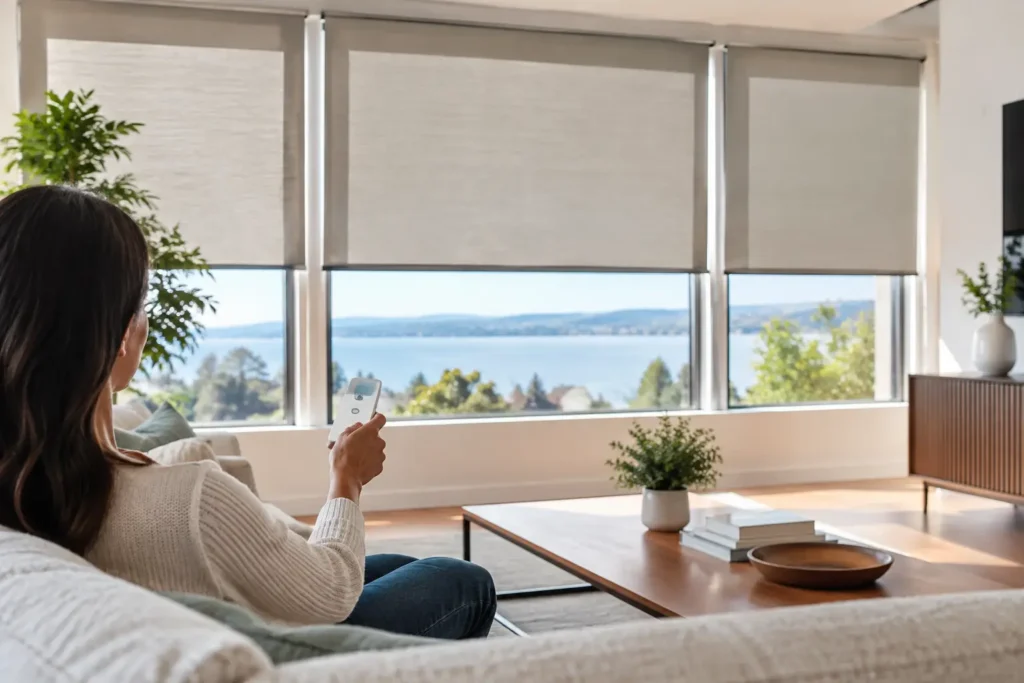
The afternoon sun can turn a beautiful Los Angeles room into the least comfortable place in the house. Glare lands directly on the television, hardwood floors heat up, and rooms that felt bright in the morning become difficult to use by midafternoon. Shade automation gives homeowners a simple way to manage that changing light without constantly walking from window to window.
Motorized shades are not just a convenience feature for high-end homes. When they are selected for the right windows and installed correctly, they can improve everyday comfort, protect interiors, support privacy, and make a home feel more responsive to the people living in it. The key is choosing an automation setup that fits your space, your routines, and the way you want your window treatments to look.
What Shade Automation Does
Shade automation uses a motorized system to raise, lower, or position shades with a remote, wall control, smartphone app, timer, or compatible home automation system. Rather than pulling a cord or adjusting a wand, you can control one shade, a group of shades, or an entire room from a single command.
For many homeowners, the most useful feature is scheduling. Shades can lower during the hottest part of the day, open in the morning for natural light, or close at night for privacy. A schedule is especially helpful in rooms with large west-facing windows, skylights, high windows, or sliding doors where manual adjustment is inconvenient.
Automation can also make window treatments safer and cleaner looking. Cordless motorized shades eliminate dangling lift cords, which is an important consideration in homes with young children or pets. The finished look is streamlined, with the focus remaining on the fabric, color, and fit of the shade rather than its operating hardware.
The Everyday Benefits of Automated Shades
The appeal of motorized shades goes beyond pressing a button. For Southern California homes, where sunlight is plentiful and temperatures can vary throughout the day, automated control can make a noticeable difference in how a room performs.
Better control of heat and glare
Sunlight is welcome until it hits a computer screen, fades upholstery, or raises the temperature in a room that already receives strong afternoon exposure. Automated roller shades, solar shades, cellular shades, and woven wood shades can be programmed or adjusted at the right time to soften direct sun.
The result depends on the shade material. A solar shade may preserve more of the outside view while filtering glare, while a blackout or room-darkening shade provides stronger light blocking. Cellular shades can add insulation, which may be particularly helpful in bedrooms, upstairs rooms, and spaces with large expanses of glass.
Automation does not replace a home’s cooling system, and it will not solve every heat issue on its own. It does, however, help you use your window coverings consistently, which is often the difference between having an effective solution and having shades that stay open because adjusting them is a hassle.
Privacy without the daily routine
Privacy needs often change quickly after sunset. With automated shades, a single command can close every shade in the living room, bedroom, or office. This is useful for homes near neighboring properties, busy streets, or ground-level walkways.
For bedrooms, timers can be especially practical. Shades can close automatically in the evening and open gradually in the morning, helping create a more comfortable daily rhythm. In a home office, you can lower shades before a video call without interrupting your work to adjust multiple windows.
Easier access to difficult windows
Some windows are simply not designed for frequent manual operation. Tall entryway windows, windows behind furniture, and windows above a bathtub or staircase may be hard to reach safely. Motorization makes these openings functional instead of decorative-only.
This is where custom measuring matters. An automated shade must fit the window precisely, operate without obstruction, and have a control solution that makes sense for the room. A professional consultation can identify challenges before an order is placed, including trim depth, power access, window shape, and furniture placement.
Choosing the Right Shade Automation Setup
There is no single best motorized shade system for every home. The right choice depends on the number of windows, preferred controls, fabric selection, and whether the project is part of a larger remodel or a focused room update.
Battery-powered motorized shades are often a strong option for existing homes because they can avoid the need for new wiring. They work well for many standard windows and can provide a clean, polished installation. Batteries will need periodic replacement or recharging, so accessibility should be considered for high or hard-to-reach windows.
Hardwired shades are often considered during new construction or major remodeling. Because power is built into the plan, they can be an excellent long-term solution for larger installations, though they require coordination with an electrician before walls are closed.
Rechargeable options offer a middle ground for some projects. They reduce disposable battery replacement while keeping installation less involved than a hardwired system. The practical question is whether the charging point will be easy to access and whether the shades will be used frequently enough to make recharging inconvenient.
Control style also matters. A handheld remote is straightforward and dependable. Wall-mounted controls can feel familiar for guests and family members. App-based controls and smart-home integration offer more flexibility for scheduling and remote adjustment. More advanced systems can be useful, but they are not always necessary. For a single bedroom or media room, a simple remote may be the most comfortable choice. For a home with many large windows and changing sun exposure, schedules and grouped controls may provide greater value.
Style Still Comes First
A motorized system should support the design of a room, not dictate it. Today’s shade automation is available across a wide range of custom window treatments, from clean-lined roller shades to soft Roman shades and energy-conscious cellular shades. The motor is designed to work quietly behind the finished treatment, allowing the fabric and overall design to remain the visual focus.
Color, texture, opacity, and mounting style all affect the final result. A bright, minimal living room may benefit from light-filtering solar shades that maintain an airy feel. A bedroom may call for a layered approach, such as room-darkening shades paired with decorative drapery. Offices often need glare control that still allows useful daylight into the space.
The best way to evaluate these options is in the actual room. Light that looks soft in a showroom can behave very differently in a west-facing family room or a street-level office. Seeing samples against your walls, flooring, and furniture helps ensure the final choice works at every time of day.
Why Professional Measurement and Installation Matter
Automated shades involve more than selecting a fabric and adding a motor. Accurate measurements, level mounting, proper brackets, control pairing, and programming all affect performance. A shade that is slightly out of alignment can look uneven or operate poorly, especially when multiple shades are meant to move together.
Professional installation also helps avoid small issues that create long-term frustration. The installer can confirm that shades clear handles and trim, identify the best control location, program remotes or scenes, and show you how to use and care for the system. For larger projects, this guidance is valuable because it keeps every window treatment operating consistently.
Blinds by Design brings samples and product expertise to your home or office, so decisions about style, light control, and automation can be made where they matter most. From in-home measurement through installation, a guided process helps remove the uncertainty from a custom project.
Is Shade Automation Worth It?
For homeowners who adjust shades every day, have hard-to-reach windows, or want more reliable privacy and glare control, automation can be a worthwhile upgrade. It is also a thoughtful choice for people planning to stay in their homes long term, since easier operation can add comfort and accessibility over time.
The investment should be considered window by window. You may not need motorization throughout the entire house. Prioritizing bedrooms, family rooms, media spaces, large sliding doors, or sunny west-facing windows can deliver meaningful benefits while keeping the project aligned with your budget.
A free in-home consultation can help turn a broad idea into a practical plan. When you can see materials in your own light, compare control options, and receive precise recommendations for each window, it becomes much easier to choose automated shades that feel right from the first day of use.