
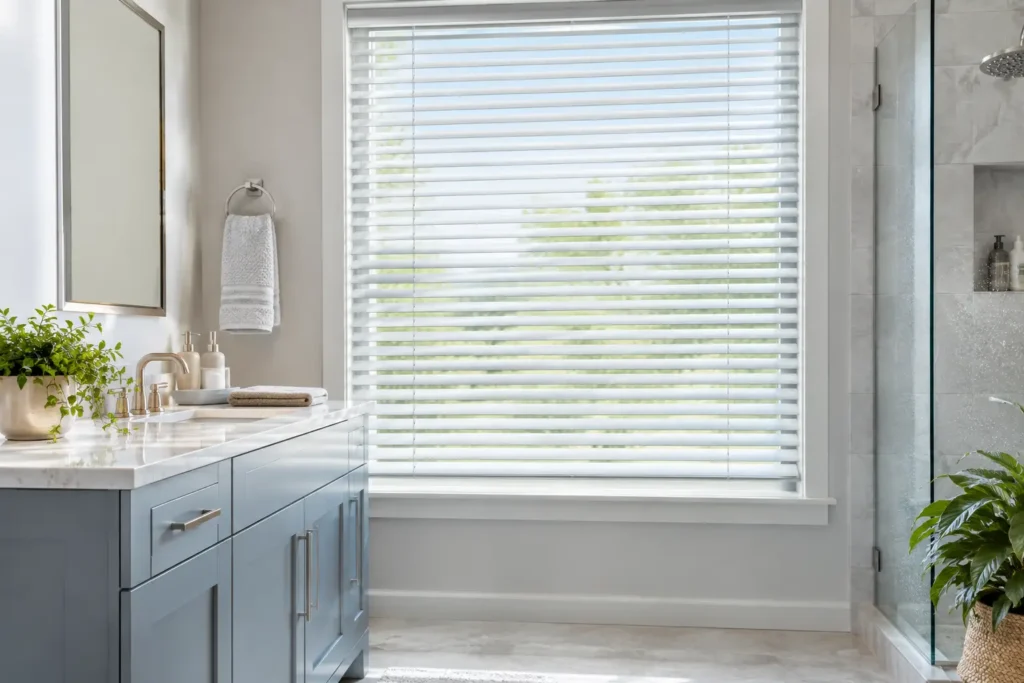
Steam collecting on a bathroom mirror, splashes near a kitchen sink, and the heat of a busy laundry room can all shorten the life of the wrong window treatment. Choosing moisture resistant blinds means looking beyond color and price to find a custom solution that will continue to operate smoothly, clean easily, and suit the room for years to come.
For Los Angeles and Orange County homeowners, this decision often comes up during a remodel or when replacing older blinds that have warped, stained, or become difficult to raise and lower. The right product should handle everyday humidity without making the space feel cold or overly utilitarian. With the right material, fit, and installation, you can have practical light control and a finished look that complements the rest of your home.
Start With the Room, Not Just the Window
“Moisture resistant” does not mean every room needs the same window covering. A guest bathroom with a rarely used shower has different demands than a primary bath where daily showers create heavy steam. A kitchen window above the sink may face occasional splashes and cooking residue, while a laundry room can experience warmth, humidity, and limited ventilation.
Take note of how moisture reaches the window area. Direct water exposure, frequent condensation, poor airflow, and strong afternoon sun each affect which material will perform best. Windows inside a shower enclosure, for example, need a much more carefully considered solution than a window across a well-ventilated powder room.
Privacy and light control matter just as much. Bathrooms usually call for privacy at all times, but some homeowners also want daylight without an exposed view. Kitchens may benefit from adjustable slats that redirect glare from a breakfast table or countertop. Considering these daily routines early helps narrow the choices without sacrificing style.
Best Materials When Choosing Moisture Resistant Blinds
The material is the foundation of a durable installation. Some products tolerate humidity and wipe down easily, while others can absorb moisture or lose their shape over time.
Faux Wood Blinds
Faux wood blinds are a popular choice for bathrooms, kitchens, and laundry areas because they offer the warmth and visual texture of painted wood without the same sensitivity to moisture. Quality faux wood slats resist warping, cracking, and fading better than natural wood in humid locations. They also provide flexible light control and a tailored look that works with traditional, transitional, and contemporary interiors.
They are not completely maintenance-free. Wider slats can collect dust, and kitchens may leave a light film of grease over time. Still, regular dusting and occasional wiping with a damp cloth usually keep them looking fresh. For many homes, faux wood provides the best balance of appearance, durability, and budget.
Vinyl and PVC Blinds
Vinyl or PVC blinds are highly practical where water exposure is a real concern. Their nonporous surfaces make them easy to wipe clean, and they are well suited to bathrooms, utility rooms, and windows near sinks. They are often a straightforward choice for rental properties, secondary baths, and hardworking spaces where durability takes priority.
The trade-off is aesthetic. Lower-quality vinyl can look less refined than faux wood or shutters, especially in a main living area or a high-end remodel. Custom sizing, thoughtful color selection, and professional installation can make a substantial difference in the finished appearance.
Composite Shutters
For homeowners who want a more architectural, built-in look, composite shutters are worth considering. Made to handle humidity better than natural wood, they provide excellent privacy, adjustable light control, and a clean, durable finish. Their solid construction makes them especially appealing in primary bathrooms and kitchens where design continuity matters.
Shutters are typically a larger investment than standard blinds, and their fixed frame changes the look of the window more dramatically. In return, they offer long-term durability and a polished result that can feel like part of the room rather than an accessory added later.
Aluminum Blinds
Aluminum blinds resist moisture and are easy to clean, making them a functional option for certain kitchens, offices, and laundry rooms. Their slim profile can work well on smaller windows or where a minimal look is preferred. However, thin metal slats can bend if handled roughly, and they may not create the warmer residential feel that many homeowners want.
Materials to Use Carefully in Humid Areas
Natural wood blinds bring depth and character, but they are generally not the first choice for a high-moisture window. Repeated humidity can cause wood to swell, warp, or discolor. They may work in a well-ventilated room with limited moisture, but they need more careful consideration than faux wood or composite alternatives.
Fabric shades also depend on the specific room and product. A moisture-resistant or performance fabric may be suitable for a lightly humid space, especially when softness is a design priority. In a bathroom with heavy steam or a kitchen directly above a sink, fabric may hold odors, show stains, or require more frequent care. The question is not whether fabric shades are good or bad, but whether the room gives them the conditions they need to last.
Choose the Right Mount and Fit
Even the best moisture resistant blinds can underperform when the fit is off. A custom measurement accounts for window depth, trim, handles, tile, nearby cabinets, and how the blind needs to operate. This is particularly important in bathrooms, where a narrow window opening or recessed tile surround can limit mounting options.
Inside-mounted blinds create a neat, integrated appearance when the window frame has enough depth. They can be an excellent choice for clean-lined spaces and windows with attractive trim. Outside mounts may be better when the opening is shallow, uneven, or when you need added privacy and light coverage beyond the glass area.
Think about clearance as well. A blind should not scrape against a faucet, interfere with a casement window crank, or block access to a window that needs to open for ventilation. Professional measuring helps prevent the small installation issues that become daily annoyances.
Do Not Overlook Privacy, Controls, and Safety
In moisture-prone rooms, function is often as important as the material. Tilt controls let you bring in daylight while limiting direct views, which is especially useful in bathrooms facing neighboring homes. A cordless lift creates a cleaner look and removes hanging cords, making it a practical option for homes with children or pets.
Motorized controls can also be helpful for high windows, hard-to-reach areas above a tub, or office settings where consistent light control is needed. The best option depends on how often the treatment will be adjusted. A simple cordless blind may be ideal for a small guest bath, while motorization can make more sense for a large primary suite or a window positioned behind cabinetry.
Color deserves attention, too. White and soft neutral finishes tend to work well in humid rooms because they feel bright and coordinate easily with tile, cabinetry, and fixtures. A wood-tone faux wood blind can add welcome warmth to a bathroom with cool stone surfaces. Samples viewed in the actual room are valuable because bathroom lighting and kitchen finishes can change how a color reads.
Plan for Easy Care From the Beginning
A moisture-resistant material still benefits from regular care. Wipe slats with a soft cloth or lightly damp microfiber cloth as needed, particularly near sinks and stovetops. Avoid abrasive cleaners that can scratch or dull the finish. Good ventilation also helps: use the bath fan during and after showers, address persistent condensation, and keep windows dry when possible.
If a blind begins sticking, tilting unevenly, or showing damage, address it early. Often, a repair or adjustment can restore smooth operation before the issue worsens. This is another advantage of working with a local window treatment specialist who understands both the product and the installation.
Get a Solution Designed for Your Space
There is no single best answer for every humid room. Faux wood may be ideal for one bathroom, composite shutters may better suit another, and a practical vinyl blind may make the most sense in a laundry area. The right choice comes from seeing the materials in your home, considering the window’s exact conditions, and matching the treatment to your design goals and budget.
Blinds by Design brings the selection process to your home with a mobile showroom, custom measurement, and professional installation. A free consultation gives you the opportunity to compare options in the actual light and moisture conditions of your space, so the finished window treatment feels considered, functions reliably, and remains easy to live with long after installation.