
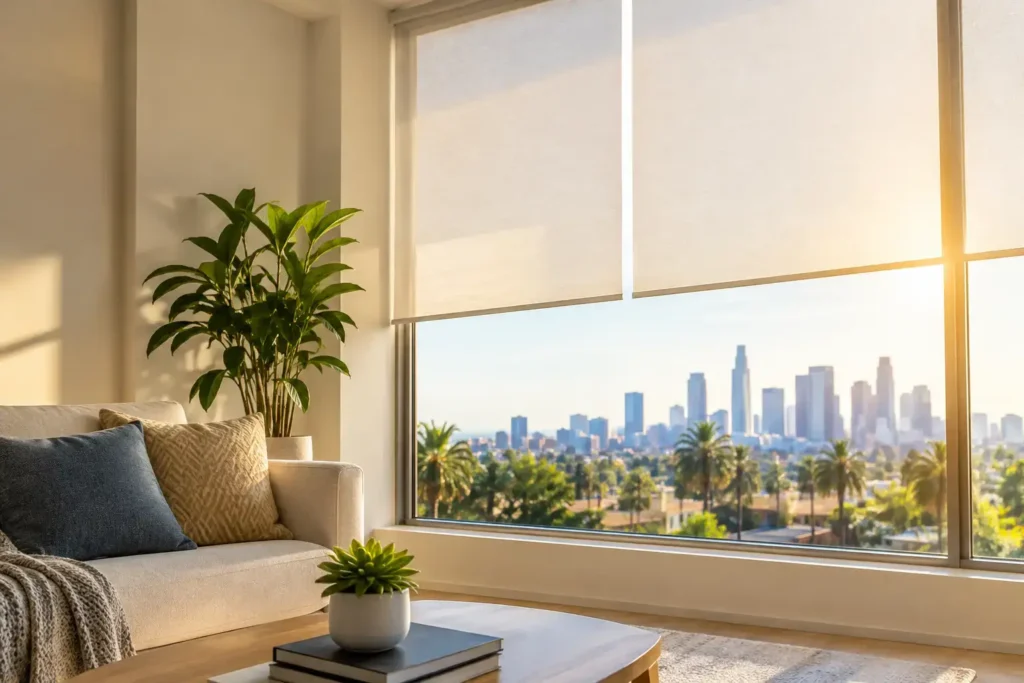
A west-facing living room can feel comfortable at 10 a.m. and nearly unusable by late afternoon. That change is often caused by solar heat pouring through the glass, not a problem with the air conditioner. Understanding how window shades reduce heat helps Los Angeles homeowners make a smarter choice for rooms that get strong sun, glare, and uneven temperatures.
Window shades do not create cold air. Instead, they limit how much of the sun’s energy enters the room and becomes trapped as heat. The right shade, fitted closely to the window and selected for its material and opacity, can make a meaningful difference in comfort while protecting the look of the space.
How Window Shades Reduce Heat From the Sun
Sunlight carries visible light, ultraviolet rays, and infrared energy. When that energy passes through a window, it warms floors, furniture, walls, and other surfaces. Those warmed surfaces then release heat into the room, which is why a sunny room can remain warm even after the sun moves away from the window.
Shades reduce this solar heat gain by intercepting sunlight before it reaches those interior surfaces. Some fabrics reflect a portion of the sun’s energy. Others absorb it, while denser or layered materials create an added barrier between the glass and the room. The exact result depends on the shade style, fabric color, openness, window orientation, and how tightly the treatment is installed.
For homes in Los Angeles and Orange County, afternoon exposure matters especially. West- and southwest-facing windows often receive the strongest, hottest sun when the home has already warmed up during the day. A properly selected shade helps control that late-day buildup, allowing the HVAC system to work less aggressively to maintain a comfortable setting.
The Shade Material Makes a Real Difference
Not all shades manage heat in the same way. A beautiful sheer can soften bright light, for example, but it will not provide the same solar control as a purpose-built solar shade or a room-darkening cellular shade. Choosing based on appearance alone can leave a room brighter and warmer than expected.
Solar Shades
Solar shades are designed to filter sunlight while preserving an outward view. Their woven screens are available in different openness levels, which describe how much light and visibility pass through the material. A lower openness percentage generally provides stronger glare and heat control, while a higher openness percentage offers a clearer view but lets in more light.
These shades are a popular fit for living rooms, offices, and rooms with a view where daytime visibility is important. They can significantly reduce glare on televisions and computer screens while helping limit solar heat. However, they are not usually the best choice when complete privacy or room darkening is the priority, especially at night.
Cellular Shades
Cellular shades, also called honeycomb shades, use pockets of air within their construction. Those pockets create insulation at the window, helping slow heat transfer. In hot weather, they can reduce the feeling of heat radiating from the glass. In cooler weather, they can also help retain conditioned indoor air.
For bedrooms, nurseries, and rooms with intense sun exposure, cellular shades can be an excellent comfort-focused option. They are available in light-filtering and room-darkening fabrics, so homeowners do not have to choose between energy efficiency and practical light control.
Roller and Roman Shades
Roller shades provide a clean, modern profile and come in solar-screen, light-filtering, and blackout materials. Their heat-reducing performance depends largely on the fabric selected. A light-filtering roller shade can soften daylight, while a solar fabric may provide better glare management and an outside view.
Roman shades bring a softer, more decorative look, with folds that add texture and dimension. Lined Roman shades can offer improved light and heat control compared with unlined versions. Because styles, fabrics, and linings vary widely, they are best selected with the room’s sun exposure in mind, not just the color palette.
Fit and Installation Affect Heat Control
A shade can be made from an excellent material and still underperform if it is not correctly sized or installed. Large side gaps allow sunlight to spill into the room. An inside-mounted shade may look streamlined, but depending on the window frame, it can leave more uncovered glass at the edges than an outside mount.
Custom measurements help determine the best mounting approach for each window. In some rooms, an outside mount provides broader coverage and better light blocking. In others, an inside mount is the right design choice and can still perform well with the proper fabric and fit. The answer depends on the window depth, trim, operation, and how much light control the homeowner wants.
Professional installation also matters for smooth operation. A shade that is difficult to raise, lower, or align is less likely to be used consistently during the hottest parts of the day. Motorized shades can be especially useful for tall windows, hard-to-reach windows, or homes where sun exposure shifts throughout the day.
Color, Opacity, and Window Direction
Lighter fabrics often reflect more sunlight than dark fabrics, but color is only one part of the decision. Dark solar fabrics may provide clearer outward visibility during the day, while lighter fabrics can create a brighter interior appearance. The fabric’s openness, backing, and construction can have as much influence on performance as the visible color.
Opacity determines how much light enters the room. Sheer and light-filtering shades preserve soft daylight but offer limited room darkening. Room-darkening and blackout options block substantially more light and are often better for bedrooms, media rooms, and windows that receive harsh afternoon sun.
Window direction should guide the recommendation. East-facing windows bring early morning sun. South-facing windows can receive prolonged direct light. West-facing windows tend to create the biggest late-afternoon heat issue. A single shade style may work throughout the home, but it is often more effective to customize fabrics or opacity by room.
Shades Work Best as Part of a Comfort Plan
Window shades can make a noticeable difference, but they are not a replacement for quality windows, weather sealing, or a properly functioning HVAC system. If a room remains extremely hot, there may be additional issues such as single-pane glass, air leaks, inadequate insulation, or direct sun on a large wall of glass.
For many homes, though, shades are one of the most practical upgrades because they address the problem at the window. Closing shades before the sun reaches its strongest point is more effective than waiting until the room is already hot. Motorization and scheduled controls make that habit easier, particularly for busy households and offices.
The goal is not necessarily to darken every room. It is to select window treatments that deliver the right balance of daylight, privacy, view, style, and heat control. A dining room may benefit from soft light-filtering shades, while a sun-exposed bedroom may need cellular room-darkening shades for better rest and a cooler feel.
Choosing Shades for Your Home or Office
The best way to evaluate heat-reducing shades is in the actual space where they will be used. Sun direction, glass size, ceiling height, nearby structures, interior colors, and daily routines all influence the right solution. Fabric samples also look different in direct daylight than they do in a showroom or on a screen.
Blinds by Design brings the selection process to your home or office, making it easier to compare materials, colors, and functional options where the light problem actually occurs. With custom measurements and professional installation, you can choose shades that look intentional in the room and perform reliably when the afternoon sun arrives.
If one room is always warmer than the rest of the house, start there. A tailored shade solution can turn that bright, overheated space back into a room you want to use.