
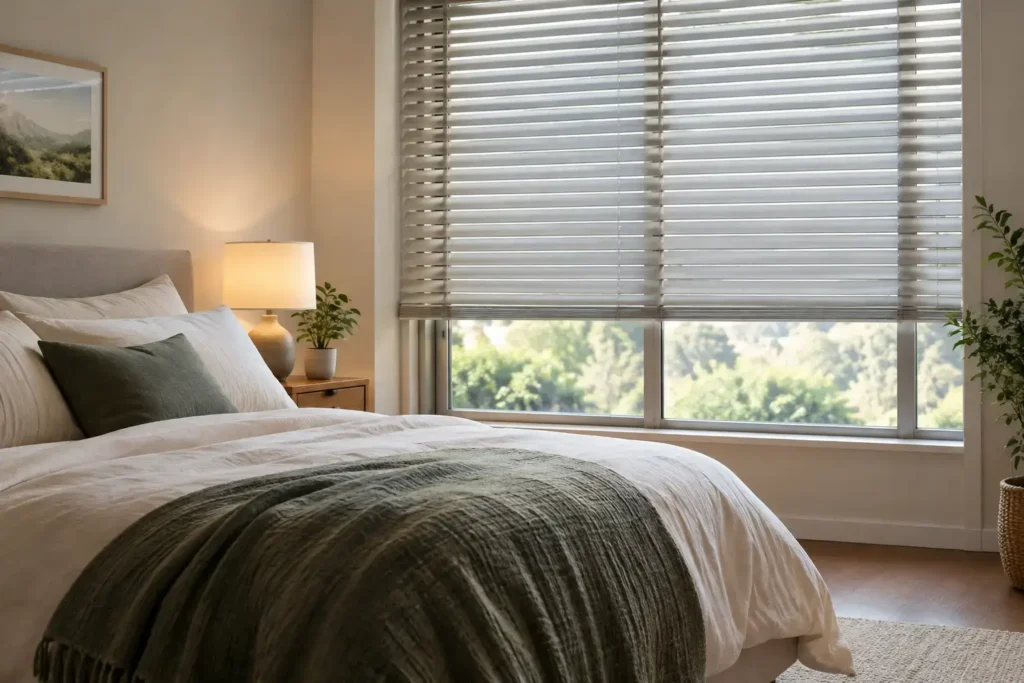
A bedroom window facing the early Los Angeles sun, a busy street, or a neighboring home can change how well the room works after dark. The best blinds for bedrooms should do more than look polished in daylight. They should support restful sleep, protect privacy, soften heat, and fit the design of the room without becoming difficult to use every morning and night.
For most homeowners, the right choice depends on what is disrupting comfort now. Is it morning glare? Streetlights? Heat building up in the afternoon? A need for privacy without making the room feel closed off? Once those priorities are clear, choosing a custom window treatment becomes much easier.
What Bedrooms Need From Window Coverings
Bedrooms ask more of a window treatment than many other rooms. A kitchen blind may simply need to filter glare, but bedroom blinds often need to handle changing light conditions from early morning through nighttime. They also need to feel appropriate for a personal, relaxing space.
Light control is usually the first consideration. A treatment that blocks direct sun can make a major difference for shift workers, light sleepers, children’s rooms, and anyone whose bedroom receives strong western exposure. However, complete darkness is not always the goal. Some homeowners prefer filtered morning light and want privacy more than blackout performance.
Privacy is equally important, especially in neighborhoods where homes sit close together. The right blind or shade lets you enjoy daylight without feeling exposed to neighbors, sidewalks, or nearby buildings. Insulation can also matter in Southern California. Window coverings can help reduce solar heat gain and make a bedroom more comfortable during warm afternoons.
Finally, operation matters. A bedroom treatment is used every day, often when you are tired or in a hurry. Cordless controls, continuous-loop systems, and motorization can make a noticeable difference in convenience and safety.
Best Blinds for Bedrooms by Priority
There is no single product that is best for every bedroom. The strongest choice is the one that matches your room’s light, privacy, style, and budget needs.
Cellular shades for insulation and soft light
Cellular shades are one of the most practical choices for bedrooms because their honeycomb-shaped construction helps create an insulating layer at the window. They are particularly useful for rooms that become uncomfortably warm in the afternoon or cool down quickly overnight.
They are available in light-filtering and blackout fabrics, giving homeowners flexibility based on how dark they want the room to be. A blackout cellular shade can greatly reduce incoming light, while a light-filtering version creates a softer, calmer glow. Keep in mind that even blackout shades can allow small bands of light around the edges, particularly on wider windows. For the darkest possible result, proper sizing and installation are essential.
Roller shades for a clean, modern look
Roller shades are a favorite for homeowners who want simple lines and easy operation. Their low-profile design works well in contemporary bedrooms, remodeled homes, and rooms where the window treatment should not compete with furniture, artwork, or bedding.
A blackout roller shade can provide strong light control, while solar or light-filtering fabrics preserve some daytime visibility and reduce glare. The trade-off is that lighter filtering fabrics are not designed for nighttime privacy when interior lights are on. For bedrooms, blackout or privacy-focused roller fabrics are generally the better fit.
Roller shades also pair well with drapery panels. The shade handles privacy and light control, while the fabric panels add softness, color, and a more layered designer finish.
Faux wood blinds for durability and adjustable privacy
Faux wood blinds are a dependable option for bedrooms that need adjustable light control. Tilting the slats lets you direct sunlight upward, bring in daylight while maintaining some privacy, or close the blind fully at night. Their durable material is well suited for homes that want the warm appearance of wood with easier maintenance.
Because blinds have slats, they do not typically darken a room as fully as a blackout shade. Small openings between slats can allow light through, and the route holes or edge gaps may be noticeable in a very bright room. Still, they are a strong choice for homeowners who value control and a classic, structured look.
Wood blinds offer a similar style with natural grain and warmth. They can be especially attractive in traditional, transitional, or organic modern bedrooms. Real wood may not be the ideal choice for every budget or exposure, but it brings an elevated finish when it suits the room.
Vertical blinds for large doors and wide openings
Bedrooms with sliding glass doors, patio access, or unusually wide windows need a treatment designed for the scale of the opening. Vertical blinds are a practical solution because they move side to side, matching the way a sliding door operates. They also offer adjustable privacy and light direction.
For a softer alternative, vertical cellular shades and panel-track systems can provide a more contemporary appearance. The best option depends on how often the door is used, how much light the room receives, and whether the homeowner wants a crisp architectural look or a more fabric-forward feel.
Motorized blinds for convenience and consistency
Motorized blinds and shades are especially helpful in bedrooms with high windows, large openings, or busy daily routines. With a remote, wall control, or smart-home integration, you can raise or lower treatments without crossing the room or handling cords.
They are also useful for establishing a comfortable routine. A programmed shade can lower before bedtime for privacy and rise in the morning when you are ready for daylight. Motorization adds to the investment, but for hard-to-reach windows or primary bedrooms where convenience is a priority, it can be well worth it.
Blackout vs. Room-Darkening: Know the Difference
Many homeowners ask for blackout blinds when what they really want is less glare and better privacy. Blackout fabrics are designed to block light through the material itself, but the finished room can still receive light through gaps at the top, sides, or bottom of the treatment.
Room-darkening treatments reduce a substantial amount of light but may not provide the same darkness as blackout materials. They can be a good fit for bedrooms where a completely dark environment is unnecessary, yet direct sun and bright street lighting are bothersome.
If the goal is maximum darkness, consider a custom-fitted blackout shade with outside mounting, which can cover more of the window frame. Pairing a blackout shade with drapery can further limit edge light while adding texture and visual warmth. A professional measurement is valuable here because a small sizing error can affect both appearance and performance.
Match the Treatment to the Room’s Style
Function should lead the decision, but a bedroom is also one of the most personal rooms in the home. The window treatment should feel connected to the space rather than added as an afterthought.
For a minimal, modern bedroom, roller shades in a neutral fabric or tailored faux wood blinds can keep the room clean and composed. In a softer or more traditional bedroom, wood blinds with layered drapery panels may feel more at home. Cellular shades are versatile enough to work in many settings because their profile is subtle and their fabric choices can be understated.
Color matters as well. A bright white treatment can look fresh against white trim, while warmer whites, taupes, grays, and natural wood tones can better support the colors already present in flooring, furniture, and bedding. Looking at samples in the actual bedroom is more reliable than selecting from a screen or a small store display. Natural light changes throughout the day, and each fabric or finish responds differently.
Why Custom Measurement Makes a Difference
Ready-made blinds may seem convenient, but bedroom windows are rarely as standard as they appear. Frame depth, trim, handles, window cranks, and uneven openings all affect what will fit and how it will operate. A custom solution is measured for the exact opening and selected with mounting requirements in mind.
Professional installation also helps ensure that blinds raise evenly, shades hang level, and operating systems work as intended. This is particularly important for blackout products, motorized treatments, large windows, and sliding doors. A well-chosen treatment can lose much of its benefit if it is poorly fitted.
Blinds by Design brings product samples, design guidance, measurement, and installation together during a personalized in-home consultation. That allows homeowners to compare materials and light-control options where they will actually be used, then choose a treatment that suits the room and the way they live.
A bedroom should feel private, comfortable, and easy to settle into at the end of the day. Start with the problem you want the window treatment to solve, then choose the style and control options that make that comfort feel natural every day.