
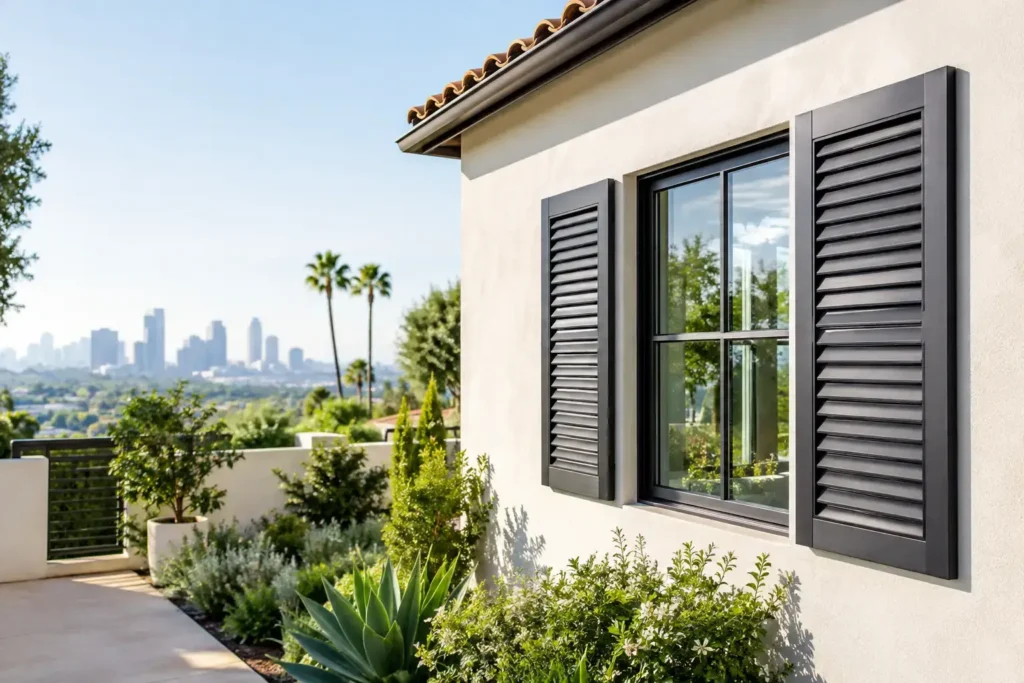
A west-facing living room in Los Angeles can need a very different window solution than a shaded bedroom in Whittier or a street-facing office in Downey. The right shutter styles do more than complement furniture and paint colors. They shape daylight, privacy, insulation, and the way a room feels throughout the day.
Custom shutters are a lasting design decision, so choosing by appearance alone can lead to frustration. Panel configuration, louver size, material, and frame details all affect daily use. A thoughtful selection starts with how you live in the space, then brings the design together around those needs.
Start With How the Room Needs to Work
Shutters offer a clean, built-in appearance that works across many interior styles, from traditional homes to updated contemporary spaces. Their appeal is not limited to looks. Adjustable louvers give you meaningful control over sunlight and visibility without requiring the shutters to be fully opened or closed.
Before narrowing down a style, consider the room’s exposure, how much privacy it needs, and who uses it. A family room with broad windows may call for a configuration that preserves the view when open. A bedroom may benefit most from dependable light control. In a bathroom or kitchen, moisture resistance can matter as much as color.
Window shape also has a major role. Wide patio doors, bay windows, narrow sidelights, and arched openings are not situations for a one-size-fits-all product. Custom measurement allows the shutter design to follow the opening cleanly and operate as intended.
Popular Shutter Styles and Where They Work Best
Plantation shutters
When most homeowners picture interior shutters, they are usually thinking of plantation shutters. This classic style uses wide, horizontal louvers within framed panels. It has enough visual presence to become part of the room’s architecture, yet it can work with coastal, transitional, farmhouse, traditional, and modern interiors.
Plantation shutters are especially practical for sunny Southern California homes because the louvers can be tilted to soften direct glare while still allowing natural light into the room. Larger louvers generally provide a clearer view when open and a more open, contemporary feel. Smaller louvers can look more traditional and may suit compact windows or rooms with detailed millwork.
The trade-off is visual weight. On a very small window, an oversized louver can appear disproportionate. Seeing full-size samples at home makes this choice much easier than selecting from a small showroom swatch.
Full-height shutters
Full-height panels cover the complete window from top to bottom. They create a tailored, uncluttered finish and are often a strong choice for bedrooms, dining rooms, and living areas. Because the whole opening is covered, they can provide consistent privacy and a more finished appearance than a partial treatment.
For added flexibility, full-height shutters can be designed with a divider rail. This horizontal rail separates the upper and lower louvers, allowing each section to be adjusted independently. It is useful when you want daylight entering from the top of the window while maintaining privacy at eye level.
Café-style shutters
Café shutters cover only the lower portion of a window. They are a natural fit for street-facing windows, breakfast nooks, kitchens, and bathrooms where privacy is needed without losing all overhead light.
This style feels lighter than a full-height panel and can highlight an attractive window shape or upper trim. It is less effective, however, for bedrooms or any room where full nighttime privacy and stronger light blocking are priorities. Café shutters are a design-forward choice, but they should match the function of the room.
Tier-on-tier shutters
Tier-on-tier shutters have independently opening top and bottom panels. They offer the most flexibility among traditional shutter configurations. You can open the top panels for air and daylight while keeping the bottom panels closed, or open only one section when you want an unobstructed view.
This arrangement works particularly well on tall windows and in rooms that face neighbors, sidewalks, or busy streets. It can also suit older homes with vertically proportioned windows. Since there are more panels and hinges, tier-on-tier shutters may have a higher cost than a simpler configuration, but the added control can be worthwhile in privacy-sensitive spaces.
Solid panel shutters
Solid panel shutters replace adjustable louvers with a solid inset or raised panel. They bring a more traditional, architectural character and can make a strong statement in historic homes, Spanish-style interiors, or rooms designed around classic millwork.
Their main advantage is visual impact and enhanced coverage when closed. Their limitation is adjustability. Unlike louvered shutters, solid panels cannot filter light in small increments. They are best for homeowners who value the style and are comfortable opening the panels when they want more daylight.
Specialty-shaped shutters
Arched, angled, circular, and other non-rectangular windows can be difficult to cover with standard products. Specialty-shaped shutters are built to follow those unique lines, turning an unusual opening into a focal point instead of a challenge.
This is one area where precise in-home measurement is essential. A shutter that is even slightly off can interrupt the symmetry of the opening or affect operation. Custom fabrication helps preserve the window’s architecture while adding privacy and light control.
Choosing the Right Shutter Material
Style is only half the decision. The material needs to suit the room, local conditions, and your expectations for maintenance and longevity.
Wood shutters offer natural warmth, rich stain options, and a refined finish that works beautifully with traditional furnishings and custom cabinetry. They are often favored in formal living rooms, dining rooms, and bedrooms. Because natural wood responds to humidity and temperature changes, it may not be the best option for every bathroom, laundry room, or high-moisture area.
Composite and engineered shutter materials can provide the crisp look of painted wood with greater resistance to warping, cracking, and moisture. They are practical for kitchens, bathrooms, and sun-exposed rooms. Some composite options are heavier than wood, which can influence panel size and configuration on very wide openings.
Vinyl shutters are generally the most moisture-resistant option and can work well in utility spaces or bathrooms. Quality varies significantly, so the finish, reinforcement, and hinge construction deserve close attention. A lower initial price is not always the best value if the product lacks the structure needed for larger windows.
Details That Change the Finished Look
The smallest design choices often separate an acceptable installation from one that looks intentionally built for the home. Louver size affects both the view and the scale of the shutters. Frame selection can either blend with existing trim or create a clean new border around the window.
Color deserves the same attention. Bright white shutters can make a room feel crisp and fresh, especially with white trim. Soft whites and warm neutrals may coordinate better with cream walls, wood floors, or warmer interior palettes. Matching the shutters exactly to trim is a popular choice, but contrast can also look polished when it is intentional.
Tilt options matter, too. A traditional center tilt rod creates a familiar shutter look and lets you adjust louvers quickly. Hidden tilt systems offer a cleaner, more contemporary appearance. Neither is automatically better. The right choice depends on whether your room calls for classic detail or a more streamlined finish.
Why Professional Measurement and Installation Matter
Shutters are designed around exact openings, not rough estimates. Window frames can be out of square, walls can vary, and trim details can affect how panels open. Professional measurement accounts for these realities before the shutters are ordered.
Installation also affects appearance and performance. Properly mounted shutters should open smoothly, align evenly, and sit securely within the frame. An experienced installer can address practical details such as handle clearance, window cranks, alarm sensors, and nearby doors before they become problems.
A mobile in-home consultation is especially useful because color, light, and proportion change from room to room. Blinds by Design can bring shutter samples into your actual space, making it easier to compare materials and finishes against your walls, flooring, and existing furnishings before committing to a custom order.
The best shutter style is the one that looks natural in your home and makes everyday life easier. Start with the light, privacy, and layout challenges of each room, then let the material and design details support that plan. A professional consultation can turn those choices into a custom solution that feels right from the first day it is installed.